
Table of Contents
- What to Look for in Moisture Wicking Shirts
- Synthetic vs Natural Moisture Wicking Fabrics
- Best Moisture Wicking Workout Shirts for Heavy Training
- High Performance Workout Gear Men Should Prioritize
- How to Wash Moisture Wicking Shirts So They Last
- Layering Moisture Wicking Shirts for Different Climates
- Conclusion
- Frequently Asked Questions
Last Updated: September 10, 2026
What to Look for in Moisture Wicking Shirts
The best moisture wicking workout shirts share four traits: fabric weight matched to your conditions, flatlock or seamless construction that won't rub, an athletic cut that moves without binding, and an antimicrobial finish that survives repeated washing.
Moisture-wicking fabric moves sweat off your skin through capillary action, then spreads it thin so it evaporates faster. Hydrophobic synthetics push liquid outward; hydrophilic treatments pull it along, creating a quick-dry surface instead of a soaked cotton sponge.
Fabric Weight and GSM
Fabric density is measured in GSM (grams per square meter), and it decides almost everything about how a shirt performs. Lightweight knits in the 120-150 GSM range dry fastest and suit high-intensity interval training and hot gyms. Mid-weight fabric around 150-180 GSM balances breathability with structure. Heavyweight options above 200 GSM hold their shape, drape well, and resist stretching out, which is why lifters gravitate toward them for strength work.
Here's what most guides miss: a heavier shirt is not automatically worse for sweat management. Heavier cotton-blend tees absorb more before they feel wet, so a 7.5 oz heavyweight tee can feel drier through a long squat session than a paper-thin synthetic that saturates in twenty minutes.
Fit, Seams, and Chafing Reduction
Chafing comes from loose fabric that bunches, rough internal seams, and wet surfaces that stick to skin. Flatlock seams lie flat and eliminate the ridge overlock stitching creates; seamless construction removes the side seam entirely, which matters most for high mileage or long conditioning blocks.
An athletic fit should sit close without compressing. If you can pinch more than an inch of fabric at the ribs, the shirt will ride up during overhead work. If the sleeves bind at the shoulder, you'll fight the fabric on every press.
Synthetic vs Natural Moisture Wicking Fabrics
Synthetic fibers win on evaporation rate. Polyester, nylon, and their blends are hydrophobic, so they don't hold water like cotton and dry quickly, which is why almost every performance fabric is built on a polyester base. Capillary action spreads sweat thin along the fiber surface so it evaporates faster than a bead on skin.
Natural fibers bring different strengths. Merino wool regulates temperature, resists odor naturally, and suits sensitive skin, though it dries slowly and costs more. Cotton absorbs and holds sweat, making it a poor base layer but a reasonable heavyweight training tee where structure and absorbency matter more than speed.
Most athletes are best served by a blend. A polyester-cotton-modal mix gives you the softness of natural fiber with the moisture transport of synthetic, handling sweat management and skin sensitivity at once.
Fabric |
Dries Fast |
Odor Resistance |
Best For |
|---|---|---|---|
100% polyester |
Yes |
Needs treatment |
High-intensity training |
Poly-cotton-modal blend |
Moderate |
Moderate |
General training, softness |
Merino wool |
Slow |
Excellent |
Cold weather, sensitive skin |
100% cotton |
No |
Poor |
Heavy lifting, casual wear |
The Sustainability Trade-Off Most Guides Skip
Synthetic performance fabric sheds microplastics every wash. A single garment can release hundreds of thousands of microfibers per cycle, and those fibers pass through wastewater treatment into waterways, a real environmental cost attached to the fast-drying polyester tee in your drawer (peer-reviewed research).
The practical response isn't to abandon synthetics, it's to buy fewer, better shirts and wash them less aggressively. Front-loading washers and mesh bags reduce shedding, and cold, short cycles shed less than hot, long ones. A poly-cotton-modal blend cuts the synthetic share without giving up moisture transport.
If sustainability is a priority, look for recycled polyester (rPET) and merino wool from certified non-mulesed flocks. Both reduce the environmental footprint without sacrificing performance. They cost more than conventional polyester, but durability is comparable, so cost-per-wear often works out.
Best Moisture Wicking Workout Shirts for Heavy Training
The right shirt for heavy training is the one you forget you're wearing by the third set. Every pick below is built around durability under repeated load, because a shirt that pills or loses its shape after ten washes gets replaced twice a year.
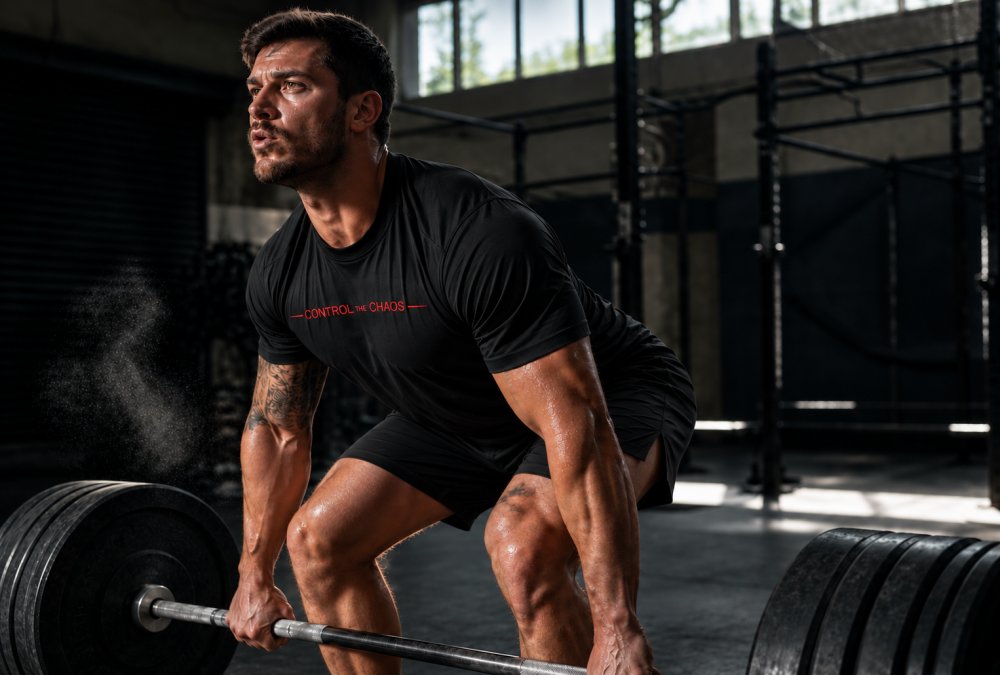
Classic Performance T: Best Overall for Strength Training
Mayhem Performance Apparel built the Classic Performance T ($49.99) for athletes who treat training as non-negotiable. It uses a lightweight performance knit with moisture-managing properties, a tagless collar, and built-in UV protection for outdoor training.
The athletic fit moves through a full range of motion without riding up on overhead presses, and durable construction survives repeated training and washing instead of stretching out at the collar or hem.
Where it falls short: it's a fitted athletic cut, so if you prefer a loose drape, size up or look at the heavyweight option below.
Classic Performance Tank: Best for Training in the Heat
The Classic Performance Tank ($44.99) is the answer for anyone training in a hot gym or summer garage. Its 4.2 oz polyester-cotton-modal tri-blend gives an ultra-soft hand feel with genuine breathability.
Side-seam construction keeps its shape through repeated workouts and frequent washing, where most cheap tanks fail. The tagless design removes distraction, and the athletic fit stays put through conditioning work.
It's the lightest option in the lineup, which is exactly the point. If you run hot, this is the one.
Heavyweight Oversized T: Best for Lifters Who Want Structure
Not everyone wants a skin-tight performance tee. The Heavyweight Oversized T ($59.99) is cut intentionally oversized from a 7.5 oz 100% cotton body, giving a structured silhouette that layers comfortably and moves freely.
The reinforced double-needle stitched collar is the durability detail worth noting: collars fail first on a training tee, and double-needle stitching holds shape far longer than a single stitch. The heavyweight fabric breathes well year-round and absorbs sweat without turning translucent like thin cotton.
The tradeoff is real: cotton dries slower than synthetic. If you're doing metcons in a humid gym, this isn't your shirt. If you're lifting heavy, resting between sets, and want a tee that looks as solid as it performs, it is.
Shirt |
Price |
Fabric |
Best For |
|---|---|---|---|
Classic Performance T |
$49.99 |
Lightweight performance knit |
Strength training, all-around |
$44.99 |
4.2 oz poly-cotton-modal |
Heat, conditioning |
|
Heavyweight Oversized T |
$59.99 |
7.5 oz 100% cotton |
Structure, heavy lifting |
High Performance Workout Gear Men Should Prioritize
High performance workout gear men should prioritize comes down to a short list: a moisture-wicking base layer, a durable training tee or tank, and a second layer for cold sessions.
Then buy two or three training shirts to rotate through the week so each gets a full dry cycle between sessions; fabric that never fully dries breaks down faster and holds odor.
The FTC's guidance on textile labeling and care claims is worth knowing if you're comparing performance claims on packaging, since terms like "moisture wicking" are marketing descriptions rather than regulated technical standards.
Prioritize in this order:
- Fit before features. A well-fitting basic shirt outperforms a poorly fitting premium one.
- Seam construction. Flatlock or seamless beats standard stitching for chafing reduction.
- Fabric weight matched to conditions. Light for heat, heavy for structure.
- Washability. A shirt that requires special handling won't survive a real training schedule.
How to Wash Moisture Wicking Shirts So They Last
Washing moisture wicking shirts correctly means cold water, mild detergent, no fabric softener, and air drying whenever possible. Fabric softener is the single biggest killer of performance fabric. It coats the fibers and blocks the moisture transport you paid for.
Turn shirts inside out before washing to protect against pilling, and use a mesh bag when washing technical fabric with towels or denim. Skip high heat; it degrades elastic fibers and shrinks cotton blends. Tumble low or hang dry.
For odor, wash promptly rather than letting sweaty gear sit overnight, bacteria multiply fast in damp fabric. An occasional vinegar rinse resets stubborn smells without damaging the fabric.
Layering Moisture Wicking Shirts for Different Climates
Layering strategy changes completely depending on the climate you train in, and getting it wrong undoes the benefit of a good base layer. The principle: the layer against your skin moves sweat, and every layer above it manages temperature.
Hot and Humid Conditions
In hot, humid conditions, wear the lightest single layer you can and nothing else, a second layer traps heat and humidity against your body. Look for a 120-150 GSM base layer with mesh or open-knit panels under the arms and across the back. The Classic Performance Tank is built for exactly this scenario.

Humidity is the variable most people underestimate. Above roughly 60% relative humidity, sweat evaporates slowly no matter how good your fabric is, because the air is near saturation (the CDC). Prioritize airflow over fabric technology: looser cuts, mesh panels, and lighter colors that reflect rather than absorb heat.
Cold Conditions
In cold conditions, use a moisture-wicking base layer under an insulating mid-layer and a wind-resistant shell. The base layer must be synthetic or wool, never cotton. Cotton holds sweat against your skin, and in cold air that's how you end up dangerously cold mid-session.
A working cold-weather system looks like this:
- Base layer (next to skin): 150-200 GSM merino or synthetic, fitted but not compressive. This moves sweat off your skin.
- Mid-layer (insulation): fleece or grid-fleece in the 200-300 GSM range. This traps warm air without blocking vapor escape.
- Shell (wind and precipitation): a breathable wind-resistant layer. A non-breathable shell traps sweat vapor and soaks your base layer from the inside, which is the opposite of what you want.
The failure mode to avoid is the cotton hoodie over a cotton tee. Once wet, it stops insulating and starts conducting heat away from your body, the mechanism behind most cold-weather training hypothermia cases.
Variable and Shoulder-Season Conditions
For variable conditions, like an unheated garage in cooler seasons, a mid-weight performance tee works as both base and outer layer. You can shed a hoodie once warm without losing the sweat management underneath.
A practical rule: dress so you feel slightly cool for the first five minutes. If you're warm before you start moving, you're overdressed and you'll be soaked by the halfway point. Adjust by adding or removing a mid-layer, not by swapping the base layer.
Layering for High-Intensity Intervals
High-intensity intervals generate heat fast, which changes the layering math. Even in cold weather, a heavy mid-layer becomes a liability once your heart rate climbs. For cold-weather intervals, start with a base layer and light shell, shed the shell during work intervals, and put it back on during rest to keep core temperature stable without soaking your base layer.
For hot-weather intervals, skip layering entirely. A single 120-150 GSM performance tank or tee is the right call. Anything more traps heat and humidity against your skin and forces your body to work harder to cool itself.
Conclusion
Finding shirts that hold up under real training load is harder than it should be, because most performance apparel is built for a photo shoot rather than a squat rack. The fix: pick fabric weight for your conditions, check seam construction before buying, and wash gear properly so it lasts.
Mayhem Performance Apparel builds gear for athletes who train regardless of circumstance. The Classic Performance T handles strength work with a lightweight performance knit and tagless comfort, the Classic Performance Tank keeps you cool with a breathable tri-blend, and the Heavyweight Oversized T delivers structure and durability for lifters who want a heavier tee.

Get started with Mayhem Performance Apparel and train in gear that endures as long as you do.
Frequently Asked Questions
How do moisture wicking fabrics actually work?
Moisture wicking fabrics use hydrophobic synthetic fibers, usually polyester blends, that pull sweat away from your skin and spread it across the surface of the shirt so it evaporates faster. Instead of soaking up sweat the way cotton does, the fabric moves moisture outward. This is why a good moisture wicking shirt stays lighter and drier during high-intensity interval training than a standard cotton tee.
Is moisture wicking the same as Dri-Fit?
No. Dri-Fit is a brand name for one company's moisture wicking technology, not a general fabric category. Moisture wicking describes how any fabric moves sweat away from your body, whether it is polyester, a poly-cotton blend, or a treated natural fiber. When you shop for the best moisture wicking workout shirts, judge the fabric and construction, not the trademark on the label.
Do moisture wicking shirts prevent body odor?
They help, but they do not eliminate odor on their own. Synthetic fibers can trap odor-causing bacteria if sweat and oils stay in the fabric, which is why anti-odor and antimicrobial finishes matter. The bigger factor is how you wash moisture wicking shirts: use cold water, skip fabric softener, and air dry when possible. That routine keeps the fabric performing and reduces the odor-trapping buildup that makes shirts smell after a few sessions.
Should I choose synthetic or natural moisture wicking fabrics?
Synthetic fibers like polyester dry fastest and handle heavy sweat best, which is why they dominate high performance workout gear men use for lifting and conditioning. Natural fibers like cotton feel softer but hold moisture and get heavy. Blends, such as a polyester, cotton, and modal mix, split the difference with softness and better drying than pure cotton. Pick based on how hard you train and how much you sweat.
How long do moisture wicking workout shirts last?
With proper care, a well-made moisture wicking shirt holds its shape and performance for a year or more of regular training. Durability depends on construction details like side-seam stitching, reinforced collars, and fabric weight. Heavyweight options such as a 7.5 oz cotton tee resist stretching better than thin blends. Washing in cold water and avoiding high heat in the dryer are the two habits that extend shirt life the most.
0 comments