
Table of Contents
- Why Standard Gym Shorts Fail Under a Heavy Barbell
- The 5 Fabric and Build Criteria That Decide Durability
- Squat-Proof Workout Shorts: Inseam Length and Liner Choices
- Best Shorts for Thick Thighs: Wide Stance and Leg Opening Fit
- How We Stress-Test Shorts for Deep Squats and Heavy Volume
- What to Ignore When Shopping for Lifting Shorts
- The Verdict: Build Your Shorts Rotation for Heavy Training
- Frequently Asked Questions
Last Updated: September 4, 2026
Why Standard Gym Shorts Fail Under a Heavy Barbell
The search for durable gym shorts for heavy squats usually ends with ripped seams and a failed rep. Standard athletic shorts are designed for jogging, not the extreme tension of deep hip flexion under a loaded barbell.
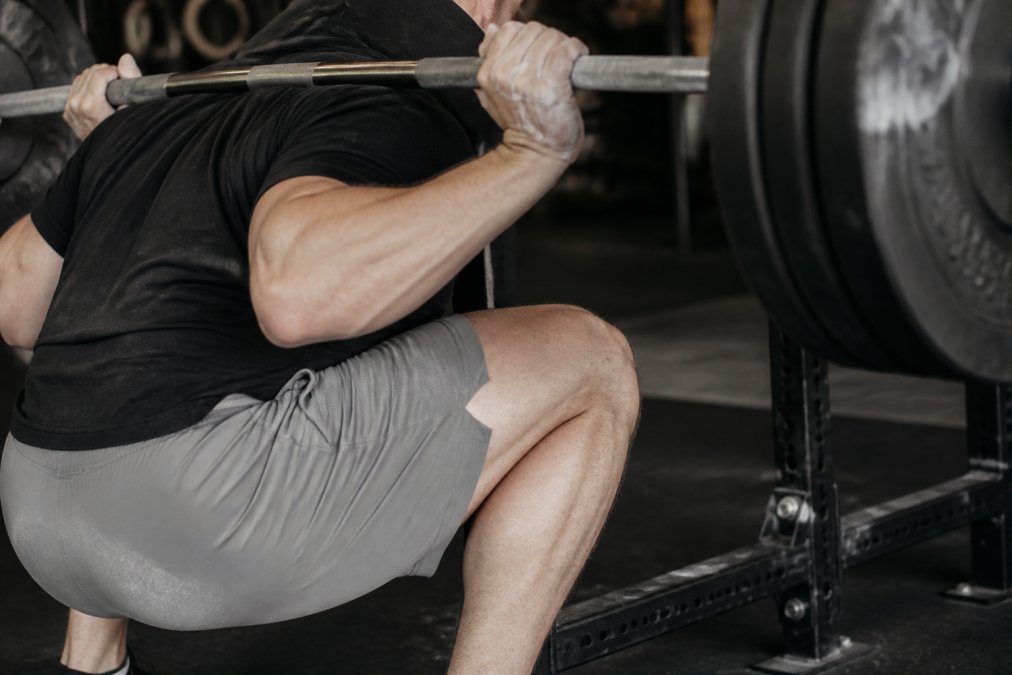
The fix requires understanding what breaks. A heavy squat demands unrestricted range of motion and fabric that resists barbell friction, completely different from a treadmill run. Below are the five criteria that separate shorts that last from shorts that tear.
The 5 Fabric and Build Criteria That Decide Durability
The most durable gym shorts share five non-negotiable characteristics. Understanding why they matter requires looking at the physics of a loaded squat. At parallel with 315 pounds, the fabric at your hip crease undergoes multi-axial strain exceeding 30% elongation per rep, hundreds of high-tension cycles per session (peer-reviewed research). We evaluate each criterion against this stress profile.
Criterion |
Measurable Standard |
Why It Matters for Squats |
|---|---|---|
Tensile Strength |
Minimum 25 lbs/in (warp) & 20 lbs/in (fill) |
Prevents blowouts at the hip crease under deep flexion load |
Abrasion Resistance |
Passes 50,000 cycles on a Wyzenbeek test |
Stops fraying from knurling on the bar during low-bar or front squat contact |
Gusseted Crotch |
4-point diamond gusset, minimum 2" depth |
Allows full range of motion without transferring stress to the side seams |
Four-Way Stretch |
Minimum 50% elongation with >95% recovery |
Maintains mobility in deep hip flexion without permanent bagging |
Inseam Length |
7"-9" inseam for most lifters |
Prevents ride-up during wide stance work and anchors the leg opening |
Tensile Strength and Abrasion Resistance: The Data Behind the Weave
Tensile strength is the fabric's ability to resist being pulled apart, mattering most at the seams and crotch during deep hip flexion. A durable fabric has a tight weave and high denier count, often in polyester-spandex blends.
Standard woven polyester has a tensile strength of 15-18 lbs per inch (peer-reviewed research). At the bottom of a heavy squat, the fabric at the hip crease is pulled in two directions at once; once force exceeds the breaking point, you get a blowout on a single rep. Lifting-specific fabric uses higher denier yarn (200D or higher) and a tighter weave, pushing tensile strength above 25 lbs per inch, the difference between surviving a year or failing on week three.
Abrasion resistance is equally critical. Barbell knurling scrapes against your shorts on every rep with a low bar position or wide stance, creating micro-tears over time. Look for a ripstop weave or reinforced panels in high-contact areas.
Gusseted Crotch and Seam Integrity: The Structural Engineering
A gusseted crotch is a diamond-shaped piece of fabric sewn into the seam junction, a structural requirement for deep squats, allowing the legs to spread without pulling the garment apart.
Not all gussets are equal. A 1-inch gusset barely adds range of motion; a 2-to-3-inch diamond gusset redistributes tension across a larger surface, expanding like an accordion in a wide stance, the difference between a full-depth squat and restriction at parallel.
Seam integrity is the other half. Flatlock seams reduce chafing but must be reinforced with multiple rows of stitching; a single-stitch seam will fail under heavy volume. Turn shorts inside out, double or triple-needle stitching indicates durability.
Test at home: hold the waistband with one hand and the leg opening with the other, then pull with moderate force. Any seam gap or thread popping means it will not survive a 405-pound squat. Also check bartack stitches, dense zigzag reinforcements at gusset corners and pocket openings. Without them, the short fails where the gusset meets the side seam within 10-15 heavy sessions.
Squat-Proof Workout Shorts: Inseam Length and Liner Choices
Squat-proof shorts are defined by inseam and liner design. A 5-inch inseam looks good standing but rides up into your hip crease at parallel, causing bunching and restricting movement.
A 7 to 9-inch inseam is the practical sweet spot, keeping the leg opening anchored above the knee and protecting your thighs from barbell friction in a high-bar position.
The liner choice affects durability and comfort. A compression liner acts as a second skin, reducing thigh friction, but its integrity matters as much as the outer shell, a liner that loses elasticity bunches and chafes. Linerless shorts require separate compression gear, which some prefer for breathability.
Best Shorts for Thick Thighs: Wide Stance and Leg Opening Fit
Standard sizing fails lifters with developed lower bodies. A lifter with a 32-inch waist and 25-inch thighs cannot fit a standard medium without the leg opening cutting off circulation. The leg opening is the most overlooked measurement in athletic shorts.
But 'thick thighs' is not a single body type; fit requirements differ based on where you carry mass and how you stance your squat.
The Quad-Dominant Lifter vs. The Glute-Dominant Lifter
A quad-dominant lifter typically has a leg opening circumference of 22-26 inches at the upper thigh, even with a 32-inch waist. The short must have a leg opening at least 1-2 inches larger than the thigh circumference when laid flat and doubled. A 20-inch opening compresses the quadriceps at the sartorius, restricting blood flow and pulling the short upward during descent.
A glute-dominant lifter squatting wide with hip drive has a different stress point: the gluteus maximus and tensor fasciae latae. The leg opening matters less than the hip-to-thigh ratio. A short with a 24-inch opening but a narrow hip gusset binds at the glute fold at depth; the fix is a deeper gusset (2.5 inches or more).
The Leg Opening Circumference Rule
Practical rule: measure your upper thigh circumference at the widest point while standing, add 2 inches, and divide by 2. That is the minimum leg opening when laid flat. A 25-inch thigh needs at least 13.5 inches laid flat; most standard 'large' shorts have 11-12 inches, explaining the circulation issue.
The Waist-to-Thigh Ratio Problem
Standard sizing assumes proportionality. A size large is cut for a 34-inch waist and 22-inch thighs, but a powerlifter often has a 34-inch waist and 26-inch thighs, a 4-inch deviation standard sizing cannot accommodate. Sizing up loosens the waist; sizing down binds the legs.
The solution is a different cut. Look for a 'bodybuilding' or 'athletic' fit with a tapered waistband, higher rise, and wider leg opening. The waistband should have a minimum 2-inch elastic band with an internal drawstring that cinches independently, allowing you to tighten the waist without compressing the legs.
The Wide Stance Test
For wide-stance squatters, the leg opening must accommodate the sartorius and adductors as they stretch. Test by assuming your widest stance and descending to parallel without a barbell. If the short pulls at the inner thigh or shows a tension line from crotch to leg opening, it will fail under load.
The Waistband as the Second Anchor
The waistband is the second critical fit point. A wide, elastic waistband with a drawstring prevents rolling during heavy sets. If you have a significant waist-to-hip difference, a tapered waistband sitting higher on the hip stays in place better than a low-rise cut.
For a hip-to-waist differential over 6 inches, look for a silicone grip strip on the interior waistband. This prevents rolling even when the drawstring is loose; without it, the waistband migrates upward, bunching fabric at the lower back.
How We Stress-Test Shorts for Deep Squats and Heavy Volume
Understanding our evaluation process helps you make better decisions. While most reviews focus on looks, our protocol centers on long-term wear and tear under real training conditions, what happens after 50 sessions, not one.
The core test is a repeated deep squat protocol: sets of 5 reps at 80% of one-rep max, checking seam slippage, fabric thinning, and waistband elasticity. A short that passes session one but shows wear by session ten fails.
We also evaluate shorts across HIIT and general weightlifting to test sweat management and quick-drying. A short that holds moisture becomes heavy and chafes; the best dry quickly and maintain breathability when saturated.
What to Ignore When Shopping for Lifting Shorts
Marketing language creates confusion. Many brands advertise "squat-proof" as a buzzword without the engineering to back it up; the term should indicate a gusset, high tensile strength, and a secure waistband, not a thicker cotton blend.
Ignore pocket design. A zippered pocket adds hardware that digs into your hip during a squat, and a deep mesh pocket can catch the barbell. A simple, secure pocket or none at all is preferable.
Do not obsess over brand logo or colorway, aesthetics do not improve your squat. Also ignore shorts marketed for "training" without specifying the type; CrossFit-style shorts prioritize lightweight materials over the durability required for heavy barbell work.
The Verdict: Build Your Shorts Rotation for Heavy Training
The shorts you wear under a heavy barbell are equipment, not casual wear. The most durable are engineered with a gusseted crotch, high tensile strength fabric, and a secure waistband that anchors during deep hip flexion.
For lifters who refuse to negotiate, the answer is a short built for heavy training. Mayhem Performance Apparel designs apparel that endures as long as you do. The Moisture Wick Short is constructed from a lightweight poly/spandex blend delivering four-way stretch and quick-drying properties, built to hold up under a loaded barbell.

Building a rotation of two or three pairs of properly engineered shorts ensures you always have durable gear ready. This approach, rooted in wear and tear analysis rather than marketing, is the only reliable way to protect your training from equipment failure.
Choosing the right shorts comes down to understanding the engineering, not the branding. You need gear that provides full range of motion, resists abrasion, and holds its shape through months of heavy volume. Mayhem Performance Apparel builds apparel for athletes who train regardless of circumstance. Shop now → and equip yourself for the work ahead.
Frequently Asked Questions
What makes gym shorts squat-proof?
Squat-proof shorts resist tearing and stay opaque through deep hip flexion. The deciding factors are a gusseted crotch for unrestricted movement, high tensile strength in the fabric, and reinforced flatlock seams. A 4-way stretch performance blend gives you the elasticity needed for a wide stance without putting stress on the material. Liner integrity also matters: a compression liner that shifts or rolls creates friction that accelerates wear.
What is the best fabric for heavy-duty lifting shorts?
A poly-spandex performance blend is the most durable choice for heavy squats. Polyester provides tensile strength and abrasion resistance against the barbell, while spandex delivers the four-way stretch required for deep hip flexion. Look for a lightweight fabric that is quick-drying and moisture-wicking. Ripstop fabric adds extra tear resistance, but a dense poly-spandex weave typically outperforms cotton or nylon blends for repeated heavy sessions.
Are compression shorts better than loose shorts for squats?
For heavy barbell training, a compression liner inside a loose outer short is the most practical setup. The liner stays put through deep squats, preventing chafing and eliminating the need to adjust fabric between reps. Loose outer shorts alone can bunch up at the hip crease, creating friction points. If you have thick thighs, choose a short with a longer inseam, around 7-9 inches, so the liner does not ride up during wide-stance squats.
How do I prevent gym shorts from ripping during deep squats?
Check three things before you buy: the crotch construction, the seam type, and the fabric stretch. A gusseted crotch adds fabric at the stress point where most blowouts start. Flatlock seams lay flat and distribute tension better than standard overlock stitching. Finally, the fabric needs true four-way stretch, not just two-way elasticity. Test the short by doing a full bodyweight squat in the store or immediately after delivery, and inspect the hip crease for fabric pulling.
0 comments