
Last Updated: November 1, 2026
Quick Summary
A home CrossFit gym on a budget starts with measuring your space and setting a firm number, then buying in order: a power rack first, then a barbell and bumper plates, with accessories last. A starter setup can begin with a pull-up bar, jump rope, and bands, while a full barbell setup typically costs around $1,000 to $2,000.
- Measure floor area, ceiling height, and plate loading room before buying any equipment.
- Buy the power rack first, since it anchors your setup and keeps heavy lifts safe.
- A $200 starter tier covers bodyweight and conditioning but not heavy barbell lifts.
- A $1,000 tier adds a squat stand, barbell, bumper plates, and gymnastic rings.
- Buy plates used if needed, since a bumper plate either weighs what it says or it doesn't.
Table of Contents
- Start With a Plan: Measure Your Space and Set a Budget
- Essential CrossFit Home Gym Equipment List
- Tiered Budget Breakdown: $200, $1,000, and $2,000 Setups
- Where to Source Used Equipment and How to Judge It
- DIY CrossFit Equipment Ideas That Save Money
- Choosing Training Apparel and Gear That Holds Up in a Home Gym
- Your First Week of Setup: Buy the Rack, Then Build Out
- Frequently Asked Questions
Start With a Plan: Measure Your Space and Set a Budget
Building a home CrossFit gym on a budget is easier than most people think. The athletes who build the best setups start with a plan, not a shopping cart. Measure your space first, then set a number you can actually stick to.
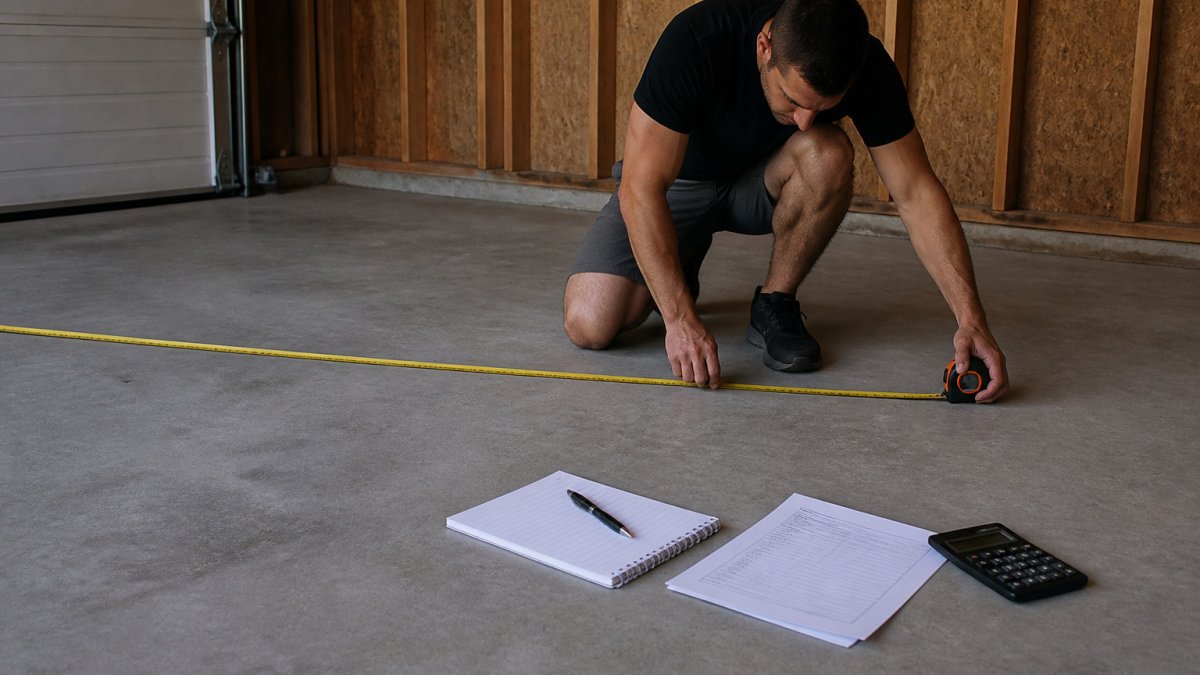
Measuring Floor Area, Ceiling Height, and Plate Loading Room
Start with the room itself. Measure the floor area, the ceiling height, and the walking space around your main lifting zone. Measuring plate loading room is also worth doing, since bumper plates and barbell sleeves need clearance on both ends.
- Floor area: the total space you can use for lifting
- Ceiling height: needed for overhead presses and pull-up bars
- Walking clearance: room to move around the rack safely
- Plate loading room: space to load and unload plates without hitting walls
A common mistake is buying a rack before checking whether it fits. Measure first, then shop.
Essential CrossFit Home Gym Equipment List
Most home CrossFit setups start with a few core pieces. A power rack with a pull-up bar, an Olympic barbell, bumper plates, and an adjustable bench cover most of the workouts you'll do. This combination is a common and practical starting point for beginners.
Add gymnastic rings, a jump rope, and a couple of kettlebells once the basics are in place. These cost little and add a lot of variety to your conditioning work.
- Power rack or squat rack with pull-up bar
- Olympic barbell
- Bumper plates
- Adjustable bench
- Gymnastic rings
- Jump rope
- Kettlebells
Tiered Budget Breakdown: $200, $1,000, and $2,000 Setups
A tiered plan does two things a single shopping list can't: it tells you what to buy first, and it tells you what to skip until your training actually demands it. The tiers below are built around one rule, spend on the pieces that take the most load and the most abuse (rack, barbell, plates), and go cheap or DIY on everything that doesn't. Pricing depends on condition, whether gear is new or used, and current sales. Check current prices directly with retailers.
The $200 Starter Tier: Bodyweight and Conditioning
At this level you are not buying a barbell. You are buying consistency.
- Doorway or wall-mount pull-up bar: A tension-mounted doorway bar is the cheapest entry point; a screw-in wall mount is sturdier if you own the wall.
- Jump rope: A speed rope with adjustable cable length beats a weighted rope for double-unders.
- Resistance band set: Loop bands cover pull-up assistance, banded squats, and mobility work.
- One kettlebell: A 35 lb (16 kg) bell is a practical choice. Buy one good bell rather than a set of light ones.
- Abmat or folded towel: A low-cost option for ab work.
What this tier cannot do: heavy barbell lifts, Olympic lifts, or anything requiring a rack. That's fine, most beginners spend their first months on technique and conditioning anyway.
The $1,000 Tier: The First Real Barbell Setup
This is the tier where most people should land. It covers the strength and metabolic work that defines CrossFit-style training.
- Squat stand or budget power rack: A two-post squat stand with separate spotter arms is the value play; a four-post rack costs more but adds storage and stability.
- Olympic barbell (used or entry-level new): Look for a 20 kg bar with a 190,000+ PSI tensile rating if buying new; used bars from gym liquidations can be a good value.
- Bumper plate set (160-230 lb): Bumper plates matter for dropping lifts and for floor protection; cast-iron plates are not drop-safe.
- Gymnastic rings: A standard accessory for the tier.
- Jump rope and bands: carry over from the starter tier.
The $2,000 Tier: A Well-Equipped Garage
This tier matches what most people picture when they say "home box." It adds the pieces that unlock the full workout library.
- Full power rack with pull-up bar and storage: A fuller option that adds storage and stability.
- Bearing barbell: Needle bearings matter for Olympic lifts; bushing bars are fine for powerlifting and typically cost less.
- Complete bumper set (230-260 lb) plus change plates: A larger plate set for heavier training.
- Adjustable bench: A flat bench is a simpler option, but an adjustable one unlocks incline work and seated presses.
- Kettlebells (one or two bells): One or two bells, depending on training needs.
- Rings, jump rope, bands, abmat: Inexpensive accessories that round out the setup.
How to Scale Between Tiers Without Wasting Money
The mistake most people make is buying the $2,000 list in one order and discovering half of it goes unused. A better pattern:
- Start at the tier below what you can afford.
- Train for four to six weeks and note which movements you keep substituting or skipping.
- Buy the piece that removes the substitution, not the piece that looks best in photos.
This is also where resale value matters. Racks, barbells, and bumper plates can retain value on the used market, so an upgrade later is not necessarily a total loss. Accessories like bands, jump ropes, and abmats are effectively disposable, buy them cheap and don't count on recovering anything.
Shop Mayhem Performance Apparel →
The three budget tiers compare what each level buys and what it leaves out.
| Tier | Core purchases | What it cannot do |
|---|---|---|
| $200 Starter | Pull-up bar, jump rope, bands, one kettlebell | Heavy barbell and Olympic lifts |
| $1,000 First barbell | Squat stand, barbell, bumper plates, rings | Full library of barbell work |
| $2,000 Garage | Full power rack, bearing barbell, bumper set, adjustable bench | Nothing essential is missing |
Where to Source Used Equipment and How to Judge It
Used gear can cut your costs sharply. Check local classifieds, garage sales, and gym liquidations. Inspect the barbell first: look for straight shaft, smooth sleeves, and even knurling. Check racks for bent uprights and loose bolts.
Watch out: a cheap barbell with a bent shaft will hurt your lifts and your joints. Test it before you pay.
DIY CrossFit Equipment Ideas That Save Money
Some gear you can build yourself. A plyometric box from plywood, a sandbag filled with sand, and wall-mounted storage all save money. Keep builds simple and safe, and secure anything that will take heavy loads.
Choosing Training Apparel and Gear That Holds Up in a Home Gym
Your clothing takes a beating in a home gym. Look for fabrics that suit repeated heavy training. Mayhem Performance Apparel is built for athletes who train under load and demand durability through repeated heavy sessions.
To keep technical fabrics performing, wash them in cold water and skip fabric softener, which coats fibers and reduces moisture-wicking.
Your First Week of Setup: Buy the Rack, Then Build Out
Start with the rack. It anchors everything else and keeps you safe during heavy lifts. Then add the barbell and plates, followed by smaller accessories. Spreading purchases over a few weeks protects your budget and lets you learn what you actually use.
Here is a simple first-week plan:
- Measure your space and set a firm budget
- Buy or source the rack first
- Add the barbell and a starter plate set
- Test your setup with a few basic lifts
- Add accessories as your training demands them
Frequently Asked Questions
What are the essential pieces of equipment for a home CrossFit gym?
Start with a power rack or squat rack with a pull-up bar, an Olympic barbell, bumper plates, and a set of kettlebells. Gymnastic rings, a jump rope, and a rowing machine or air bike cover most conditioning needs. The rack, barbell, and plates support the largest share of CrossFit movements, which makes them a sensible starting point. Add a bench, collars, and a flooring mat once the core setup is in place. Buy the foundation first and expand over time as your training demands grow.
How much does it cost to build a basic CrossFit home gym?
A functional starter setup can begin around $200 using a few essentials, while a comprehensive CrossFit-style gym with a power rack, barbell, bumper plates, rings, kettlebells, and conditioning tools can be assembled for under $2,000 according to current 2026 build guides. Prices vary by brand, condition, and whether you buy new or used. Used equipment from local listings often lowers the total considerably. Check current prices directly with retailers before you commit to a budget.
Can you do CrossFit workouts with minimal equipment?
Yes. Bodyweight movements such as push-ups, air squats, pull-ups on a single bar, and burpees cover a large share of CrossFit workouts. Adding a jump rope, a pair of kettlebells, and a set of resistance bands expands the options considerably. Many WODs can be scaled to available equipment without losing their intent. Minimal equipment limits the heaviest lifts, so prioritize a barbell and plates when your budget allows.
Is it cheaper to build a home gym or pay for a CrossFit membership?
A home gym often pays for itself over time if you train consistently, because a one-time equipment purchase replaces recurring membership fees. Membership prices vary widely by location and gym, so compare your local quotes against your planned equipment spend. A home setup also removes travel time and scheduling limits. Factor in space, noise, and the value of coached classes when deciding.
Building a home CrossFit gym on a budget comes down to planning, buying the right core pieces, and training consistently. Mayhem Performance Apparel builds gear for athletes who train under load, so when you're ready to equip your training, explore our performance gym apparel and premium performance collection for clothing that holds up in your new setup.

0 comments