
Table of Contents
- Understanding Fit Architecture for Broad Shoulders and Chest
- How to Measure for a Gym Shirt That Fits Your Frame
- How Should a Workout Shirt Fit Across the Shoulders
- Best Fabric for Workout Shirts That Won't Cling or Ride Up
- Raglan Sleeve Workout Shirts vs. Standard Cuts
- Choosing Between Relaxed, Regular, and Athletic Fits
- Gym-Specific Fit Tests Before You Buy
- Frequently Asked Questions
Last Updated: October 11, 2026
Understanding Fit Architecture for Broad Shoulders and Chest
Learning how to choose gym shirts for broad shoulders requires understanding fit architecture: your shoulders and chest need room to move, but excess fabric elsewhere creates drag and distraction. Mayhem Performance Apparel builds its line around this principle, engineered fit that moves with athletic builds, not against them.
Standard cuts assume proportional bodies. Size up for shoulder room and you swim in fabric at the waist; size down and you pinch your shoulders. Understanding how a shirt sits on your frame solves this before you try it on.
The shoulder seam placement test
The shoulder seam, where sleeve meets body, determines whether a shirt works during heavy lifting. When you raise your arm overhead, the seam should sit at the edge of your shoulder bone.
For broad shoulders, this test is non-negotiable.
To check seam placement, measure from seam to seam across the shoulders and compare to your actual shoulder width. If less than your width, the shirt will pull; if 1-2 inches wider, you have proper clearance.
Balancing shoulder room with waist definition
The challenge is finding a cut that gives shoulder room without drowning your midsection. This balance separates gym shirts that work from ones that just fit.
Look for tapered construction: snug through chest and shoulders, narrowing toward the waist. This gives shoulder space while maintaining clean lines. Avoid uniform width from shoulder to hem, it bunches at the waist and rides up during movement.
Oversized means extra fabric everywhere; tapered athletic fit means strategic room where you need it. For broad shoulders, tapered fit is your advantage.
How to Measure for a Gym Shirt That Fits Your Frame
Proper measurement eliminates guesswork. You need three critical measurements to predict how a gym shirt will fit your specific proportions.
Taking shoulder and chest measurements
Start with shoulder width: measure from the outer edge of one shoulder bone to the other.
Next, measure your chest at the fullest part, keeping the tape snug but not tight. This matters because size charts list chest width as the primary dimension.
Finally, take an overarm measurement: extend one arm out to the side at shoulder height and measure from fingertip to fingertip across your back. This tells you sleeve length and cross-body room needed during movement.
These three numbers are your baseline, more reliable than typical shirt sizes because they're specific to your proportions.
Using size charts to predict fit consistency
Compare your three measurements against the chart's shoulder width, chest width, and overarm span. If you fall between two sizes, choose the larger one for shoulder room.
Check the fit description: athletic fit works best for broad shoulders because it's engineered for muscular builds. Relaxed fit adds fabric everywhere; oversized is only useful for layering.
Check fit reviews from customers with similar builds. Size charts are guidelines; customer feedback is ground truth.
Measurement |
What It Tells You |
How to Use It |
|---|---|---|
Shoulder width |
Whether seams will sit in the right place |
Compare to shirt's shoulder span in size chart |
Chest width |
If fabric will be snug or loose through torso |
Look for 2-4 inches of ease over your measurement |
Overarm span |
If sleeves and cross-body room are adequate |
Ensure shirt measurement equals or exceeds your span |
How Should a Workout Shirt Fit Across the Shoulders
A properly fitted gym shirt allows full range of motion without pulling or bunching. The fabric should sit flush against your shoulders without tension, and the sleeve should move with your arm.
A shirt that restricts shoulder movement forces stabilizer muscles to work harder managing fabric, wasted effort. The shirt should be invisible, moving with you, not against you.
Checking for movement and hard movement during lifting
Put on the shirt and perform your actual lifting movements. Feel for tension or pulling across your chest and shoulders. Any restriction means the fit is wrong.
Heavy pressing movements expose fit problems immediately. If a shirt works during overhead pressing with load, it works.
During a heavy lift, your shoulder blades should retract without the shirt hiking up your back. If it rides up or pulls, shoulder room is insufficient.
The best test is to wear the shirt through one full training session. Your shoulders, chest, and back will tell you whether the fit works for hard movement.
Avoiding cling and fabric drape issues
Thin fabrics cling to your skin during intense training, restricting movement slightly. Heavier fabrics drape away and move more naturally.
For broad shoulders, fabric weight matters. A lightweight shirt might feel fine during warm-up, but once sweating starts, it sticks to your chest and shoulders.
Tightly woven fabrics hold their shape better than loose weaves, cling less, and recover faster after movement. Construction quality directly impacts how the shirt moves during your workout.
Best Fabric for Workout Shirts That Won't Cling or Ride Up
The fabric you choose determines how a shirt performs during training. For broad shoulders and intense workouts, fabric selection is as important as fit architecture.
Fabric weight and construction for muscular builds
Heavier fabrics (7-8 oz) maintain shape better, resist clinging, and recover quickly. For broad shoulders, heavier construction prevents skin sticking and moves more naturally during hard movement.
Tightly woven fabric resists moisture absorption better than loose weave, preventing the shirt from becoming heavy and sagging when sweating.
Pure cotton is breathable but absorbs moisture and clings when wet. Tri-blend or poly-cotton blends add durability and moisture-management without sacrificing breathability, outperforming pure cotton in sweaty conditions.
The Mayhem Performance Apparel Classic Performance Tank uses a 4.2 oz tri-blend balancing breathability with durability.

Moisture-managing performance in sweat conditions
Moisture management affects fit consistency. When a shirt absorbs sweat, it becomes heavier and loses shape. Fabric that manages moisture stays dry and maintains fit.
Synthetic fibers wick moisture faster than natural fibers. Poly-cotton or tri-blend moves sweat toward the surface where it evaporates, keeping the shirt light and preventing cling.
Test fabric performance in your actual training conditions. In hot environments or high-intensity conditioning, moisture management becomes critical.
Raglan Sleeve Workout Shirts vs. Standard Cuts
Raglan sleeves extend from underarm to neckline, creating a diagonal seam across chest and shoulders. Standard cuts have a perpendicular shoulder seam. For broad shoulders, this difference matters.
Raglan sleeves provide more shoulder room and are useful for exceptionally broad shoulders or layering. The trade-off is less structure and a less clean silhouette than standard cuts.
Standard cuts with proper shoulder width work better for most lifters with broad shoulders. They provide a cleaner look, better waist definition, and more predictable fit.
Choose raglan if you prioritize maximum shoulder room and layering capability. The Mayhem Performance Apparel Classic Performance T has these design features.
Choosing Between Relaxed, Regular, and Athletic Fits
These three cuts represent different philosophies about how a shirt should sit on your body.
Athletic fit for unrestricted movement and range of motion
Athletic fit is engineered for muscular builds. The shoulders are roomy, the chest is snug, and the waist tapers. This cut assumes you have a larger upper body and a proportionally smaller waist.
Athletic fit gives you shoulder room without excess fabric at your midsection. The taper through your core keeps the shirt from bunching during movement. During hard pressing movements, you have full range of motion without tension.
The Mayhem Performance Apparel Classic Performance T features an athletic fit designed for strength athletes. It provides shoulder room for broad frames while maintaining a clean silhouette through the chest and waist.
Oversized cuts for layering and comfort
Oversized cuts add extra fabric everywhere. They're useful if you plan to layer or if you prefer a looser silhouette. For training purposes, oversized cuts create excess fabric that can shift during movement and bunch at your waist.
Oversized works if you're wearing the shirt for recovery, casual wear, or layering over a tight base layer. For actual training, oversized usually creates more problems than it solves because the extra fabric becomes a distraction during hard movement.
The Mayhem Performance Apparel Heavyweight Oversized T is intentionally oversized by design. It's built for athletes who want a relaxed fit that works for training and everyday wear.

Gym-Specific Fit Tests Before You Buy
The best way to know if a shirt works is to test it under actual training conditions. Online measurements and size charts are helpful, but they can't replicate what happens when you load weight and move hard.
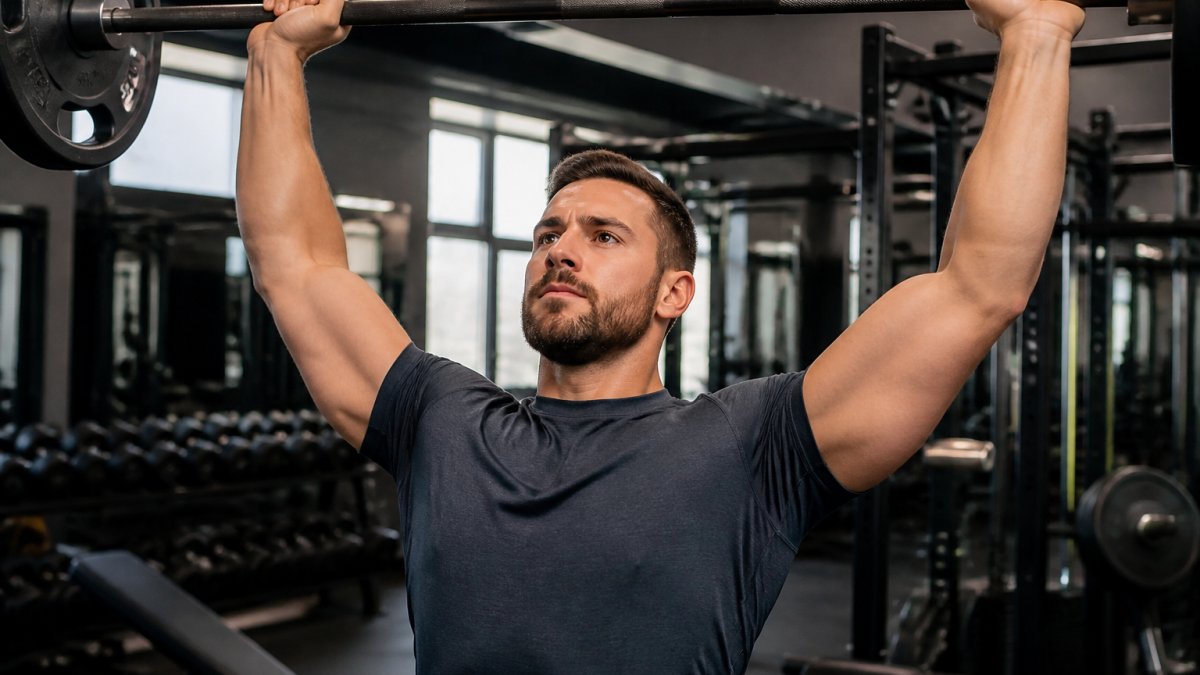
Testing shoulder seam placement and arm movement
Put the shirt on and perform your primary lift. If you're a powerlifter, do a few heavy bench presses or squats. If you do CrossFit, do some overhead movements or rowing.
Feel for tension across your shoulders and chest. Your shoulder blades should retract smoothly without the shirt pulling. Your arms should move freely without the seams creating drag or restriction.
Check the seam placement during movement. Does it stay at your shoulder bone, or does it migrate? Does the shirt bunch anywhere? Does it ride up your back? These are the real-world tests that matter.
Performing range of motion checks during heavy lifting
Range of motion during heavy lifting is different from casual movement. When you're under load, your body demands full freedom of movement.
Do your heaviest set in the shirt. If it works during your heaviest lift, it works. If you feel any restriction or distraction, the fit is wrong.
Pay special attention to your shoulders and chest. These areas take the most stress during pressing movements. If the shirt restricts movement here, it will affect your performance and your safety.
At Mayhem Performance Apparel, we build gym shirts specifically for athletes who demand performance under load. The Classic Performance T and Heavyweight Oversized T are both engineered with broad shoulders in mind, featuring athletic fit construction and moisture-managing fabric that performs during hard movement.

Frequently Asked Questions
What's the best way to tell if a gym shirt fits properly across broad shoulders?
The shoulder seam should sit right at the edge of your shoulder bone, not drooping down your arm or pulling toward your neck. Put on the shirt and raise your arms overhead as if pressing weight. Your shirt should move with you without pulling, bunching, or riding up. If the fabric clings to your chest or the seams roll forward, the shirt is too tight. For gym shirts for broad shoulders, unrestricted movement through the full range of motion matters more than a snug fit.
How do I measure for a gym shirt if I have a broad chest and shoulders?
Measure your shoulder width from the outer edge of one shoulder bone to the other while standing relaxed. Then measure your chest at the fullest point, keeping the tape parallel to the ground. Finally, take an overarm measurement from the center of your back across one shoulder to your wrist. Compare these three measurements to the size chart before ordering. This prevents ordering a shirt that fits your shoulders but is too loose at the waist, or vice versa.
Should I size up in workout shirts if I have broad shoulders?
Not necessarily. Sizing up often creates excess fabric at the waist and can cause your shirt to ride up during heavy lifting. Instead, look for shirts specifically cut for athletic builds with tapered waists. The best fabric for workout shirts in your case is one with stretch and moisture management—this allows the shirt to move with your body without needing a larger size. Check the garment measurements in the size chart rather than relying on standard sizing.
Are raglan sleeve workout shirts better for broad shoulders?
Yes, raglan sleeves often work better for broad shoulders because they extend from the underarm to the neckline, providing more room through the shoulder and chest without adding bulk elsewhere. This design reduces strain on the shoulder seam during pressing movements and overhead work. However, the fit still depends on overall chest measurement and how the shirt is cut at the waist. Always check the specific garment measurements and test the shoulder seam placement regardless of sleeve style.
0 comments