
Table of Contents
- Why Squats Cause Inner-Thigh Chafing
- The Leg-Day Routine: Before, During, and After
- The Best Shorts to Prevent Thigh Chafing Under Load
- Picking an Anti-Chafe Balm for Workouts
- Does Petroleum Jelly Prevent Thigh Chafing?
- What to Do When Chafing Starts Mid-Workout
- How to Treat Chafing After Exercise
- Conclusion
- Frequently Asked Questions
Last Updated: October 21, 2026
Why Squats Cause Inner-Thigh Chafing
Chafing during squats is skin damage from repeated friction between your inner thighs, worsened by sweat, heat, and fabric.
Most lifters blame the bar or the depth.
Add sweat and skin grips instead of glides, producing redness, soreness, and eventually raw, irritated skin.
- Skin-to-skin contact at the bottom of a deep squat
- Sweat and moisture that soften skin and raise friction
- Heat that increases sweat and swelling
The fix is not one product.
The Leg-Day Routine: Before, During, and After
A leg-day chafing routine has three phases: prep the skin, check mid-session, and clean up fast. Each takes minutes; skip one and friction wins.
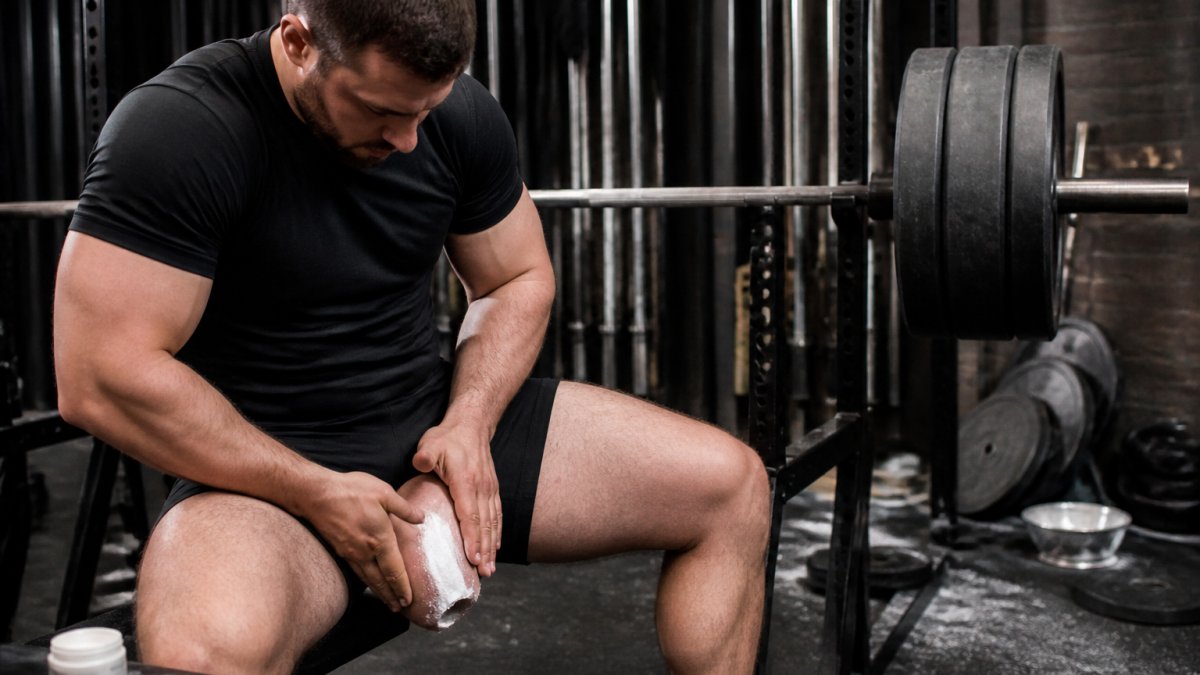
Before You Touch the Bar
Start with dry skin. Pat the inner thighs completely dry after showering, then apply your barrier product.
- Apply balm or stick to both inner thighs and the crease where they meet
- Coat any spot that rubbed last session, even if it healed
- Choose fitted shorts with a flat inseam that covers the rub zone
Mid-Session Checks
Halfway through, take 30 seconds to assess. Wipe sweat from the inner thighs and reapply lubricant if the area feels tacky or hot.
- Feel for heat, sting, or a rough patch
- Reapply balm if you are sweating heavily
- Pull shorts back into place if they have ridden up
After the Last Set
Get out of wet clothes fast. Change into dry gear, rinse the area with cool water, and pat dry. Moisture left on irritated skin keeps the friction cycle going.
The Best Shorts to Prevent Thigh Chafing Under Load
The best shorts for preventing thigh chafing during squats are fitted, moisture-wicking, and long enough to cover the rub zone through a full range of motion.
Most guides stop at moisture-wicking fabric, which is fine for running. Squatting adds a variable running does not: your thighs press together at the bottom of every rep, so fabric must stay put through a deep hole.
Inseam: The Number That Matters Most
Look for a 7-inch inseam or longer. That length covers the inner thigh through a full squat without riding up.
Longer is not automatically better: a 9-inch inseam on a shorter lifter can bunch behind the knee and create a second friction point. Most lifters between 5'6" and 6'0" find 7 inches covers the rub zone without excess fabric.
Fit Under Load: The Squat Test
A short that passes the mirror test can still fail the squat test. Before you trust a pair on leg day, do this:
- Bodyweight squat to depth, check whether the hem rides up or the fabric pulls tight across the crease
- Pause at the bottom, the fabric should stay flat against the inner thigh, not bunch
- Stand and reset, the short should return to position without you tugging it down
If the hem climbs during a bodyweight squat, it will climb worse under a loaded bar, exposing skin and adding fabric-on-skin friction on top of skin-on-skin contact.
Seams and Construction
Flatlock seams and seam-free inner thighs reduce the chance of a seam edge digging into the crease. Avoid shorts with a thick side seam that runs down the inner thigh, under load, that seam becomes a blade against sweaty skin. Check the gusset too: a well-constructed gusset keeps fabric flat where thighs meet.
Compression: Helpful, With a Caveat
Compression shorts hold fabric flat against skin so nothing bunches, but fabric quality matters. Cheap compression loses stretch after repeated washes and bags, reintroducing the bunching you were eliminating. Check seams and fit before every heavy session, and replace them once they stop snapping back.
Fabric and Moisture
Synthetic blends move sweat away from skin; cotton holds it. A performance blend with four-way stretch follows your hips through the hole instead of pulling tight, critical for squats, where hip angle changes dramatically through the rep.
Our Moisture Wick Shorts are built around these squat-specific requirements. They use a lightweight 3.5 oz poly/spandex blend with four-way stretch, a 7-inch inseam, and moisture-wicking fabric that keeps the rub zone drier under load.

| Feature | Why It Matters for Squats |
|---|---|
| 7-inch inseam | Covers the inner thigh through a full squat without bunching behind the knee |
| Moisture-wicking blend | Moves sweat off skin instead of holding it in the crease |
| Four-way stretch | Follows hip movement through the hole without pulling tight |
| Fitted cut with flat seams | Stops fabric from bunching and seams from digging into the crease |
What to Skip
- Loose shorts that bunch in the crease and add a second friction source
- Cotton that holds sweat against skin
- Short inseams that leave the rub zone exposed at depth
The right short is not the tightest or the longest, it is the one that stays flat against your inner thigh from the top of the rep to the bottom and back.
Picking an Anti-Chafe Balm for Workouts
An anti-chafe balm for workouts is a lubricant that reduces friction between skin and skin or fabric. The right one lasts through sweat without irritating sensitive skin.
Match the product to the conditions:
- Sticks are clean and easy to reapply mid-session
- Creams and balms give heavier coverage for long sessions
- Petroleum-based ointments last long but can stain fabric
If your skin is sensitive, patch test on a small area first. Fragrance and heavy silicones cause reactions in some athletes.
Does Petroleum Jelly Prevent Thigh Chafing?
Petroleum jelly does reduce thigh chafing: it creates a slick, cheap, easy-to-find barrier that cuts friction, but it is not the best choice for every lifter.
The trade-offs are real: it is thick, can stain shorts and leggings, may clog pores on sweaty skin, and wears off under heavy sweat, so long sessions need reapplication.
Use it if you need a quick, low-cost barrier and you are not worried about your gear.
What to Do When Chafing Starts Mid-Workout
Chafing that begins mid-set is a decision point, not a nuisance. The sting at rep eight means the top layer of skin is already breaking down, and the next 60 seconds determine whether you finish the session or lose the next three leg days.
Most prevention guides stop at "reapply balm," which is not enough when skin is already hot and raw. Use this squat-specific sequence instead.
Step 1: Rack the Bar and Assess
Rack the bar the moment you feel stinging, not after the set. Finishing under load drives more friction into damaged skin and turns mild irritation into an open wound.
Once the bar is racked, step off the platform and check the area with a clean towel. You are looking for three things:
- Redness only, mild friction irritation, safe to continue with protection
- Stinging or a rough patch, the skin barrier is compromised, proceed with caution
- Raw, shiny, or broken skin, stop the leg session entirely
Step 2: Clean and Dry the Area
Sweat is the accelerant. Wipe the inner thighs with a clean, dry towel, not your sweaty shirt. If a sink is available, rinse with cool water and pat dry completely; moisture left on irritated skin keeps the friction cycle running even after you reapply product.
Avoid rubbing. Patting preserves what is left of the skin barrier.
Step 3: Reapply Protection Correctly
Reapply your barrier product to the irritated spot and the surrounding crease. A stick is the cleanest option mid-session because you do not have to touch raw skin with your hands. If the skin is already broken, do not apply a thick balm, it traps bacteria. Use a thin layer of healing ointment instead and plan to end the session.
Step 4: Adjust the Squat, Not Just the Product
Changing your stance is not a substitute for protecting skin, but it reduces contact for the rest of the session:
- Widen your stance slightly to reduce inner-thigh contact at the bottom
- Cut depth to parallel instead of below parallel if the crease is raw
- Switch to a sumo or wide-stance variation that keeps thighs apart
If you are mid-program and cannot afford to skip, substitute a movement that keeps the thighs separated, split squats, step-ups, or leg extensions, and finish the session without loading the irritated area.
Step 5: Decide Whether to Continue or Stop
Use this rule: if the sting settles within two minutes of cleaning and reapplying, finish with reduced volume and adjusted stance. If it persists, worsens, or the skin feels raw, end the leg session, a week of raw skin costs more training than one shortened workout.
Step 6: Reset Before the Next Session
Before your next leg day, inspect the area. If it is still red or tender, train a different movement pattern and let the skin close. Return to squats only when skin feels smooth and dry, and apply your barrier product before you warm up, not after.
How to Treat Chafing After Exercise
Treat chafing after exercise by cleaning the area, drying it fully, and letting it breathe. Most mild cases settle within a few days.
- Rinse with cool water and a gentle, fragrance-free cleanser
- Pat dry, do not rub
- Apply a thin layer of healing ointment or barrier cream
Watch for signs that need medical attention: spreading redness, swelling, pus, or pain that gets worse instead of better. Those point to infection, and a doctor should look at them.
Conclusion
Chafing during squats is a friction problem, and friction is controllable. Dry skin, a barrier product, fitted shorts with a real inseam, and fast cleanup after training keep you off the sideline.
At Mayhem Performance Apparel, we build gear for athletes who train under load and refuse to negotiate. Our Moisture Wick Shorts pair a 7-inch inseam with moisture-wicking fabric and four-way stretch, so the rub zone stays covered and dry through every set. Our Moisture Wick Track Pants add the same moisture-wicking build for colder sessions.

Stop letting chafing dictate your leg day. Shop now and train with gear that endures as long as you do.
Frequently Asked Questions
Will chafing go away by itself?
Mild redness and soreness usually settle within a day or two if you stop the friction and keep the skin clean and dry. Chafing during squats tends to linger when you keep training in the same damp shorts or skip the balm. If the skin is broken, weeping, or still painful after three or four days, or if it looks infected (spreading redness, warmth, pus), see a doctor. Otherwise, treat it like any friction injury: wash, dry, protect, and change out of wet clothes fast.
What should I wear to prevent chafing during squats?
Skip loose, cotton shorts and go with a fitted short that covers the rubbing zone. A 7-inch inseam in a moisture-wicking poly/spandex blend keeps fabric between your thighs through the bottom of the squat instead of letting skin meet skin. Look for flat seams, four-way stretch, and a drawcord so the waistband stays put under load. Mayhem's Moisture Wick Shorts ($49.99) use a 3.5 oz 90/10 poly-spandex blend with a 7-inch inseam built for exactly this.
Does petroleum jelly stop thigh chafing?
Petroleum jelly does reduce friction and it is cheap, but it is not the best choice for a heavy squat session. It stays greasy, transfers onto your shorts, and can trap sweat against the skin. It also tends to wear off faster than a dedicated anti-chafe balm. Use it as a backup in a pinch, but for leg day a purpose-built balm or a fitted moisture-wicking short will hold up better across multiple sets.
How do I treat irritated skin after leg day?
Get out of sweaty clothes as soon as you can, rinse the area with cool water, and pat dry instead of rubbing. Apply a thin layer of a healing ointment or fragrance-free moisturizer, and avoid tight clothing until the redness fades. If it stings, a cool compress for ten minutes helps. Do not scrub or exfoliate irritated skin. If the chafing is raw or bleeding, keep it covered and give the area a couple of days away from heavy squat volume.
0 comments