
Table of Contents
- What Makes Fitness Apparel High Quality
- Durable Gym Clothing Materials That Withstand Relentless Training
- Seam Construction and Stitching Quality
- How to Test Activewear Quality Before and After Purchase
- Signs of Poor Quality Workout Clothes to Avoid
- Fit, Compression, and Performance Features
- Why Quality Apparel Justifies the Investment
- Conclusion
- Frequently Asked Questions
Last Updated: September 23, 2026
What Makes Fitness Apparel High Quality
High quality fitness apparel combines engineered fabric performance with construction durability that survives relentless training. It's not about brand names or flashy marketing, it's about materials that wick moisture, seams that hold under load, and fit that supports movement without restriction.

Durable Gym Clothing Materials That Withstand Relentless Training
High-quality fitness apparel uses engineered synthetic blends designed for repeated stress, sweat exposure, and frequent washing. But fabric quality alone isn't enough, care after purchase determines whether that quality persists.
Synthetic Blends and Performance Fabrics
Performance fabrics use polyester, nylon, and spandex combinations. Polyester dominates because it resists moisture absorption, maintains elasticity after repeated washing, and won't degrade when exposed to sweat or chlorine.
A 3.5 oz poly/spandex blend (5-15% spandex) provides four-way stretch for heavy squats, Olympic lifts, and explosive movements without binding or restricting range of motion.

Nylon is more abrasion-resistant than polyester, making it ideal for high-quality leggings that contact skin repeatedly.
Fabric weight (measured in ounces per square yard) signals durability. Lightweight fabrics (3.5-4 oz) breathe better; heavyweight fabrics (7-8 oz) provide more durability. Sprinters and CrossFit athletes favor lighter weights, while powerlifters prefer heavier fabrics.
Moisture-Wicking and Breathability Standards
Moisture-wicking technology separates sweat from your skin rather than absorbing it, keeping you dry and extending garment life by reducing bacterial growth.
High-quality wicking apparel uses hydrophobic synthetic fibers that repel moisture, unlike cotton which absorbs and holds it against your skin.
Breathability works alongside wicking. Tight weaves trap heat; loose weaves allow airflow. The best high-quality fitness apparel balances these properties, tight enough to provide structure and durability, loose enough to allow sweat to evaporate. A textile engineering study from Georgia Tech on athletic fabric performance found that properly engineered synthetic blends maintain breathability even at saturation, unlike natural fibers which become increasingly dense when wet.
How Care and Maintenance Impacts Fabric Longevity
High-quality fabric can be destroyed by improper washing. This is where many athletes unknowingly shorten the lifespan of expensive apparel.
Water temperature is critical. Wash high-quality athletic apparel in cold water (below 60°F). Hot water causes spandex to lose elasticity permanently, while cold water preserves fiber structure through 100+ wash cycles.
Detergent choice matters. Standard laundry detergents break down the hydrophobic coating that enables moisture-wicking. Use sports-specific or enzyme-free detergent; regular detergent strips wicking properties after 10-15 washes.
Avoid fabric softener. It coats synthetic fibers with a waxy layer that blocks moisture-wicking and breathability. Never use fabric softener, dryer sheets, or conditioning products on high-quality apparel.
Drying method impacts spandex longevity. Air-dry or use low-heat drying. High heat (above 130°F) causes spandex to lose elasticity, degrading leggings within 20-30 washes instead of 100+.
Washing frequency affects durability. Wear apparel 2-3 times before washing when possible; this extends lifespan by reducing total wash cycles. Outer layers like shorts can be worn multiple times before washing.
Pre-wash treatment prevents damage. Turn apparel inside-out and wash in a mesh bag to reduce friction and pilling, extending durability by 20-30%.
Proper care, cold water, sports detergent, air-drying, and wearing 2-3 times before washing, maintains performance through 100+ cycles. Improper care degrades identical fabric to 30-40 cycles. Maintenance is as important as fabric composition.
Seam Construction and Stitching Quality
Seams fail before fabric does. This is where cheap apparel falls apart and high-quality fitness apparel proves its durability.
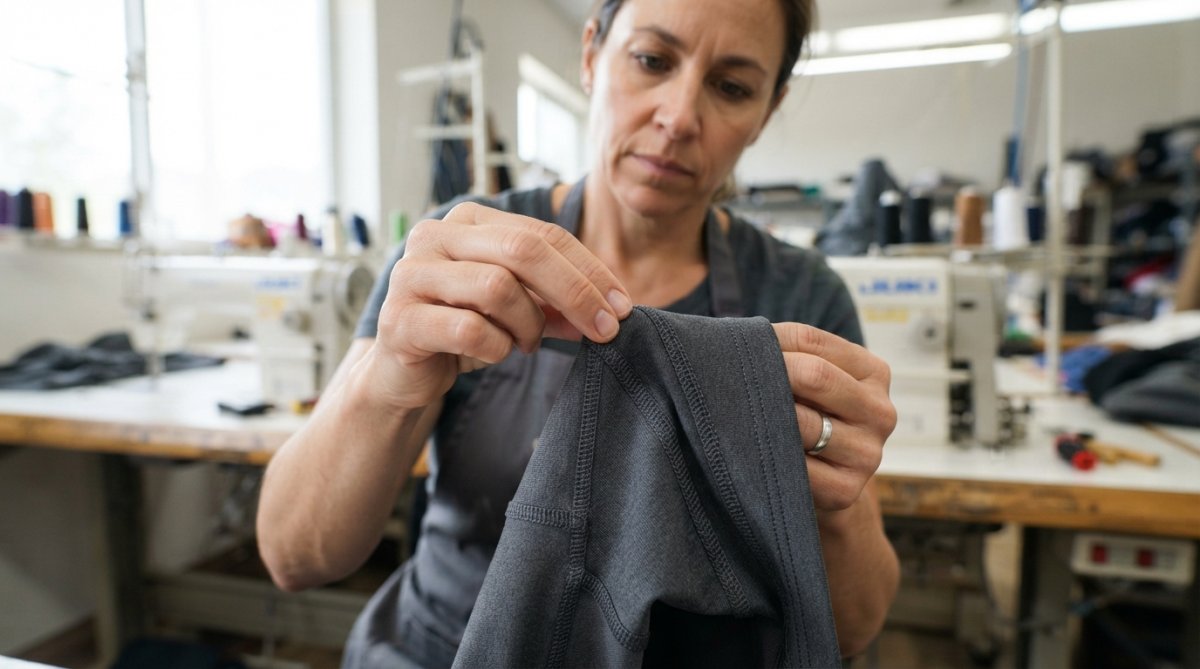
High-quality apparel uses flatlock stitching for skin-contact areas, creating smooth seams that won't irritate during movement or cause chafing.
Double-needle stitching reinforces stress points like waistbands, armholes, and leg openings. Two parallel threads create redundancy; if one breaks, the other holds.
Polyester thread resists moisture and maintains strength after washing; cotton thread degrades faster. High-quality apparel uses polyester or synthetic thread.
Seam density (stitches per inch) determines seam strength. Quality apparel balances density with thread durability, typically using 12-16 stitches per inch on stress points.
How to Test Activewear Quality Before and After Purchase
You don't need to wait months to discover if apparel will hold up. Several hands-on tests reveal quality immediately, both in-store and after repeated wear.
Pre-Purchase Testing Methods
The Stretch-Back Test: Pull fabric perpendicular to the weave for 5-10 seconds, then release. High-quality apparel returns to original shape within 1-2 seconds with no wrinkles. If fabric stays stretched or takes more than 3 seconds to recover, spandex content is insufficient.
The Seam Stress Test: Pull fabric on both sides of a seam for 10 seconds. Quality seams don't separate, pucker, or show thread stress. Check high-stress areas like crotch seams on leggings or underarm seams on shirts.
The Opacity Test: Hold leggings up to light. High-quality athletic leggings should be opaque enough that you cannot see your hand clearly. If light passes through easily, the weight is too low for intense training.
The Fabric Consistency Check: Run your fingers across the entire surface. The weave should feel uniform with no thin spots or loose threads. Pay special attention to seams and hems.
The Tag and Labeling Inspection: Quality apparel lists specific fiber content percentages, weight in ounces per square yard, country of manufacture, and detailed care instructions. Vague labeling indicates the manufacturer doesn't prioritize transparency.
Post-Purchase Durability Testing
After 10-15 wears and washes, repeat the stretch-back test. High-quality apparel should still recover quickly. Increased recovery time or permanent wrinkles indicate spandex is degrading faster than expected.
Check seams for separation or fraying. Quality seams don't split or show thread stress after normal washing. This is especially critical on crotch seams and armholes.
Assess pilling on the fabric surface. A few small pills are normal, but extensive pilling after 10-15 wears indicates poor fiber quality or insufficient spandex.
Smell the fabric after washing. Persistent odor after washing indicates the synthetic fibers aren't antimicrobial or the fabric retained bacteria despite detergent. Quality high-intensity training apparel resists odor because the fiber structure prevents bacterial colonization. If odor returns quickly after washing, the fabric is trapping moisture or bacteria, which accelerates degradation.
Measure fit retention by trying on the garment in the same position as your first wear. High-quality apparel fits the same way after 50 washes as it did new. If waistbands are looser, leg openings are wider, or the overall silhouette has changed, the elastic or spandex is degrading. This is a sign that the blend quality or elastic construction was compromised.
Signs of Poor Quality Workout Clothes to Avoid
Poor quality apparel fails in predictable ways. Knowing what to avoid saves money and frustration.
Avoid 100% cotton for high-intensity training. Cotton absorbs moisture instead of wicking it, becomes heavy when saturated, and takes hours to dry. It also breaks down faster under repeated washing and sweat exposure. Cotton is fine for casual wear; it's wrong for performance.
Watch for excessive stretch without recovery. If fabric stays stretched after you pull it, the spandex content is too low or the quality is poor. This means the garment will lose its fit quickly and won't provide the support you need during training.
Reject seams with visible imperfections. Uneven stitching, loose threads, or gaps between parallel stitches indicate rushed manufacturing. These seams will fail under the stress of intense training.
Avoid thin, flimsy fabrics that feel insubstantial. Cheap apparel often uses 2-3 oz fabrics that provide minimal durability. While lightweight fabrics have their place, they should still feel structured and intentional, not fragile.
Be skeptical of apparel with poor tag quality.
Fit, Compression, and Performance Features
Fit determines whether apparel supports your training or hinders it. High-quality fitness apparel is engineered for specific movement patterns, not generic sizing.
Why Quality Apparel Justifies the Investment
High-quality fitness apparel costs more upfront because it lasts longer and performs consistently. A $49.99 pair of shorts that survives two years of training is cheaper than replacing $25 shorts every six months.
Quality Indicator |
High-Quality Apparel |
Poor-Quality Apparel |
|---|---|---|
Fabric Blend |
Engineered synthetic (poly/spandex, nylon/spandex) |
Cotton-heavy or unclear composition |
Seam Type |
Flatlock + double-needle reinforcement |
Single-line stitching, visible imperfections |
Moisture Management |
Active wicking, quick-dry |
Absorbs sweat, stays wet |
Durability After 10 Washes |
Minimal change, no pilling |
Visible degradation, excessive pilling |
Fit Retention |
Returns to original shape |
Stays stretched, loses structure |
Price Point |
$49-75 per item |
$15-30 per item |
Conclusion
High-quality fitness apparel isn't a luxury, it's a practical investment in training consistency. When you understand what to look for, synthetic blends that wick and breathe, seams that hold under load, and fit engineered for movement, you stop wasting money on gear that fails.
Frequently Asked Questions
What fabric composition makes the best high quality fitness apparel?
Premium fitness apparel combines synthetic fibers like polyester and nylon with spandex or elastane for stretch and recovery. A poly/spandex blend (typically 85-90% polyester, 10-15% spandex) delivers moisture-wicking, durability, and four-way stretch. Look for lightweight constructions (3.5-7.8 oz) that breathe without sacrificing durability. Heavier 100% cotton options work for casual wear but lack the technical performance needed for high-intensity training.
How can you tell if fitness apparel will hold its shape after washing?
Examine the fabric recovery by stretching it gently—quality apparel snaps back immediately without sagging. Check for reinforced seams, especially around high-stress areas like waistbands and armholes. Double-needle stitching and flatlock construction resist fraying and maintain structural integrity through repeated washing. After purchase, test durability by checking for pilling, color fading, or waistband roll-down after 10-15 washes.
Does price always correlate with quality in fitness apparel?
Not entirely, but premium pricing typically reflects superior materials, construction methods, and durability testing. High-quality apparel uses technical fabrics with proven moisture-wicking and antimicrobial properties, reinforced seams, and fade-resistant dyes. Cheaper alternatives often cut corners on fabric weight, stitching quality, and stretch recovery. However, you're not always paying for brand name—focus on material specifications, seam construction, and customer feedback about long-term durability rather than price alone.
What should you look for in moisture-wicking athletic clothing?
Quality moisture-wicking apparel uses synthetic blends (polyester, nylon, spandex) engineered to pull sweat away from skin and dry quickly. Check product descriptions for 'moisture-wicking technology' and breathable construction. Four-way stretch fabrics combined with breathable weaves enhance sweat management during high-intensity training. Avoid 100% cotton for intense workouts—it absorbs sweat, becomes heavy, and takes longer to dry. Test by wearing during a training session; quality gear should feel dry and comfortable, not damp or clingy.
0 comments