
Table of Contents
- What Makes Leggings Squat-Proof
- How to Test Leggings for Opacity Before Buying
- Durable Gym Leggings for Powerlifting: What Sets Them Apart
- Fit, Sizing, and Anti-Roll Performance
- Best Athletic Gear for CrossFit: Squat-Proof Standards
- Moisture-Wicking and Breathability for Heavy Training
- Frequently Asked Questions
Last Updated: September 19, 2026
What Makes Leggings Squat-Proof
Squat proof leggings are engineered to maintain full coverage and opacity during deep squats and heavy lifting movements. The difference between leggings that pass the test and those that fail comes down to three core factors: fabric weight, fiber composition, and construction quality.
During deep squats, fabric stretches across glutes, hamstrings, and quads, becoming translucent under load. True squat proof leggings resist this transparency through deliberate material choices and engineering.
Mayhem Performance Apparel is developing a women’s product line specifically designed to meet these standards. Subscribe to our email list for exclusive details about our planned launch in November 2026.
Fabric Weight and GSM
GSM (grams per square meter) is the industry standard for measuring fabric density. Higher GSM means thicker, more durable fabric. Most standard athletic leggings fall between 200-250 GSM. Squat proof leggings typically range from 280-350 GSM, providing the weight necessary to maintain opacity during intense stretching.
Heavier fabric resists transparency better, but weight alone doesn't guarantee squat-proof performance, construction quality matters equally.
Strategic density balances durability and breathability, holding up through heavy training without becoming restrictive.
Fiber Composition and Spandex Blend
Fiber blend determines fabric behavior under tension. Standard leggings use 10-15% spandex; squat proof leggings typically contain 15-25%, providing superior stretch recovery and opacity retention.
Polyester offers moisture-wicking and durability; nylon provides softness and opacity. Premium squat proof leggings blend both with high-spandex content.
The synthetic blend also matters for long-term wear. Lower-quality synthetic fibers degrade faster under repeated stretching and washing. Premium interlock knit construction, where fibers are tightly interlocked rather than loosely woven, resists pilling and maintains opacity longer.
How to Test Leggings for Opacity Before Buying
Most buyers perform only casual checks and miss critical failure points. Rigorous stress testing reveals transparency issues before purchase.
The Three-Point Opacity Stress Test
Instead of a single bend test, use this standardized methodology that replicates actual lifting conditions:
Test 1: The Static Transparency Check (Baseline) Hold leggings to bright light and look through the fabric. If you see hand details clearly, the fabric will show skin during movement.
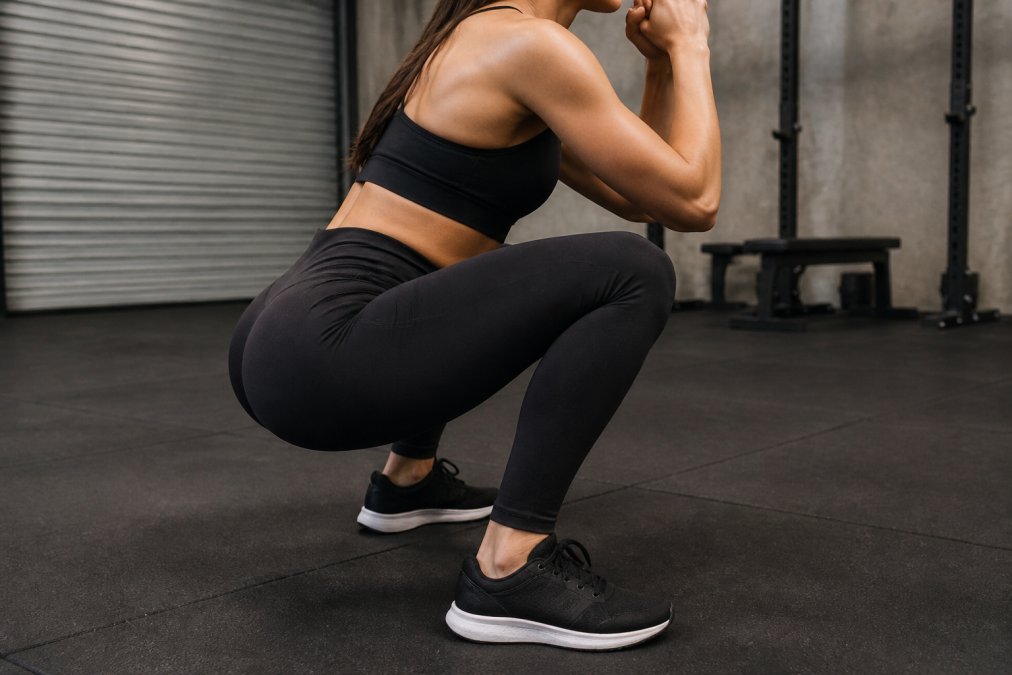
Test 2: The Deep Squat Hold (30 seconds) Perform a full deep squat (knees at 90 degrees) and hold for 30 seconds in bright lighting. Fabric opacity shifts as fibers stretch; many leggings pass quick squats but fail under sustained tension. Check glutes, hamstrings, and back thighs for visible skin tone or shadowing.
Test 3: The Lunge and Hold (20 seconds per leg) Perform a deep lunge and hold for 20 seconds per leg. Lunges create asymmetrical tension that tests opacity under uneven load, critical for unilateral movements in powerlifting and CrossFit.
Lighting Standards Matter
Test under natural daylight near a window (overcast is better than direct sun) or bright gym lighting (500+ lux). Never test in dim household lighting, leggings that appear opaque at home fail under gym conditions.
Request photos or videos of leggings in a deep squat under bright light. Refusal or soft-lighting photos are red flags.
The Pinch and Stretch Test
Grab a section of the leggings at the thigh and pinch the fabric between your thumb and forefinger. Stretch it horizontally as far as it will go without tearing. Look through the stretched fabric. This isolates the fiber behavior under maximum tension without the complexity of body position. If the fabric becomes translucent when stretched this way, it will show during heavy squats. This test takes 10 seconds and reveals fabric quality that marketing claims cannot.
Documentation for Future Reference
Document tests with photos/video. After 20-30 washes, repeat under identical lighting to track fabric degradation and lifespan.
Durable Gym Leggings for Powerlifting: What Sets Them Apart
Durability separates leggings that maintain performance through a full year from those failing within months. Powerlifting creates repeated deep squats, friction, and constant seam tension across 50-100+ sessions.
Seam Construction and Gusset Design
Seams fail first under heavy squats. Durable gym leggings use reinforced seams with higher thread count and double-stitching. The gusset must be seamlessly constructed or reinforced at stress points.
Quality gussets extend from waistband to knee, distributing stress across the panel. Minimal gusset coverage forces stress onto side seams, causing separation after 50-100 sessions.
The stitching pattern also matters. Box-stitch patterns (stitching in a rectangular grid across the gusset) reinforce the entire panel rather than relying on a single seam line. This construction is more expensive to manufacture but dramatically extends the lifespan of the leggings under load.
Fabric Degradation Over Time: The Opacity Timeline
Most durability guides focus on new leggings. What competitors miss entirely is how squat-proof fabric degrades over time, a critical factor that determines whether your investment maintains performance or becomes see-through within months.
Fabric opacity degrades through two mechanisms: fiber breakdown and pilling. When synthetic fibers (polyester, nylon, spandex) are repeatedly stretched and washed, the molecular structure weakens. The fibers become thinner and more translucent. Additionally, friction from movement and washing causes surface fibers to pill, creating small fiber balls that thin the fabric surface and increase light transmission.
High-quality squat-proof leggings maintain opacity through approximately 50-75 washes when cared for properly. This translates to roughly 6-12 months of heavy training (3-4 sessions per week). After this threshold, many athletes notice the leggings becoming slightly more translucent, particularly in high-stress areas like the glutes and inner thighs.
Budget leggings (200-250 GSM, lower spandex content) typically show visible opacity loss by 25-35 washes. Premium leggings (300+ GSM, 20%+ spandex, interlock knit construction) maintain opacity through 75+ washes. The difference is not subtle, it's the difference between leggings that remain gym-appropriate for a full year versus those that require replacement after 2-3 months.
To extend the opacity timeline: wash in cold water with like colors, avoid fabric softener (which coats fibers and accelerates breakdown), air dry rather than machine dry (heat degrades synthetic fibers), and avoid chlorinated pools (chlorine breaks down spandex). Athletes who follow these practices report their premium leggings remaining opaque through 100+ washes.
Pilling Resistance and Long-Term Wear
Pilling occurs when friction causes fiber balls to form on the fabric surface. It's both a durability and aesthetic issue. High-quality synthetic blends resist pilling better than cheap alternatives. The fiber quality, yarn construction, and finishing process all influence pilling resistance.
Interlock knit construction provides superior pilling resistance compared to standard jersey knits. The tightly interlocked fibers create a barrier against friction damage. After 6-12 months of heavy training, quality leggings maintain their appearance while budget alternatives develop visible pilling across the glutes and thighs.
Pilling also affects opacity. As fiber balls form on the surface, they create a textured layer that scatters light differently than smooth fabric. This can make leggings appear slightly more opaque initially, but as pilling worsens and fibers break down, the opposite effect occurs, the fabric becomes thinner and more transparent. This is why pilling resistance directly impacts long-term squat-proof performance.
Fabric finishing processes matter here. Premium manufacturers apply finishing treatments that seal the fiber surface and reduce friction-induced pilling. Budget manufacturers skip this step to reduce costs. The result is visible pilling within 10-15 washes on cheap leggings versus 50+ washes on quality options.
Waistband and Elastic Degradation
The waistband and leg openings use elastic that degrades independently from the main fabric. Spandex in elastic loses elasticity faster than spandex blended into the fabric itself. A legging can maintain opacity and structural integrity while the waistband loses its grip and begins rolling down during squats.
Quality leggings use high-grade elastic with sufficient spandex content (typically 40%+ in the elastic blend) to maintain compression through 100+ washes.
Fit, Sizing, and Anti-Roll Performance
A legging can be opaque and durable but still fail if it doesn't fit properly. Fit determines whether the waistband stays in place during heavy squats or rolls down mid-set.
Best Athletic Gear for CrossFit: Squat-Proof Standards
CrossFit combines heavy lifting with dynamic movement, creating unique demands on apparel. The best athletic gear for CrossFit meets squat-proof standards while also handling box jumps, rope climbs, and rapid transitions between movements.
Moisture-Wicking and Breathability for Heavy Training
Moisture-wicking and breathability are often confused. Moisture-wicking refers to the fabric's ability to pull sweat away from skin. Breathability refers to how quickly air moves through the fabric. Both matter for heavy training.
Feature |
Standard Leggings |
Squat Proof Leggings |
Performance Difference |
|---|---|---|---|
GSM Weight |
200-250 |
280-350 |
Better opacity under tension |
Spandex Content |
10-15% |
15-25% |
Superior stretch recovery |
Gusset Design |
Minimal |
Reinforced |
Reduced seam stress |
Seam Construction |
Single-stitched |
Double-reinforced |
Extended durability |
Waistband |
Standard |
Anti-roll, high-rise |
Stays in place during movement |
Breathability |
Moderate |
High-performance mesh |
Comfortable during intense sessions |
Frequently Asked Questions
What exactly makes leggings squat-proof?
Squat-proof leggings combine three core factors: sufficient fabric weight (typically 250+ GSM), a spandex blend of at least 15-20% that maintains stretch recovery, and a tight interlock knit construction that resists transparency under tension. When you bend forward or perform a deep squat, the fabric stretches. Without adequate GSM weight and spandex content, the fibers thin out and light passes through. Squat-proof fabrics maintain their opacity by using heavier synthetic blends designed specifically for this stress.
How can I test if leggings are squat-proof before buying?
Perform the bend test: squat down fully in the leggings while facing a mirror or window with light behind you. Look for any transparency, especially in the seat and thigh areas. Check the fabric tag for GSM weight and spandex percentage. Hold the fabric up to a light source and stretch it gently—if light passes through easily, opacity will fail under heavy lifting. Request sizing guidance from the brand to ensure proper fit, as loose leggings shift during movement and expose gaps.
What materials work best for durable gym leggings for powerlifting?
Look for nylon or polyester blended with 15-25% spandex. Nylon offers superior durability and resists pilling better than polyester alone. The spandex percentage matters more than the base fiber—higher spandex (20%+) provides better stretch recovery, so leggings maintain their shape after hundreds of squats. Avoid pure cotton or cotton blends; they absorb sweat, lose elasticity quickly, and fail the opacity test during heavy lifting. High-performance lifting leggings use seamless construction with reinforced gussets to prevent seam failure under load.
Why do some expensive leggings become sheer during squats?
Expensive doesn't always mean squat-proof. Many premium brands prioritize aesthetics or lightweight feel over GSM weight and spandex content. When you squat, the fabric stretches significantly—if the GSM is under 200 or spandex is below 15%, the fibers thin and transparency occurs. Some brands also cut leggings with inadequate seat coverage or use lower-quality interlock knits that don't hold up under tension. Always check the technical specs (GSM, spandex %, fabric type) rather than relying on price or brand reputation alone.
0 comments