
Table of Contents
- Why Fast Fashion Gym Wear Fails Under Heavy Training
- Sustainable Activewear Brands: What Certifications Actually Verify
- Ethically Made Workout Clothes: Reading Supply Chain Claims
- Plastic-Free Activewear and Polyester-Free Activewear: What Holds Up
- Durable Alternatives Built for Heavy Training
- Cost Per Wear: The Math That Beats Fast Fashion Prices
- Repair, Resale, and Secondhand: Extending Gear Life
- Choosing Alternatives to Fast Fashion Gym Wear: A Decision Framework
- Frequently Asked Questions
Last Updated: October 12, 2026
Why Fast Fashion Gym Wear Fails Under Heavy Training
Fast fashion gym wear fails under heavy training because it is engineered for a price point, not for load.
The problem is structural. Fast fashion brands sell volume, so they optimize for how a garment looks on a hanger and how cheaply it can be made.
At Mayhem Performance Apparel, we build for that second set of demands. Our gear is designed to endure relentless training rather than survive a season of light use.
Here's what most guides miss: the failure usually isn't dramatic. A waistband rolls. A seam frays. A shirt goes translucent under a barbell. Individually these look minor.
Sustainable Activewear Brands: What Certifications Actually Verify
Certifications verify specific claims, not general goodness. A label that says "sustainable" without a named standard behind it is marketing, and you should treat it that way.
Here's the mapping most brand pages won't give you:
- Fiber and organic content. The USDA National Organic Program (NOP) governs the "organic" label for agricultural fibers like cotton, and the Global Organic Textile Standard (GOTS) covers organic fiber through processing. If a product says "organic cotton" but names neither, the claim is unverified.
- Recycled content. The Global Recycled Standard (GRS) and the Recycled Claim Standard (RCS) are the two third-party standards most often cited for recycled polyester and nylon. GRS adds social and environmental criteria; RCS verifies recycled content only.
- Chemical safety. OEKO-TEX Standard 100 tests finished articles for harmful substances, and bluesign focuses on input chemicals and mill processes. Neither is a labor standard, so don't read one as the other.
- Labor and social criteria. SA8000 and the Fair Trade Certified program are the two most commonly cited third-party social standards in apparel. A brand can hold a chemical certification and still have no labor certification, they are separate audits.
- PFAS-free claims. PFAS (per- and polyfluoroalkyl substances) are a class of chemicals historically used for water and stain repellency in some outerwear and finishes. A "PFAS-free" claim is only meaningful if the brand names the test method or the standard behind it. Several states have moved to restrict PFAS in apparel, so the claim is becoming more common, and more worth scrutinizing.
FTC Green Guides on environmental marketing claims explains why vague environmental claims are legally risky for brands to make, which is a useful filter: if a company won't name a standard, there probably isn't one.
What to look for on a product page:
- A named certification body, not a self-designed badge
- Specific material content by percentage
- A stated supply chain or manufacturing location
- Care instructions that match the fabric claim
- For any chemical claim, the test method or standard behind it
If a brand lists none of these, that's your answer.
Ethically Made Workout Clothes: Reading Supply Chain Claims
Ethically made workout clothes are verifiable through disclosure, not through tone. Words like "conscious" and "responsible" carry no fixed meaning, while a named factory, a material percentage, or a certification number does.
Read for four things, in this order:
- Where the garment was made. A country is a start; a named factory or region is better. Brands that publish a factory list are giving you something to check.
- What it's made of, by percentage. "Recycled polyester blend" without a percentage is not a disclosure. "68% recycled polyester, 27% cotton, 5% spandex" is.
- Whether a third party checked either claim. A certification number or a standard name (GOTS, GRS, SA8000, Fair Trade Certified) is checkable. A house badge is not.
- Whether the price is consistent with the claim. This is the step most shoppers skip, and it's the one that separates real disclosure from marketing.
That fourth point deserves its own framework, because it's where fast fashion wins by default.
Budget tiers, roughly:
- Entry tier (under about $30 per piece): mostly fast fashion and mass-market activewear. Expect limited disclosure, blended synthetics, and short service life under heavy training.
- Mid tier (roughly $30-$70 per piece): where most credible alternatives sit. This is the range where you can realistically find a named certification, a stated fiber percentage, and construction built for repeated washing.
- Premium tier (roughly $70 and up): smaller-batch production, more disclosure, and often repair or resale programs. The premium is partly materials and partly the cost of verification.
None of these tiers is automatically better.
Cost per wear is the tiebreaker. Divide purchase price by the number of wears before replacement. A $25 top worn 20 times costs about $1.25 per wear.
This is where most shoppers stop reading and just buy on price. That's the fast fashion business model working as designed.
Plastic-Free Activewear and Polyester-Free Activewear: What Holds Up
Plastic-free activewear and polyester-free activewear trade some performance for material simplicity, and the trade-off is real. Natural and semi-synthetic fibers breathe well and feel better against skin, but they absorb sweat and dry slower than synthetics.
The honest breakdown:
- Organic cotton breathes and feels soft, but holds moisture and gets heavy
- Bamboo fabric is soft and breathable, though it can lose shape without a blend partner
- Tencel and modal are semi-synthetic fibers with good drape and moisture handling
- Recycled polyester keeps synthetic performance while reducing virgin plastic demand
For heavy training, blends usually beat single-fiber garments. Our Classic Performance Tank uses a 4.2 oz tri-blend of polyester, cotton, and modal, which balances breathability with shape retention through repeated washing.

Durable Alternatives Built for Heavy Training
Durable alternatives built for heavy training share one trait: they're constructed for repeated stress rather than occasional wear. That means reinforced seams, structured waistbands, and fabrics chosen for recovery, not just softness.
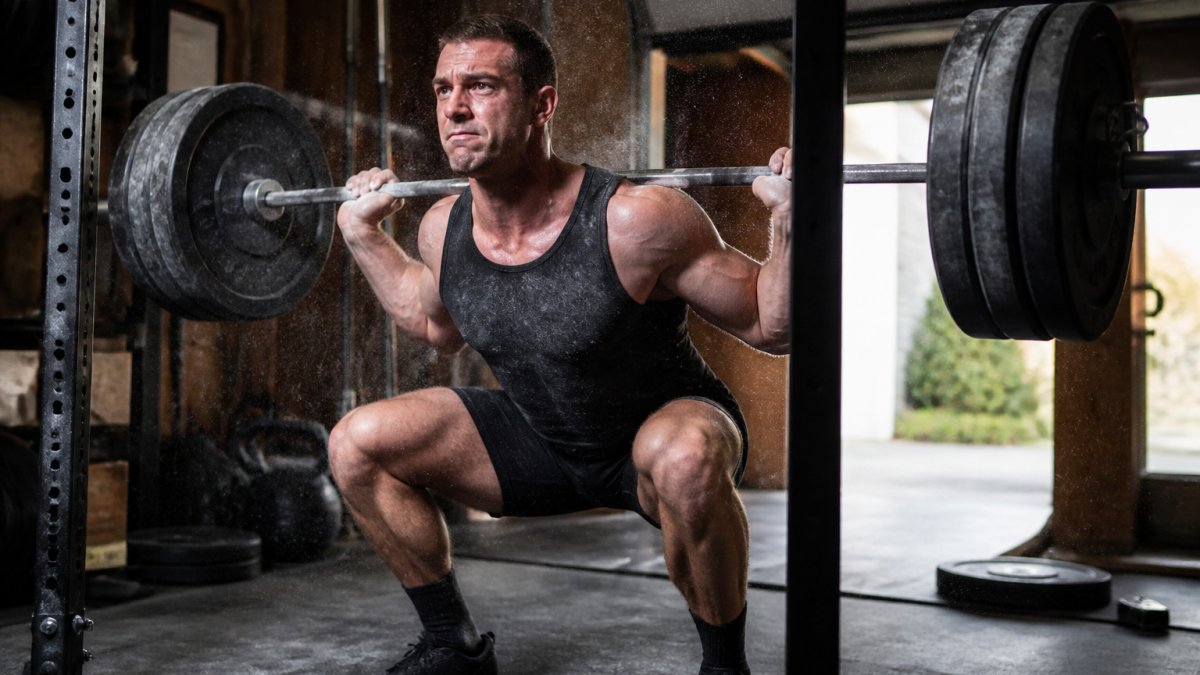
Our Moisture Wick Shorts use a 3.5 oz poly/spandex blend with four-way stretch and an internal drawcord, which matters more than it sounds. A drawcord keeps the waistband locked during squats and deadlifts. Elastic alone won't.

For tops, the Classic Performance T is built with raglan sleeves, so shoulder and chest movement isn't restricted by a set-in seam. Small detail, noticeable under a loaded bar.

For colder sessions or warm-ups, the Moisture Wick Track Pants add ankle zippers and zippered side pockets. For recovery days, the Midweight Fleece Joggers use an 8.25 oz cotton blend with a 3-end fleece construction built to resist everyday wear.
| Garment | Fabric | Built For | Price |
|---|---|---|---|
| Classic Performance T | Lightweight technical fabric | Strength training, cardio | $49.99 |
| Classic Performance Tank | 4.2 oz tri-blend | Weightlifting, conditioning | $44.99 |
| Moisture Wick Shorts | 3.5 oz poly/spandex | Lifting, running, conditioning | $49.99 |
| Moisture Wick Track Pants | 7.8 oz poly/spandex | Training, warm-ups | $74.99 |
| Midweight Fleece Joggers | 8.25 oz cotton blend | Recovery, everyday wear | $59.99 |
Cost Per Wear: The Math That Beats Fast Fashion Prices
Cost per wear is the price of a garment divided by how many times you actually wear it. A cheap item worn twenty times costs more per session than a durable one worn two hundred times.
Run the numbers on your own gear. If a low-cost top costs a fraction of a performance tee but falls apart in three months of hard training, the annual cost is higher, not lower. Durability is the variable that breaks the fast fashion argument, and it's the one most shoppers never calculate.
A simple formula:
Cost per wear = Purchase price ÷ Number of wears before replacement
Track it for one training cycle. Most people find the cheap option loses.
Repair, Resale, and Secondhand: Extending Gear Life
Repair, resale, and secondhand options extend the life of gear that's already in circulation, and they're the cheapest sustainability move available. Fixing a seam or replacing a drawcord costs far less than a new garment.
Practical steps:
- Learn one basic repair: a reinforced stitch on a failing seam
- Wash cold and air dry to slow elastic breakdown
- Resell gear that no longer fits rather than discarding it
- Buy secondhand for low-stress items like warm-up layers
- Retire garments only when the fabric itself fails
Washing matters more than most people think. Heat and dryer cycles degrade elastic and synthetic fibers faster than training does. Cold wash, air dry, and most performance gear lasts noticeably longer.
Choosing Alternatives to Fast Fashion Gym Wear: A Decision Framework
Choosing alternatives to fast fashion gym wear comes down to four questions: what you train, how often, how hot you run, and what you'll actually pay per wear.
Use this order:
- Identify your heaviest use. Squats, deadlifts, and conditioning stress gear differently than yoga or walking.
- Match fabric to climate. Hot gyms need moisture-wicking and quick-drying blends. Cold garages need layers.
- Check construction, not softness. Drawcords, raglan sleeves, and reinforced seams outlast marketing claims.
- Calculate cost per wear. Divide price by expected wears before you decide.
- Verify claims. Named certifications and stated material percentages beat vague sustainability language.
The throughline here is simple: fast fashion gym wear is priced for the first wear, not the hundredth. Gear built for load costs more up front and less over a training year.
Frequently Asked Questions
What is the opposite of fast fashion for gym clothes?
The opposite is durable, repair-friendly activewear made from lower-impact materials and sold by brands that disclose where and how the gear is produced. Instead of replacing $20 leggings every few months, you buy fewer pieces built to survive repeated washing and heavy training. Look for specific fabric weights, construction details like side-seam stitching, and certifications that verify ethical production rather than vague sustainability slogans.
Is polyester-free activewear suitable for intense workouts?
Polyester-free activewear can work for intense training, but the fabric choice matters. Natural and semi-synthetic fibers like organic cotton, modal, and Tencel handle sweat differently than synthetics: they breathe well and resist odor, but they absorb moisture instead of repelling it. Blends that combine these fibers with a small amount of performance yarn often give the best balance of breathability, stretch, and durability for lifting and conditioning.
How can I tell whether a gym-wear brand is ethically made?
Check for third-party certifications, published factory lists, and specific supply chain details rather than generic claims. A brand that names its materials, fabric weights, and manufacturing partners is easier to verify than one that only says 'sustainable.' Certification programs that audit factories for labor and environmental standards give you independent evidence. If a brand cannot answer basic questions about where its clothes are made, treat that as a warning sign.
What materials should I look for in sustainable activewear?
Look for organic cotton, modal, Tencel, and recycled polyester, and check the fabric weight and construction. Heavier knits and side-seam stitching hold up better under repeated training than thin, single-stitch fast fashion pieces. Blends like 80% cotton with 10% polyester and 10% recycled polyester offer softness with structure. The best material is the one matched to your workout type, not the one with the longest list of eco-friendly keywords.
Is it worth paying more for durable gym gear instead of fast fashion?
It often is, once you calculate cost per wear. A $50 performance tee worn three times a week for two years costs about $0.16 per wear, while a $15 fast fashion shirt that loses its shape in three months costs roughly $0.38 per wear. Durable gear also reduces the time and hassle of constant replacements. The key is buying pieces built for your specific training, not just paying more for a label.
Heavy training exposes weak gear fast, and replacing it every few months costs more than buying right once. Mayhem Performance Apparel builds apparel for athletes who train under load, with moisture-managing fabrics, raglan construction for unrestricted movement, and drawcord waistbands that hold through heavy squats. Shop now and get gear that endures as long as you do.
0 comments