
Table of Contents
- Fabric Technology: The Foundation of Durability
- Construction Methods That Withstand Heavy Lifting
- Durability in High-Stress Zones
- Signs of Low Quality Workout Gear
- How to Wash High Performance Gym Clothes
- Activity-Specific Durability Demands
- Sustainability vs. Durability: Finding the Balance
- Frequently Asked Questions
Last Updated: September 21, 2026
Fabric Technology: The Foundation of Durability
What makes high performance gym wear durable starts with the fabric itself. At Mayhem Performance Apparel, we've engineered our gear around materials that withstand repeated stress, intense sweat exposure, and constant movement. The difference between apparel that lasts months and gear that falls apart in weeks comes down to fiber selection and how those fibers are constructed.
High performance gym wear relies on synthetic fibers and blends that resist degradation under the specific demands of heavy lifting and conditioning work. Unlike cotton, which absorbs moisture and loses elasticity over time, performance fabrics maintain their integrity through hundreds of wash cycles and thousands of repetitions under load.
Moisture-Wicking and Breathability
Moisture-wicking technology moves sweat away from your skin to the fabric's outer surface, where it evaporates. This prevents the fabric from becoming waterlogged, which would compromise both comfort and durability. When fabric stays saturated, fibers weaken faster and odor-causing bacteria thrive.
Breathability works hand-in-hand with moisture management. Fabrics engineered for air circulation allow heat to escape, reducing the thermal stress on fibers. Polyester blends with spandex create a matrix that pulls moisture outward while maintaining structural integrity. The Mayhem Performance Moisture Wick Shorts use a lightweight 3.5 oz poly/spandex blend specifically designed to keep you cool and dry through heavy workouts without compromising durability.

Temperature regulation through breathable construction also extends garment life. When fabric temperature stays moderate, the polymer chains in synthetic fibers don't degrade as quickly. Excessive heat accelerates breakdown, which is why poorly ventilated fabrics fail faster even with identical fiber composition.
Synthetic Fibers vs. Natural Fibers
Synthetic fibers outperform natural fibers in durability for high-stress athletic applications. Polyester, nylon, and spandex resist stretching and maintain elasticity far longer than cotton or wool. When you're pulling against fabric during heavy squats or deadlifts, synthetic fibers recover to their original shape repeatedly without permanent deformation.
Natural fibers absorb moisture, which changes their mechanical properties. Cotton swells when wet, then shrinks as it dries, creating microscopic stress fractures in the fiber structure. Over dozens of wash cycles, this expansion and contraction degrades the material. Synthetic fibers remain dimensionally stable regardless of moisture content.
Spandex (elastane) is essential for performance apparel durability. Even small percentages, typically 5-20% of the blend, provide four-way stretch and shape retention. Fabrics without spandex cannot recover from the elongation that occurs during heavy movement, leading to bagging and loss of fit within weeks.
Construction Methods That Withstand Heavy Lifting
Durability isn't just about fabric. How that fabric is assembled determines whether seams hold under load or separate after a few months of intense training.
Reinforced Seams and Flatlock Stitching
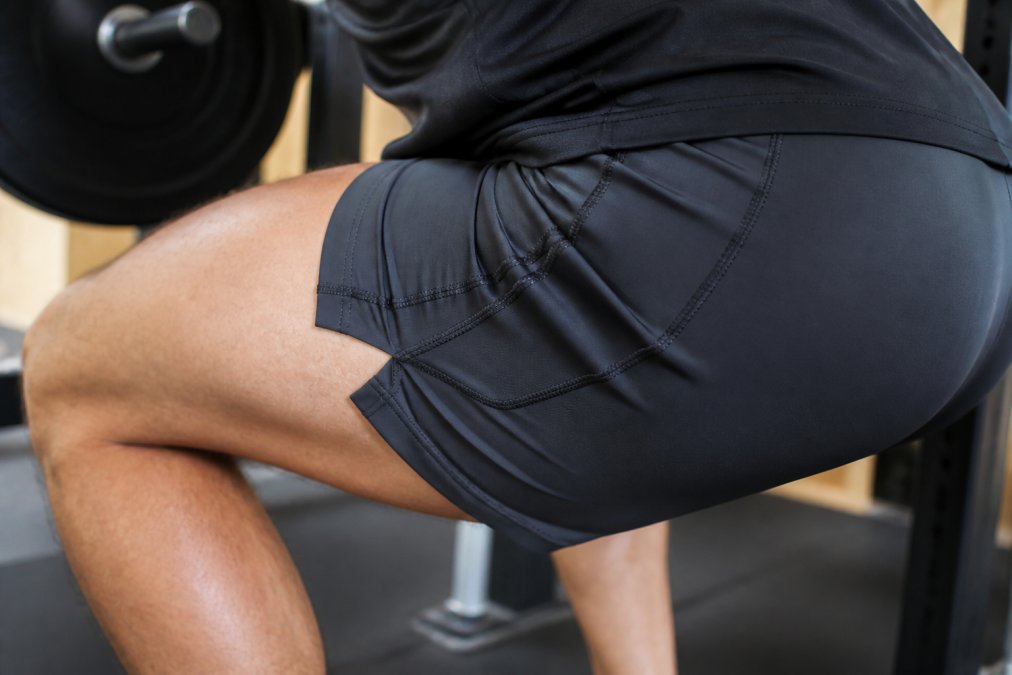
Standard stitching fails under high-stress training because the needle creates puncture points where fibers separate. Reinforced stitching uses double-needle or triple-needle construction, which distributes tension across multiple thread lines. This redundancy means that even if one thread breaks, the seam stays intact.
Flatlock stitching eliminates the raised ridge of traditional seams. Instead of stitches sitting on top of fabric, flatlock threads lock into the fabric itself, creating a smooth, flat surface. This design reduces chafing and, more importantly, distributes stress more evenly across the seam. When you're performing a heavy squat or pull-up, flatlock stitching prevents the concentrated pressure that causes regular seams to fail.
High-stress zones, waistbands, crotch seams, and armholes, require reinforced construction. These areas experience the greatest elongation and stress during training. Apparel that skips reinforcement in these zones will fail first, which is why cheap gym wear typically separates at the crotch or waistband.
Four-Way Stretch and Shape Retention
Four-way stretch means the fabric stretches horizontally and vertically, plus recovers to its original shape. This matters because movement during heavy lifting pulls fabric in multiple directions simultaneously. A squat involves downward movement, lateral hip opening, and forward knee tracking all at once. Fabric that only stretches in one direction bunches and loses fit.
Shape retention depends on the spandex quality and the overall fiber architecture. Lower-grade spandex loses elasticity quickly, after 50-100 washes, the fabric no longer bounces back. Premium spandex maintains recovery through hundreds of cycles. The Mayhem Performance Moisture Wick Track Pants use a lightweight 7.8 oz poly/spandex blend engineered for unrestricted movement and durable stretch recovery.

Elasticity degradation is visible. If your gym shorts feel loose or baggy after a month of training, the spandex is failing. Quality apparel maintains a snug fit through extended use because the fiber structure resists permanent deformation.
Durability in High-Stress Zones
Waistbands, crotch seams, and armholes experience the most tension during training. These zones demand specific construction techniques that standard apparel ignores.
Waistband durability determines whether leggings and shorts stay in place during heavy squats or roll down mid-set. Reinforced waistbands with elastic backing prevent rolling and maintain consistent compression. Without this reinforcement, the waistband stretches out and loses its grip.
Crotch seams require both reinforcement and adequate gusset depth. A shallow gusset creates tension that causes tearing. Deeper gussets distribute movement across a larger fabric area, reducing stress concentration. The best performance apparel includes a gusseted crotch specifically engineered for the range of motion in heavy lifting.
Armhole construction matters for upper-body focused training. Tight armholes restrict movement and create pressure points where fabric fails. Properly engineered armholes provide enough room for full shoulder mobility while maintaining fit and durability through repeated overhead pressing and pulling movements.
Signs of Low Quality Workout Gear
Low quality apparel fails in predictable ways. Recognizing these failure patterns helps you identify durable gear before purchase.
Seams that fray or separate after a few weeks indicate inadequate stitching. Quality construction uses tight, even stitching with minimal gaps between needle penetrations. Loose or irregular stitching is a red flag.
Pilling on the fabric surface suggests low-quality fibers or inadequate anti-pilling treatment. Pills form when short fibers break free and ball up on the surface. Premium apparel uses tightly wound fibers and sometimes applies an anti-pilling finish that prevents this.
Loss of elasticity is obvious.
How to Wash High Performance Gym Clothes
Proper washing extends durability significantly. High performance gym wear requires different care than regular cotton clothing.
Activity-Specific Durability Demands
Different training styles place different stresses on apparel. Understanding these demands helps you choose gear engineered for your specific needs.
Sustainability vs. Durability: Finding the Balance
The most sustainable apparel is the gear you wear for years. Durability and sustainability align when you buy quality pieces that last, rather than cheap items you replace frequently.
Durability Factor |
What It Means |
How It Affects Longevity |
|---|---|---|
Synthetic fiber blend |
Polyester/spandex resists moisture absorption |
Maintains shape and elasticity through hundreds of wash cycles |
Reinforced seams |
Double or triple-needle stitching distributes tension |
Prevents separation at high-stress zones |
Four-way stretch |
Fabric stretches and recovers in all directions |
Maintains fit through repeated heavy movement |
Flatlock stitching |
Threads lock into fabric instead of sitting on surface |
Reduces chafing and distributes stress evenly |
Moisture-wicking |
Pulls sweat away from fabric surface |
Prevents saturation that weakens fibers |
Anti-pilling treatment |
Prevents short fibers from breaking free |
Maintains appearance and fabric integrity |
Washing Method |
Impact on Durability |
Best Practice |
|---|---|---|
Water temperature |
Hot water degrades spandex faster |
Wash in cold water always |
Detergent type |
Bleach and softeners damage synthetic fibers |
Use gentle detergent without additives |
Drying method |
Heat permanently damages spandex |
Air-dry instead of using the dryer |
Garment orientation |
Inside-out reduces surface abrasion |
Turn inside out before washing |
Wash cycle intensity |
Rough cycles create mechanical stress |
Use gentle or delicate cycle |
Frequently Asked Questions
What fabric is most durable for gym wear?
Polyester blends with spandex (elastane) deliver superior durability for high performance gym wear. Polyester resists abrasion, moisture degradation, and pilling better than cotton, while spandex (typically 5-20% of the blend) provides four-way stretch and shape retention. A 3.5 oz to 7.8 oz poly/spandex blend balances breathability with tensile strength. High-performance fabrics engineered for heavy lifting use tighter weaves and higher fabric density to withstand repeated stress and frequent washing without losing integrity.
How can you tell if workout clothes are high quality?
Inspect reinforced seaming, especially flatlock stitching in high-stress zones like waistbands and armholes. High quality gym wear shows double-needle stitching on seams, secure zippered pockets, and tagless construction. Feel the fabric weight—lightweight performance blends (3.5-7.8 oz) should feel dense and structured, not thin or flimsy. Check for anti-pilling treatment and examine how the fabric recovers after stretching. Moisture-wicking properties should dry visibly faster than cotton. Hems should be reinforced and lie flat without curling after repeated wear and washing.
Does high-performance apparel require special care to maintain durability?
Yes. Wash high performance gym clothes in cold water with like colors to prevent dye bleeding and fabric degradation. Use a gentle detergent and avoid fabric softeners, which break down moisture-wicking coatings. Turn garments inside out before washing to reduce abrasion on the exterior. Air-dry or tumble-dry on low heat—high heat accelerates elastane breakdown and reduces stretch recovery. Wash after every use if you sweat heavily, as salt and moisture left on fabric accelerate fiber degradation. Proper care extends the life of high-stress areas and preserves shape retention through hundreds of training sessions.
Why do gym clothes lose their shape over time?
Poor elastane recovery and repeated stretching without proper fabric support cause shape loss. Low-quality activewear uses insufficient spandex or lower-grade elastane that fatigues quickly under heavy lifting stress. Improper washing—especially hot water and high-heat drying—degrades elastane fibers permanently. High-stress zones like waistbands and leg openings lose shape fastest when seams aren't reinforced with flatlock stitching or double-needle construction. High performance gym wear uses higher spandex percentages (8-20%) and quality elastane engineered for thousands of stretch cycles, maintaining shape retention even after intense, repeated training sessions.
0 comments