
Table of Contents
- Best Athletic Gear for CrossFit: Our Top Picks at a Glance
- How We Evaluated Gear for High-Intensity Training
- What Makes a Shoe Work for CrossFit? Best Crossfit Shoes for Lifting and Cardio
- Performance Apparel: The Foundation of Your CrossFit Kit
- Essential Crossfit Gear for Beginners: Where to Start
- How to Choose Crossfit Accessories That Add Value
- Gear Maintenance and Longevity: Making Your Investment Last
- Final Verdict: Build Your Kit for the Long Haul
- Frequently Asked Questions
Last Updated: September 6, 2026
Choosing the best athletic gear for CrossFit is about engineering, not brand loyalty. The sport demands one outfit handle heavy barbell work, high-intensity interval training, and metabolic conditioning, often within the same hour. Most gear fails because it is designed for one modality.
Below, we show how to evaluate construction, fabric, and fit so every dollar goes toward durability and performance. We also break down essential crossfit gear for beginners, identify the best crossfit shoes for lifting and cardio, and explain how to choose crossfit accessories that add value rather than clutter.
Best Athletic Gear for CrossFit: Our Top Picks at a Glance
Quick Picks:
- Best Overall Apparel: Mayhem Performance Apparel, durable, moisture-wicking gear built for repeated high-intensity sessions
- Best for Heavy Lifting: Lift-specific shoes with rigid soles for stability under load
- Best for Conditioning: Lightweight, breathable tops and speed ropes for metabolic work
The Mayhem Performance Moisture Wick Short at $49.99 delivers a lightweight 3.5 oz poly/spandex blend with four-way stretch. The 7-inch inseam provides coverage without restricting range of motion during squats or plyometrics.

How We Evaluated Gear for High-Intensity Training
We evaluated each item against five criteria: durability under repeated stress, moisture-wicking capability, range of motion, versatility across modalities, and long-term value. Gear that excelled in one area but failed in another was eliminated.
Durability matters most because barbell knurling tears fabric, rope climbs shred knees, and repeated washing breaks down cheap elastic. We prioritized abrasion-resistant materials and reinforced stitching in high-friction zones like shoulders and thighs.
Breathability and moisture-wicking performance are non-negotiable for high-intensity interval training. Fabric that traps sweat becomes heavy, chafes, and breeds odor (acefitness.org). The American Council on Exercise guidelines on workout apparel emphasize that proper moisture management keeps body temperature regulated and prevents skin irritation during prolonged sessions.
What Makes a Shoe Work for CrossFit? Best Crossfit Shoes for Lifting and Cardio
The best crossfit shoes for lifting and cardio solve a fundamental conflict: stability versus agility. Heavy squats and deadlifts demand a rigid, flat sole with zero compression. Running and box jumps require cushioning and flexibility. No single shoe perfects both, so prioritize based on your weakness.
For athletes who lift first, a shoe with a raised heel and firm midsole improves squat depth and bar path. For those who struggle with conditioning, a lighter shoe with responsive cushioning protects joints during repeated jumps. Many athletes own two pairs and switch based on the workout.
The right lifting shoe provides joint support through a secure heel lock and a wide toe box. The right cardio shoe offers enough cushioning to absorb landing impact without sacrificing ground feel.
Performance Apparel: The Foundation of Your CrossFit Kit
Poorly constructed shirts restrict shoulder movement during overhead presses. Weak waistbands roll down during squats. Cotton traps sweat and becomes a breeding ground for bacteria.
The Mayhem Performance Classic Performance T at $49.99 is built to perform through every workout. Crafted from high-performance technical fabric, this premium performance tee delivers lightweight comfort, breathability, and durability. The athletic fit allows unrestricted movement, while moisture-managing fabric keeps you dry.

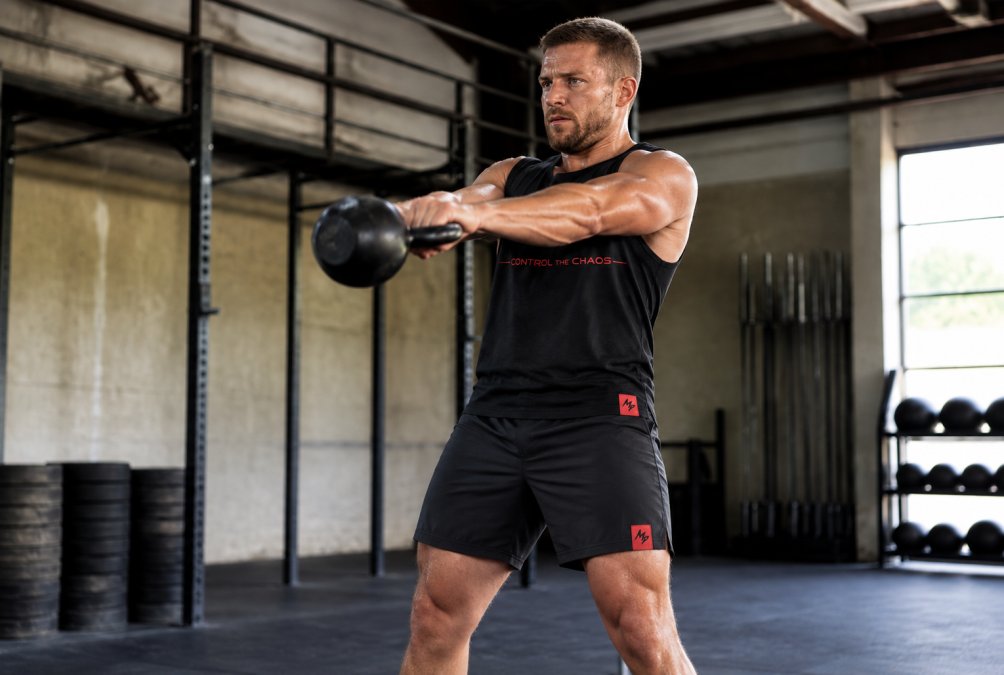
For the bottom half, the Moisture Wick Short at $49.99 uses a poly/spandex blend that moves with you. The four-way stretch accommodates deep squats and broad jumps without binding. A common mistake is buying shorts with a 5-inch inseam that rides up during hip extension; the 7-inch inseam here provides coverage without sacrificing mobility.
Essential Crossfit Gear for Beginners: Where to Start
Starting CrossFit does not require a complete gear overhaul. Most beginners already own acceptable shoes and basic athletic wear. The essential crossfit gear for beginners focuses on closing the most critical gaps without overspending. Build your kit in three phases based on the movements you will encounter in your first 90 days.
Phase 1: Your First Month, The Non-Negotiables
Before your first class, you need three things: moisture-wicking apparel, a speed rope, and hand protection. The Mayhem Performance Classic Performance Tank at $44.99 is constructed from a lightweight 4.2 oz tri-blend fabric featuring polyester. It is built for relentless training, engineered for athletes who demand lightweight comfort without compromising durability.

For the speed rope, do not buy the cheapest option at a big-box retailer. Budget ropes kink, tangle, and develop inconsistent spin patterns that make learning double-unders frustrating. A ball-bearing speed rope in the $15-$30 range with adjustable cable length is the sweet spot for beginners. Look for a thin steel cable (2.5-3 mm) rather than a plastic-coated cable; the thinner cable spins faster and is easier to control.
Hand grips are the most overlooked beginner essential. Rope climbs and high-rep pull-ups will tear soft palms within the first two weeks. Leather grips with a dowel or finger holes provide the best protection, but synthetic options are more breathable and easier to break in. Start with a basic leather pair in the $15-$25 range.
Phase 2: Months 2-3, Footwear Decisions
Your second month is when you will discover whether your current shoes work for lifting. If you are using running shoes with compressible foam soles, you will feel instability under moderate loads. This is the point where most beginners invest in their first pair of lift-specific shoes. A stiff-soled shoe with a raised heel (0.5-0.75 inch) and a secure heel lock will improve squat mechanics immediately. A mid-range option with a solid heel and durable upper will serve you well for 12-18 months.
Phase 3: Months 3+, Support Accessories
Knee sleeves, wrist wraps, and weightlifting belts belong in this phase, not before. Your joints and connective tissues need time to adapt to the loading patterns of functional fitness. Adding support too early can mask developing weaknesses. Wait until you are consistently working at 70-80% of your one-rep max before adding these tools.
Essential Gear |
Recommended Starting Point |
Why It Matters |
Approximate Investment |
|---|---|---|---|
Performance Top |
Moisture-wicking tank or tee |
Prevents chafing and overheating |
$49.99 - $54.99 |
Athletic Shorts |
7-inch inseam, four-way stretch |
Full range of motion for squats |
$49.99 |
Speed Rope |
Ball-bearing design, 2.5-3 mm cable |
Smooth rotation for double-unders |
$15 - $30 |
Hand Grips |
Leather with dowel or finger holes |
Protects palms from bar tears |
$15 - $25 |
Footwear (Month 2+) |
Stiff-soled lifting shoe |
Stability under heavy loads |
$100 - $200 |
Knee Sleeves (Month 3+) |
5mm neoprene, snug fit |
Joint warmth and stability |
$30 - $60 |
Most brands offer size charts based on height and weight, but these are rough guides. For apparel, a snug but not restrictive fit is ideal, loose clothing catches on barbells and equipment. For hand grips, they should be tight enough that they do not rotate on your palm but not so tight that they cut off circulation. When in doubt, size up for grips and size down for knee sleeves, as neoprene stretches with body heat and use.
How to Choose Crossfit Accessories That Add Value
CrossFit accessories fall into two categories: injury prevention and performance enhancement. The mistake most athletes make is buying accessories before they need them. If your wrists do not hurt during front squats, you do not need wraps. If your palms are not tearing, you do not need grips. Purchase accessories reactively, not proactively.
Injury Prevention Accessories: The Biomechanical Case
Knee sleeves are not braces, they do not prevent joint dislocation or ligament tears. Instead, they provide three measurable benefits: compression, warmth, and proprioceptive feedback. Compression increases blood flow, warmth keeps the joint at an optimal operating temperature, and proprioceptive feedback helps maintain awareness of knee position during squats and lunges.
When choosing knee sleeves, thickness matters. A 5mm neoprene sleeve is the standard for general training. A 7mm sleeve provides more warmth and compression but restricts range of motion slightly. A 3mm sleeve is better for athletes who primarily do conditioning work. The trade-off is straightforward: thicker sleeves provide more support but limit mobility and breathability.
During overhead pressing, the wrist joint is in a position of relative instability. Wrist wraps provide external support that allows you to maintain a neutral wrist position under heavy loads. Flexible wraps provide light support for most pressing movements; stiff wraps with a thumb loop are best reserved for maximal lifts like heavy jerks or push presses. Using stiff wraps for light work will weaken your wrist stabilizers over time.
Performance Enhancement Accessories: When They Actually Help
Weightlifting belts are the exception to the reactive purchasing rule. A quality leather belt supports the core during maximal lifts via intra-abdominal pressure: the belt gives your abdominal muscles something to push against, increasing core stability and protecting the lumbar spine. For beginners, however, the belt can mask weak core development. Focus on building midline stability first, then add a belt when your lifts approach heavy percentages of your max.
Resistance bands add versatility to any home setup for warm-ups, mobility work, and accessory movements. A single set of three bands covers most needs. Their unique value is accommodating resistance, the band adds tension as the movement reaches its strongest point, helping develop explosive power.
The Maintenance Angle Most Guides Miss
Accessories require maintenance to remain effective. Knee sleeves should be hand-washed in cold water and air-dried after every 3-4 uses. Leather belts need periodic conditioning with leather balm. Wrist wraps should be washed in a mesh bag on a gentle cycle. Hand grips, particularly leather ones, need to be broken in gradually, wear them for short sessions first to mold them to your hand shape.
Proper maintenance extends the life of these products to 2-3 years, changing the cost-benefit calculation significantly. A $50 pair of knee sleeves that lasts 6 months costs $100 per year; the same sleeves maintained properly last 2 years, bringing the annual cost to $25.
:::warning Do not share hand grips or knee sleeves with other athletes. Skin infections, including staph and fungal infections, spread easily through shared gear in gym environments. If you train in a box that has communal accessories, treat them as contaminated and clean them before and after use.
Cheap accessories often use lower-grade neoprene, thinner leather, or inferior stitching that fails under load. A quality leather belt from a reputable manufacturer will last a decade with proper care; a budget belt may last 6 months before the stitching pulls or the leather stretches. The same logic applies to knee sleeves: the difference between a $20 pair and a $50 pair is often the density of the neoprene and the quality of the stitching.
Gear Maintenance and Longevity: Making Your Investment Last
The most common maintenance mistake is using fabric softener on performance materials. Fabric softener coats the fibers, clogging moisture-wicking channels and reducing breathability over time.
Wash performance apparel in cold water and hang it to dry. Heat from dryers breaks down elastic and spandex, causing premature sagging and loss of compression. The Federal Trade Commission guidance on clothing care labels recommends following manufacturer instructions, but cold water and air drying universally extend the life of technical fabrics. For more information on fabric care, check out this article from our Journal: Why Do Gym Clothes Smell? Causes and Fixes – Mayhem Performance Apparel.
If you train daily, rotate between shoe pairs. This allows the midsole foam to decompress between sessions, maintaining its shock-absorbing properties. A single pair worn daily will break down in months; rotated pairs last years.
Final Verdict: Build Your Kit for the Long Haul
The best athletic gear for CrossFit is not the most expensive or the most fashionable. It is the gear that survives relentless training and keeps you performing at your peak. Start with a moisture-wicking top and short, add a quality speed rope, and purchase support accessories only when your training demands them.
For athletes who refuse to compromise on durability, Mayhem Performance Apparel builds apparel specifically for this type of stress. The Heavyweight Oversized T at $59.99 uses 7.5 oz 100% cotton with a reinforced double-needle stitched collar. The Moisture Wick Track Pant at $74.99 adds secure zippered pockets and ankle zippers for easy transitions between gym and everyday life.
That approach keeps you training consistently, which is the only metric that matters. Shop the full Mayhem Performance Apparel collection and get gear engineered for repetition.
Frequently Asked Questions
What is the best activewear for CrossFit?
The best activewear for CrossFit balances durability, breathability, and unrestricted movement. You need moisture-wicking fabrics that manage sweat during high-intensity interval training but also withstand the abrasion of barbells and ropes. Look for performance blends like polyester and spandex in shorts and shirts. This combination offers a four-way stretch for movements like squats and cleans while resisting the wear and tear of daily training.
What gear do I actually need to start CrossFit?
For essential crossfit gear for beginners, focus on the non-negotiables: a pair of versatile training shoes and moisture-wicking apparel. You do not need every accessory on day one. Start with a quality pair of shorts, a performance t-shirt, and shoes that handle both lifting and cardio. As you progress, add gear like a jump rope, hand grips, and knee sleeves based on your specific weaknesses.
How do I choose the right shoes for CrossFit?
The best crossfit shoes for lifting and cardio offer a firm, stable heel for weightlifting and enough cushioning for box jumps and running. A wide toe box allows your feet to spread for balance during squats. Avoid overly cushioned running shoes, as they compress under heavy loads. Look for a shoe with a moderate drop and a durable outsole that provides grip for rope climbs.
How should I care for my CrossFit gear to make it last?
Proper care extends the life of your gear. Wash performance apparel in cold water and hang it to dry to preserve the elasticity of the poly-spandex blend. Avoid fabric softeners, which break down moisture-wicking technology. For shoes, remove them from your gym bag to air out after sessions. This routine prevents odor and maintains the structural integrity of the materials.
0 comments