
Table of Contents
- Why Breathable Fabrics Matter for High-Intensity Training
- Synthetic vs. Natural Fibers: Performance Trade-offs
- Moisture-Wicking and Sweat Management
- Temperature Regulation and Airflow During HIIT
- Why Do Gym Clothes Smell and How to Prevent It
- How to Care for Performance Gym Apparel
- Durability and Longevity Under Relentless Training
- Frequently Asked Questions
Last Updated: September 25, 2026
Why Breathable Fabrics Matter for High-Intensity Training
When you're pushing through a brutal conditioning session or grinding heavy reps, your body generates serious heat. The difference between gear that manages that moisture and gear that doesn't is the difference between staying focused and becoming a distraction to yourself. Breathable fabrics for high intensity training aren't just a comfort feature, they're a performance feature.
The right fabric keeps sweat from pooling against your skin, maintains airflow to your body, and dries fast enough that you're not carrying extra weight through your next set. This matters because when moisture builds up, your core temperature rises, your grip fails faster, and your mental edge dulls. You're no longer training at your peak, you're fighting your own gear.
The science here is straightforward: synthetic fibers and performance blends pull moisture away from skin through capillary action, while natural fibers absorb it. That distinction determines whether your training clothes work with your physiology or against it. Over the next sections, we'll break down which fabrics actually deliver, how they manage heat and sweat, and how to keep them performing through months of relentless training.
Synthetic vs. Natural Fibers: Performance Trade-offs
This is where most conversations about gym apparel go wrong. People treat synthetic and natural fibers as a binary choice, pick one camp and stay there. The reality is more nuanced. Each has specific strengths under specific conditions.
Polyester and Nylon: Speed and Durability
Polyester is the workhorse of performance apparel. It's hydrophobic, meaning water doesn't cling to the fiber itself. Instead, moisture moves through the fabric's structure via capillary action, pulling sweat away from your skin and toward the outer surface where it evaporates faster. In high-intensity training, this translates to a drier feel and better thermoregulation.
Nylon offers similar moisture-wicking properties but with one key advantage: tensile strength. It's more resistant to the kind of repeated stress that comes from heavy lifting, constant friction, and aggressive movement patterns. For athletes training hard daily, nylon-blended fabrics tend to outlast pure polyester when subjected to the same intensity.
Our Moisture Wick Shorts use a lightweight 3.5 oz poly/spandex blend specifically engineered for the demands of strength training. The polyester handles moisture-wicking, while the spandex provides the four-way stretch needed for unrestricted movement through heavy lifts and conditioning work.

Merino Wool, Organic Cotton, and Plant-Based Alternatives
Merino wool is the natural fiber that actually performs in high-intensity settings. Unlike standard wool, merino has a fine fiber diameter that feels soft against skin rather than scratchy. More importantly, merino is hygroscopic, it absorbs moisture into the fiber itself, which keeps your skin drier than you'd expect. The fiber also has natural antimicrobial properties, meaning your gear resists odor development longer between washes.
The catch: merino takes longer to dry than synthetics. In a HIIT session where you're sweating heavily and continuously, that absorbed moisture stays in the fabric longer. For sustained high-intensity work, merino performs better than standard cotton but doesn't match synthetic moisture-wicking speed.
Organic cotton breathes exceptionally well and feels soft, but it absorbs moisture like a sponge and dries slowly. In high-intensity training, cotton becomes heavy and clingy. It's excellent for low-intensity wear or outdoor training in mild conditions, but it's a poor choice for the kind of relentless sweat output that comes from heavy lifting or conditioning circuits.
Plant-based alternatives like lyocell and bamboo fiber offer a middle ground. They're more breathable than cotton and dry faster, with less environmental impact than synthetics. Lyocell in particular has decent moisture-wicking properties and a smooth hand feel. However, they don't match polyester's speed or nylon's durability under extreme stress.
The practical decision: for serious high-intensity training, synthetic-dominant blends win on performance. If environmental impact is a primary concern, merino wool is the best natural alternative, though you'll accept slower drying times.
Moisture-Wicking and Sweat Management
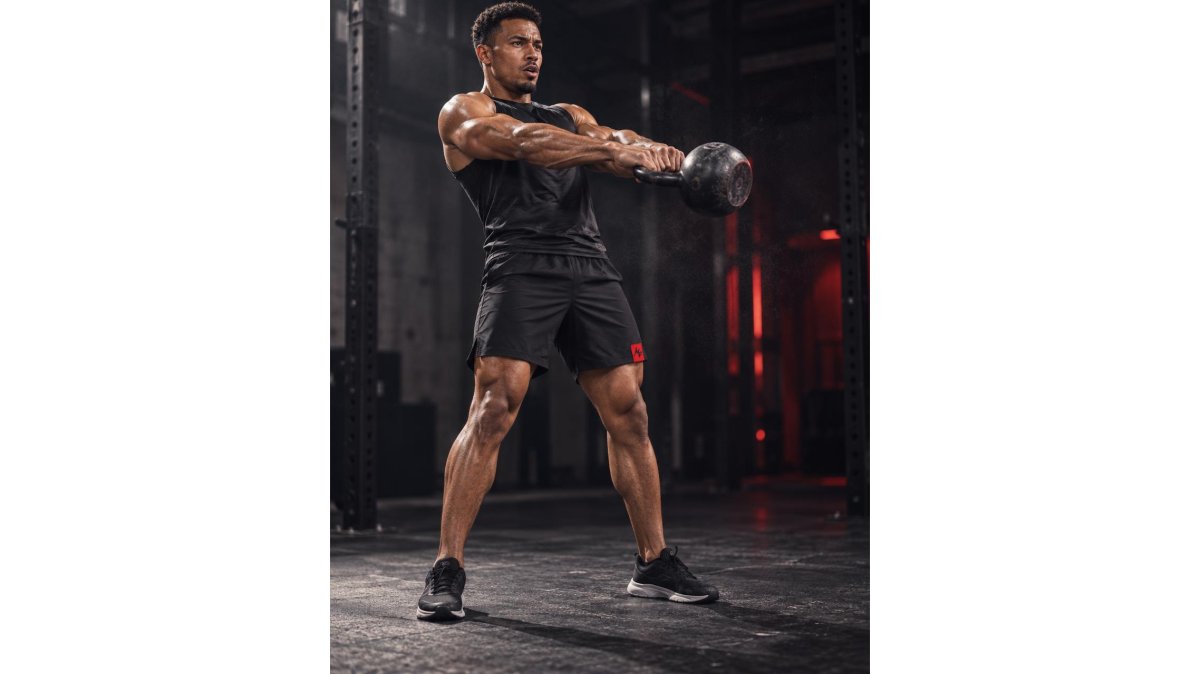
Moisture-wicking isn't magic, it's physics. The goal is to move sweat from your skin to the fabric surface where it can evaporate, rather than letting it pool against your body. This process depends on three factors: fabric structure, fiber type, and the difference in moisture between your skin and the air.
Polyester-based fabrics excel here because the fibers themselves don't absorb water. Instead, the weave pattern creates capillaries, tiny channels that pull moisture through the fabric via capillary action. The moisture spreads across a larger surface area, accelerating evaporation. In a high-intensity session, this means your core temperature stays lower and your body doesn't have to work as hard to cool itself.
The evaporation rate matters more than you'd think. Fabric weight, weave tightness, and fiber blend all affect how quickly moisture moves through and off the garment. A lightweight poly blend (like the 3.5 oz construction in our Moisture Wick Shorts) dries significantly faster than heavier fabrics because there's less material for moisture to travel through. During intense training, every second of faster drying means less weight pulling on your body and less cooling burden on your physiology.
Temperature Regulation and Airflow During HIIT
High-intensity interval training generates heat faster than steady-state cardio. Your body is working at maximum capacity for short bursts, which means sweat production spikes quickly. The fabric has to manage that heat dissipation in real time, not gradually.
Airflow through the fabric is critical here. A tightly woven fabric provides durability but restricts air circulation. A looser weave improves airflow but sacrifices some structural integrity. Performance apparel for HIIT needs to balance both, tight enough to hold up under stress, loose enough to let air move through.
The best fabrics for temperature regulation in high-intensity work use a combination approach: a moisture-wicking layer closest to skin that pulls sweat away, and a more open weave on the outer surface that allows evaporative cooling. This is why performance blends (poly/spandex, poly/nylon combinations) often outperform single-fiber fabrics. The blend optimizes for multiple functions simultaneously.
Fiber diameter also affects thermoregulation. Finer fibers create a smoother fabric surface with less friction against skin, which reduces heat buildup from friction itself. Thicker fibers feel more substantial but generate more friction-based heat. For athletes training in warm conditions or under heavy metabolic load, finer fiber diameter makes a measurable difference in comfort and core temperature management.
Why Do Gym Clothes Smell and How to Prevent It
This is the question that separates people who understand fabric science from people who just buy gear and hope. Gym clothes smell because bacteria colonize the fabric and break down sweat compounds into volatile organic compounds, the odor you notice. The smell isn't the sweat itself; it's bacterial metabolic byproducts.
Synthetic fabrics are hydrophobic, which means bacteria struggle to establish colonies on the fiber surface itself. However, bacteria thrive in the moisture trapped within the fabric structure. If moisture stays in the garment too long, either because the fabric dries slowly or because you don't wash it promptly, bacterial colonies have time to develop.
Natural fibers like cotton and merino absorb moisture into the fiber, creating an ideal environment for bacterial growth. Merino has natural antimicrobial properties that slow this process, but even merino will develop odor if left damp for extended periods.
The practical approach: wash gym apparel after every session, and don't let damp gear sit in a gym bag. If you're training twice daily and can't wash between sessions, have backup gear. The bacteria don't care about your schedule, they'll colonize damp fabric whether you're ready for laundry day or not.
When you do wash, use cold water and avoid fabric softeners. Fabric softeners coat the fibers and reduce moisture-wicking ability, which ironically makes the smell problem worse by trapping moisture longer.
How to Care for Performance Gym Apparel
The way you wash your gear determines how long it actually performs. Most athletes treat gym apparel like regular clothes and wonder why it fails faster than expected.
Durability and Longevity Under Relentless Training
Here's what separates cheap gym apparel from gear built to last: fiber quality, seam construction, and elastic integrity.
Frequently Asked Questions
What is the most breathable fabric for high-intensity exercise?
Polyester and nylon blends top the list for breathability during high-intensity training. These synthetic fibers excel at moisture-wicking, pulling sweat away from your skin and allowing rapid evaporation. Merino wool also performs exceptionally well for breathability and temperature regulation, though it's less common in intense strength training apparel. The key is fiber density and weave structure—looser weaves promote airflow, which is critical when you're generating serious heat during HIIT or heavy lifting.
Why do gym clothes smell even after washing, and how do I prevent odor?
Odor develops when sweat and bacteria accumulate in synthetic fibers, especially polyester. Bacteria thrive in the damp environment created by moisture absorption. To prevent smell: rinse gear immediately after training, avoid leaving damp clothes in a bag, wash in cold water with detergent, and air-dry when possible. Avoid fabric softener, which traps bacteria in the fibers. Proper care is non-negotiable for longevity.
How should I care for performance gym apparel to make it last?
Turn gear inside-out before washing to protect the outer surface. Use cold water and avoid bleach, which degrades synthetic fibers. Wash with other performance wear—avoid mixing with regular clothing that sheds lint. Skip the dryer; heat damages elasticity and moisture-wicking properties. Air-dry flat or hang-dry instead. Wash after every use if you train intensely, as bacteria and salt buildup accelerate degradation. Quality fabrics like those used in high-performance blends resist pilling and fading when handled correctly, extending the lifespan significantly.
What's the difference between natural and synthetic fabrics for breathable workout clothes?
Synthetic fibers like polyester and nylon excel at moisture-wicking and quick-drying, making them superior for high-intensity training where sweat volume is high. Natural fibers like organic cotton and merino wool offer breathability and temperature regulation but absorb moisture rather than wick it, leaving you feeling heavy and damp during intense workouts. Synthetic blends (polyester-spandex, poly-cotton-modal combos) combine the best traits: moisture management, durability, and comfort. For relentless training sessions, synthetics win; for moderate activity in mild conditions, natural fibers work adequately.
0 comments