
Table of Contents
- Compression Shorts vs Loose Shorts: What the Difference Means Under Load
- Benefits of Compression Shorts for Weightlifting
- Why Loose Shorts Still Have a Place in Your Gym Bag
- Compression Shorts Under Gym Shorts: A Hybrid Approach
- How to Choose Gym Shorts for Powerlifting
- The Real Performance Difference: Squat, Deadlift, and Snatch Mechanics
- Durability and Long-Term Care for Training Gear
- Frequently Asked Questions
Last Updated: September 22, 2026
Compression Shorts vs Loose Shorts: What the Difference Means Under Load
When deciding between compression shorts vs loose shorts, it isn't just about comfort. It's about what happens to your muscles when you're under load.
Compression shorts reduce muscle oscillation. Loose shorts allow freedom of movement. Both have genuine advantages. The question isn't which is universally better. It's which fits your lifting goals and body.
This guide breaks down the biomechanics, the real-world trade-offs, and how to choose based on your specific lifts.
Benefits of Compression Shorts for Weightlifting
Compression shorts deliver measurable support during heavy lifting. They're engineered to stabilize your muscles and reduce unwanted movement.
Muscle Support and Stability During Heavy Lifts
Compression works by applying consistent pressure to your muscles. This pressure provides proprioceptive feedback, your body's sense of where it is in space. During a heavy squat or deadlift, that feedback matters.
The compression fit keeps your muscles tight against your body. It reduces the vibration and oscillation that happens naturally when you move under load. Your legs stay more compact. Your core feels more connected to your lower body.
This is especially valuable during compound movements. A squat requires your quads, glutes, and hamstrings to work in perfect coordination. Compression keeps everything locked in place. Your body doesn't waste energy on stabilizing individual muscle groups. It focuses on moving the weight.
Reducing Muscle Oscillation and Vibration
Muscle oscillation is the natural bouncing and vibration that occurs when muscle fibers contract and relax. During heavy lifting, this oscillation increases. Your muscles shake. They vibrate. This isn't just uncomfortable, it's inefficient.
Compression shorts dampen this oscillation. The tight fabric acts like a spring. It absorbs some of that vibration energy. Your muscles don't waste effort fighting their own movement.
Reducing muscle vibration improves force transfer. When your muscles aren't oscillating, more of your effort goes directly into moving the weight. Less energy is lost to internal movement.
This matters most during explosive lifts. A snatch or clean and jerk demands rapid muscle contraction. Compression shorts keep that contraction focused. They prevent the scattered, inefficient muscle activation that happens without support.
Chafing Prevention and Friction Reduction
Heavy lifting creates friction. Your legs rub against each other. Your thighs rub against the inside of loose shorts. Over weeks of training, this friction becomes real pain.
Compression shorts fit snugly. They eliminate the gap where chafing happens. The fabric sits directly against your skin. There's no movement. No rubbing. No irritation.
This matters for consistency. A lifter dealing with chafing avoids certain movements. They change their stance to reduce friction. These small adjustments compound into form breakdown and reduced training volume.
Compression shorts solve this at the source. You train the same way every session. Your form stays consistent. Your training volume doesn't drop because of preventable discomfort.
Why Loose Shorts Still Have a Place in Your Gym Bag
Loose shorts aren't inferior. They're different. And for specific situations, they're the better choice.
Range of Motion and Movement Freedom
Loose shorts allow your legs to move freely. There's no compression. No resistance. Your muscles can expand and contract without constraint.
This matters for certain athletes. Gymnasts need maximum range of motion. CrossFit athletes performing high-volume conditioning need unrestricted movement. Some powerlifters prefer loose shorts during technique work where they're moving lighter weights and prioritizing full range of motion.
Loose shorts also feel less restrictive psychologically. Some lifters report feeling "trapped" in compression. That mental resistance, even if slight, can affect performance. If you're one of those lifters, loose shorts might actually help you perform better because you feel more comfortable.
The trade-off is real. You lose the muscle support and oscillation reduction. But you gain freedom. For certain movements and certain athletes, that freedom is worth the trade.
Temperature Regulation and Breathability
Compression shorts trap heat. The tight fit reduces airflow. Your legs stay warm. In a cold gym, that's useful. In a hot gym during high-intensity conditioning, it becomes a problem.
Loose shorts breathe better. Air circulates. Sweat evaporates faster. Your body temperature stays lower during intense efforts.
This is why many CrossFit athletes prefer loose shorts. They're doing high-volume metabolic work. They generate serious heat. Loose shorts with moisture-wicking fabric keep them cool.
The Mayhem Performance Moisture Wick Shorts are engineered for this scenario. They're loose-fitting with a 7-inch inseam. The lightweight 3.5 oz poly/spandex blend wicks moisture away from your skin. Four-way stretch gives you movement freedom without compression. Your body stays cool. You stay dry.

For pure strength training, temperature is less critical. You're resting between sets. You're not generating sustained heat. Compression shorts work fine. But for conditioning work and high-volume training, loose shorts with quality moisture-wicking fabric are the smarter choice.
Compression Shorts Under Gym Shorts: A Hybrid Approach
Many serious lifters use both. Compression shorts underneath regular gym shorts.
This approach gives you compression support during your heavy lifts. The tight fit reduces muscle oscillation. You get the biomechanical benefits. Then you wear loose shorts over top for comfort, temperature regulation, and the psychological feeling of freedom.
It sounds redundant. It's actually strategic. You're not compromising on either benefit. You get full compression support where it matters most. You get breathability and movement freedom for everything else.
The only downside is cost and complexity. You're buying two pairs of shorts instead of one. You're managing an extra layer. For serious lifters who train heavy regularly, it's worth it. For casual gym-goers, it's probably overkill.
How to Choose Gym Shorts for Powerlifting
The right choice depends on your specific situation. Here's how to decide.
Material and Fabric Performance
Fabric quality determines durability and performance. Cheap shorts fall apart. Quality shorts last years.
Look for poly/spandex blends. Polyester is durable. It resists wear from heavy use. Spandex provides stretch and recovery. The blend gives you both.
Avoid pure cotton. Cotton absorbs sweat and holds it. It gets heavy. It doesn't dry fast. It breaks down quickly under the stress of heavy lifting.
The best fabrics for powerlifting are engineered performance blends. They're lightweight. They wick moisture. They stretch in multiple directions. They hold up to repeated washing and hard training.
Mayhem Performance Moisture Wick Shorts use a 3.5 oz poly/spandex blend. That weight is intentional. It's heavy enough to be durable. It's light enough to move with you. The four-way stretch means your shorts move with your body, not against it.
Fit, Waistband Stability, and Inseam Length
Fit matters more than most lifters realize. A bad fit ruins your training.
Your waistband needs to stay in place during heavy lifts.
Shorts Type |
Best For |
Key Benefit |
Trade-off |
|---|---|---|---|
Compression |
Heavy strength work |
Muscle support & reduced oscillation |
Less breathability |
Loose fit |
Conditioning & high volume |
Temperature regulation & freedom |
No compression support |
Hybrid approach |
Mixed training |
Both benefits combined |
Added cost & complexity |
The Real Performance Difference: Squat, Deadlift, and Snatch Mechanics
The performance difference between compression and loose shorts shows up most clearly in specific lifts.
Squat Mechanics
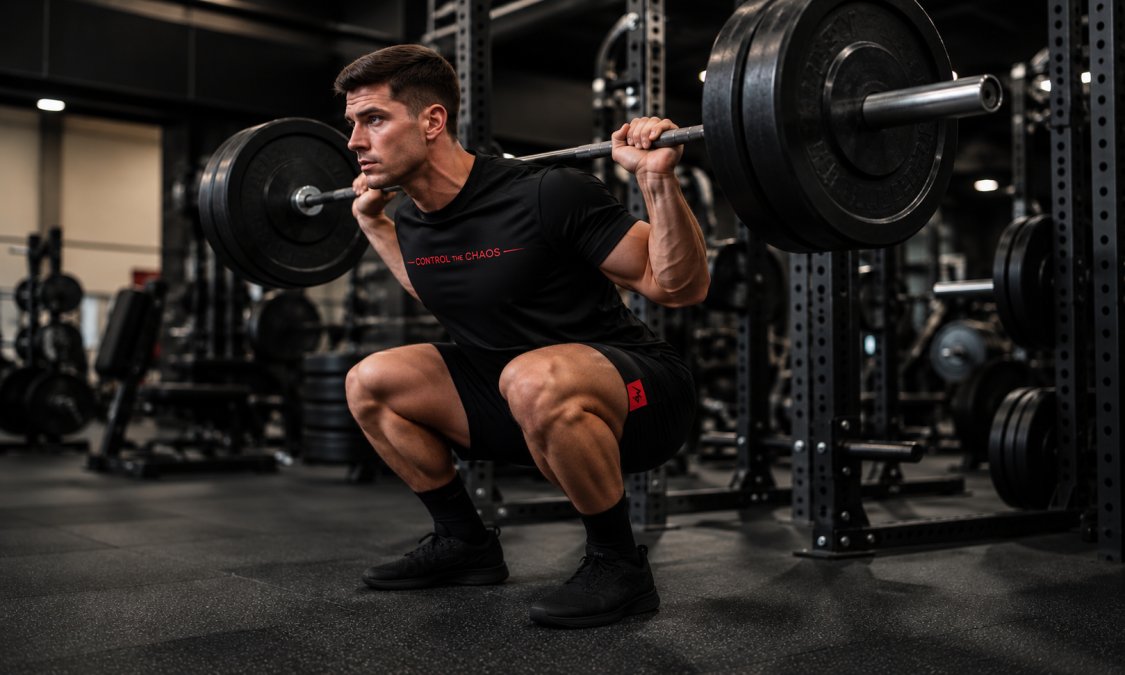
In a squat, your quads and glutes work together. They extend your knees and hips simultaneously. Compression shorts keep your leg muscles from oscillating. Your muscles fire as a unit.
Deadlift Support
Deadlifts demand different support than squats. Your legs extend against the bar. Your back stays neutral. Compression shorts stabilize your hip extensors.
Snatch and Clean and Jerk
Olympic lifts are explosive. Your muscles generate force rapidly. Compression shorts reduce the wasted energy from muscle oscillation.
Durability and Long-Term Care for Training Gear
Quality shorts are an investment. They need to last.
Heavy lifting is hard on fabric. Sweat is acidic. It breaks down elastic. Friction wears through material. Heat from your body stresses the fibers.
Frequently Asked Questions
Are compression shorts better for squatting than loose shorts?
Compression shorts provide superior muscle support and reduce muscle oscillation during the squat, which stabilizes your legs and core under load. Loose shorts offer greater freedom of movement but lack the stabilizing support that heavy loads demand. For powerlifting, compression shorts generally outperform loose shorts because they minimize muscle vibration and improve proprioception, helping you maintain form through heavier weights. The choice depends on your priority: maximum stability (compression) or maximum mobility (loose).
What are the benefits of compression shorts for weightlifting?
Compression shorts reduce muscle fatigue by minimizing muscle oscillation during heavy lifts like deadlifts and cleans. The compression fit reduces friction and chafing, keeping you comfortable through long training sessions. They also enhance proprioception, your body's awareness of position under load, which is critical for maintaining squat mechanics and deadlift form.
Should I wear compression shorts under gym shorts?
Many serious lifters wear compression shorts under loose gym shorts as a hybrid approach. This gives you the muscle support and chafing prevention of compression gear while maintaining the breathability and freedom of movement that loose shorts provide. This setup works particularly well in hot training environments where you need both moisture-wicking and stability. If you choose this approach, ensure your outer shorts are lightweight with four-way stretch to avoid restricting the support your compression layer provides underneath.
How do I choose the right shorts for powerlifting?
Look for shorts made from a poly/spandex blend with four-way stretch and moisture-wicking technology—these materials breathe well and move with your body. Check the inseam length (typically 5-7 inches for lifting) and ensure the waistband stays stable during heavy squats without rolling down. Consider your lifting style: compression shorts excel for raw lifting where maximum stability matters, while looser options work for equipped lifting or conditioning work. Test the fit through a full range of motion, including a deep squat, before committing to training in them.
0 comments