
Table of Contents
- Why Most 'Squat Proof' Leggings Fail Under a Heavy Barbell
- Fabric GSM and Density: The Real Test for Squat Proof Leggings
- How to Test Leggings for Opacity Before You Buy
- The 'Sizing Down' Trap: Why Fit Matters More Than Size
- Durable Gym Leggings for Powerlifting: What to Look For
- Seams, Waistbands, and Gussets: Construction Details That Last
- Best Athletic Gear for CrossFit: Beyond Basic Coverage
- Final Verdict: Choosing Heavy Duty Leggings That Earn Their Place
- Frequently Asked Questions
Last Updated: September 8, 2026
Most leggings labeled "squat proof" are not. They pass the bend-over test in a brightly lit fitting room, then betray you under a heavy barbell in harsh gym lighting. The difference between marketing copy and actual coverage comes down to fabric density, construction, and honest testing. At Mayhem Performance Apparel, we build gear for athletes who train under load, so we have a direct interest in separating real heavy duty squat proof leggings from the imposters.
Opacity is not a feature a brand can claim; it is a physical property of the fabric. Squat proof leggings remain fully opaque through a full range of motion, including a deep squat, regardless of how the fabric stretches. Most failures happen because brands prioritize softness or a low price point over the material density required to maintain coverage.
Why Most 'Squat Proof' Leggings Fail Under a Heavy Barbell
The primary reason leggings fail is simple: the fabric is too light. When you load a barbell and descend into a squat, the fabric over your hips and glutes stretches to its limit. If the material lacks density, the weave separates and light passes through.
The marketing term "squat proof" has no industry standard behind it. A brand can call leggings squat proof if they survive one shallow rep in a private studio. Under a heavy barbell, the load increases tension, the tension increases stretch, and the stretch exposes every weakness in the fabric.
Casual leggings are designed for comfort and aesthetics. Heavy duty options must prioritize tensile strength and fabric density over everything else. If a brand cannot explain the fabric weight or composition of their leggings, treat their squat proof claim with skepticism.
Fabric GSM and Density: The Real Test for Squat Proof Leggings
GSM, or grams per square meter, is the most reliable predictor of whether leggings will stay opaque under load. This measurement tells you exactly how much fabric you are getting per unit of area. Higher GSM means denser material, which means less light passes through when stretched.
For heavy lifting, look for leggings in the 200-300 GSM range. Fabrics below 180 GSM are typically too thin for loaded squats. A 240 GSM polyester-nylon blend with high spandex content will outperform a 150 GSM "premium" fabric every single time.
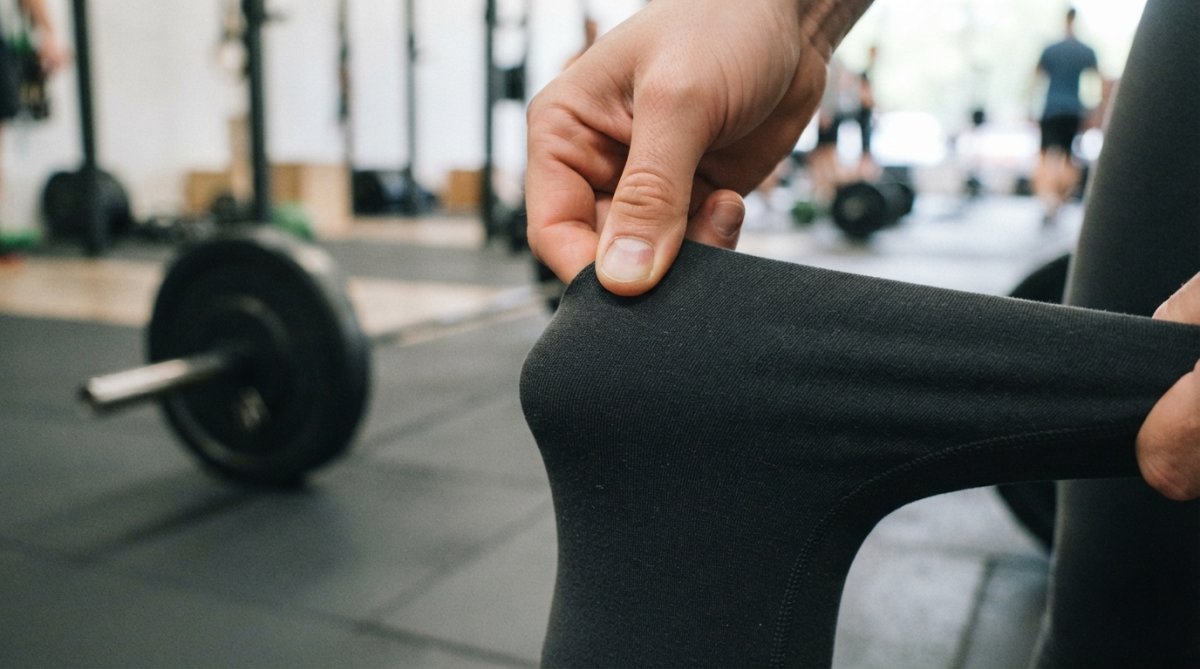
A polyester-nylon blend provides durability and moisture-wicking properties, while spandex delivers the 4-way stretch needed for mobility. Too much spandex and the fabric thins out under tension; too little and you lose the flexibility required for a deep squat. Look for spandex content between 20-30% for the best combination of coverage and range of motion.
How to Test Leggings for Opacity Before You Buy
You do not need a laboratory to test for opacity. The process takes less than two minutes and requires only your phone flashlight and a mirror. Many athletes find this method more reliable than trusting product descriptions, as documented in consumer guidance on activewear fabric testing.
Put the leggings on and position yourself in front of a mirror with your back facing the light source. Place your phone flashlight directly behind the fabric at hip level, the area under maximum tension during a squat. Perform a full squat and observe whether the light penetrates the fabric. If you can see the outline of the flashlight through the material at any point in the movement, the leggings are not squat proof.
This test is stricter than the standard bend-over check because it simulates the tension of a loaded movement. Test in the brightest lighting you can find, because that is how you will be seen in a gym.
The 'Sizing Down' Trap: Why Fit Matters More Than Size
A common mistake is buying leggings a size down to get more compression, assuming tighter fabric means better coverage. When you size down, the fabric is already stretched at rest, leaving less room to stretch during a squat without thinning out.
Athletes convince themselves that a smaller size will smooth and compress, but what actually happens is the fabric reaches its opacity limit sooner. A proper fit leaves the fabric relaxed at standing position, so it has more material to draw from during movement.
Different brands cut their sizing differently, and your measurements matter more than the label. Take your actual hip and waist measurements and compare them to the brand's size chart. If you are between sizes, size up rather than down for heavy lifting.
Durable Gym Leggings for Powerlifting: What to Look For
Powerlifting's unique demands are about specific friction points and pressure zones that standard gym leggings never encounter. The bar grinds against the fabric during setup and unrack. Your chalked hands brush against your thighs on every rep. And the belt, if you wear one, creates a compression point that can roll or fold a weak waistband.
The Hip-Hinge Friction Test
Most reviews focus on the squat, but the deadlift is where leggings truly fail. When you set up for a heavy pull, your hands slide down your thighs, dragging fabric against the knurling of the bar. A common pattern is micro-tears or pilling on the inner thighs after just a few deadlift sessions, a sign the fabric lacks abrasion resistance. Look for a tight-knit nylon face that feels slick to the touch.
The Belt Compression Problem
When you brace against a belt, it creates a hard edge that digs into your waistband. If the waistband is too soft or lacks structure, it will fold over the top of the belt, creating a painful pinch point during heavy squats. The solution isn't just a wider waistband, it's one with a different stiffness profile.
Stretch Retention: The 100-Rep Test
Fabric that passes the initial fit test can still fail after months of training. The specific failure mode for powerlifters is 'yield', when spandex fibers permanently deform under repeated heavy loading. To evaluate this in a store, perform the '100-rep test': put the leggings on, do 100 bodyweight squats, and check the fit. If the waistband has shifted, the knees have bagged out, or the fabric feels looser across the hips, the spandex has started to yield.
The Hidden Cost of 'Compression'
Many powerlifters buy compression leggings thinking tightness will support their muscles during heavy lifts. True compression gear is graduated, it applies more pressure at the ankle and less at the thigh to improve blood flow. Most 'compression' leggings are simply tight-fitting, which actually restricts blood flow during a heavy set. For powerlifting, you want joint stability, not muscle compression.
The Waistband Anchor Point
For lifters who don't use a belt, the waistband is the primary anchor point. A common issue is the waistband rolling down during the descent of a heavy squat, because the fabric at the hip flexes and shortens, creating a downward force on the band. The fix is a waistband with internal grip, either silicone dots or a rubberized strip, that creates friction against your skin.
Evaluating the Crotch Seam Under Load
Finally, examine the crotch seam under a loaded squat position. In a proper powerlifting stance, feet wider than shoulder-width, toes out, the fabric at the crotch is under maximum tension. A diamond gusset that extends at least 2 inches toward the front and back provides the most reinforcement. A smaller gusset, or a flat seam without a gusset, will be the first point of failure under a heavy bar.
Mayhem Performance Apparel's upcoming women's line, launching in November 2026, is being engineered with these specific failure points in mind, from the waistband grip placement to the gusset dimensions, to ensure the gear holds up to the unique demands of powerlifting, not just casual gym sessions.
Seams, Waistbands, and Gussets: Construction Details That Last
The seams are where cheap leggings fail first. Flatlock seams lie flat against the skin and reduce chafing, but they are only as strong as the stitching that holds them. Under heavy load, poorly constructed seams pop or irritate the skin.
A gusset is the single most important construction detail for squat proof leggings. The gusset is a diamond-shaped piece of fabric sewn into the crotch area that provides extra room and reinforcement. Without a gusset, the fabric is pulled taut across the widest point of your stride, increasing the risk of sheerness and seam failure. apparel construction guides on gusset design consistently identify the gusset as the difference between leggings that last and leggings that split.
The waistband construction determines whether the leggings stay put under a loaded barbell. A folded-over elastic band will roll down. A wide, structured band with a drawstring or internal grip stays anchored. Look for a waistband at least 3-4 inches tall.
Best Athletic Gear for CrossFit: Beyond Basic Coverage
CrossFit is not a single sport; it's a stress test that combines Olympic lifting, gymnastics, and monostructural movements in a single session. The key differentiator isn't just moisture-wicking, it's how the fabric behaves when you transition from a heavy clean to a set of handstand push-ups to a 400-meter sprint in under 10 minutes.
The Multi-Modal Fabric Stress Test
A typical CrossFit workout might involve a barbell cycling from the floor to overhead, followed by burpees over the bar, and finishing with a row. Each movement stresses the fabric differently: the clean pulls fabric taut across the hips, burpees create abrasive friction at the knees, and the row engages the waistband. A fabric that excels in one area often fails in another. The solution is a balanced knit that provides both vertical and horizontal stretch without sacrificing density. Look for a fabric with a high 'recovery rate', the ability to snap back to its original shape after being stretched in multiple directions.
The Rope Climb Factor
Rope climbs are the ultimate test of fabric abrasion resistance. The rope grips the fabric between your feet and shins, creating intense friction and heat. Most leggings will pill or tear after just a few climbs. The best gear uses a 'ripstop' weave, a reinforcing technique that stops tears from spreading. If you regularly train rope climbs, look for leggings with a reinforced panel on the inner calf and shin area.
The Sweat Management Paradox
Moisture-wicking is not just about staying dry; it's about temperature regulation during high-intensity intervals. The paradox is that the most breathable fabrics often lack the density needed for squat-proof coverage. The solution is strategic ventilation: a denser main fabric (220-260 GSM) with laser-cut perforations or mesh panels placed in low-stress areas like the back of the knee or the lower calf.
The Burpee Knee Test
Burpees are the most common movement that destroys leggings. The repeated impact of your knees on the floor creates compression damage, the fabric is crushed between your patella and the floor, breaking down spandex fibers over time. To test for this, press your thumb firmly into the fabric at the knee and rub it against a hard surface. If the fabric thins or pills, it will not survive burpees.
The Transition Problem: From Lifting to Gymnastics
CrossFit requires leggings that work for both lifting and gymnastics. A legging that is perfect for a heavy back squat might be too restrictive for a muscle-up. The key is the fabric's 'stretch recovery' in the hip and shoulder areas. During a squat, the hips need to open fully; during a handstand push-up, the shoulders need to raise overhead without the waistband pulling down. A fabric with 20-25% spandex content typically provides this range, but the spandex must be high quality.
The 'No-Slip' Waistband for Dynamic Movement
Finally, the waistband must handle dynamic, explosive movements. Box jumps, burpees, and kettlebell swings all involve rapid changes in direction that can shift a waistband. The best CrossFit leggings use a wide, high-waisted band with a silicone grip on the inside. The band should also have a slight 'V' shape at the back, which follows the natural curve of the spine and prevents gaping during forward folds or toes-to-bar.
Final Verdict: Choosing Heavy Duty Leggings That Earn Their Place
The leggings market is full of claims that do not survive contact with a loaded barbell. Heavy duty squat proof leggings are not defined by marketing language but by measurable fabric density, honest construction, and real-world performance. Prioritize GSM, fabric composition, and construction details over brand hype.
Mayhem Performance Apparel builds every piece of gear with the understanding that training is non-negotiable. Our apparel is engineered to withstand relentless stress and heavy-duty use, designed for athletes who refuse to compromise on standards. We are not a lifestyle brand; we build for performance under repeated stress. Our upcoming women's line, launching in November 2026, applies the same engineering standards to squat proof leggings built for heavy training.
Test your current leggings with the flashlight method. If they fail, replace them with gear that earns its place in your rotation. [guidance on selecting performance apparel for(/blogs/journal/best-gym-apparel-for-discipline) strength training | ncbi.nlm.nih.gov] confirms that fabric choice directly impacts both comfort and safety during resistance exercise.
Frequently Asked Questions
What makes leggings truly squat-proof during heavy lifting?
Squat proof leggings depend on fabric density and construction, not just color. Look for a high GSM rating, typically 200 or higher, and a tight knit with at least 20-25% spandex or elastane. The fabric must pass the bend-over test without revealing skin. Seam placement matters too, a flatlocked gusset prevents stress on the crotch seam. Heavy duty options use a polyester-nylon blend that maintains opacity even when stretched to maximum capacity during a deep squat.
How can you tell if leggings will be see-through before buying?
Perform the squat test in store or use the hand test: place your hand inside the legging and stretch the fabric over your knuckles. If you can clearly see your skin tone or hand outline, the fabric is too thin. Check the fabric GSM, anything below 180 is risky for heavy lifting. Look for a 4-way stretch fabric that snaps back rather than staying stretched out. High-performance fabric with dense construction will remain opaque even under maximum tension.
What fabric blends are best for heavy-duty gym wear?
A polyester-nylon blend with 20-30% spandex content delivers the best balance of compression, stretch retention, and moisture-wicking. Nylon adds tensile strength and resists pilling, while polyester manages sweat effectively. Pure cotton blends absorb moisture and lose elasticity under load. For powerlifting and CrossFit, look for high-performance fabric that combines synthetic blends for durability and breathability. The fabric should feel buttery soft on the outside but dense enough to provide real coverage.
Do compression leggings provide better coverage for squats?
Yes, compression leggings generally offer better coverage because the tighter weave increases fabric density against the skin. The compression holds the fabric in place, preventing the stretching that causes sheerness during squats. However, compression level matters, overly tight leggings can create stress points that lead to fabric fatigue. Look for graduated compression that supports muscle without restricting movement. A non-slip waistband and ergonomic design keep everything secure through heavy sets and repeated reps.
0 comments