
Table of Contents
- The Verdict: Is High Compression Gear Worth It for Lifting?
- Compression Gear for Weightlifting: What It Actually Does
- Compression Gear vs. Loose Gym Clothes: Which Wins Under the Bar?
- The Downsides of Compression Shirts and Tights You Should Know
- How Tight Should Compression Gear Fit? A Practical Sizing Guide
- Compression Clothing vs. Supportive Lifting Equipment: Know the Difference
- What to Look For: Durability, Cost Per Use, and Training Environment
- Conclusion: Making the Call on Compression Gear
- Frequently Asked Questions
Last Updated: October 6, 2026
The Verdict: Is High Compression Gear Worth It for Lifting?
If you lift heavy and often, the honest answer is yes, but only for specific reasons and only if the fit is right.
Compression gear is fitted athletic clothing made from stretch fabrics that apply steady pressure to the muscles and joints it covers.
Here is the part most guides get wrong: they treat compression as a magic performance switch. It is not.
Compression Gear for Weightlifting: What It Actually Does
Compression clothing supports muscles and joints during lifting by applying consistent pressure across the working area. That pressure reduces muscle oscillation, the small vibrations that happen inside a muscle during a heavy rep, and it helps keep tissue warm and stable through the lift.
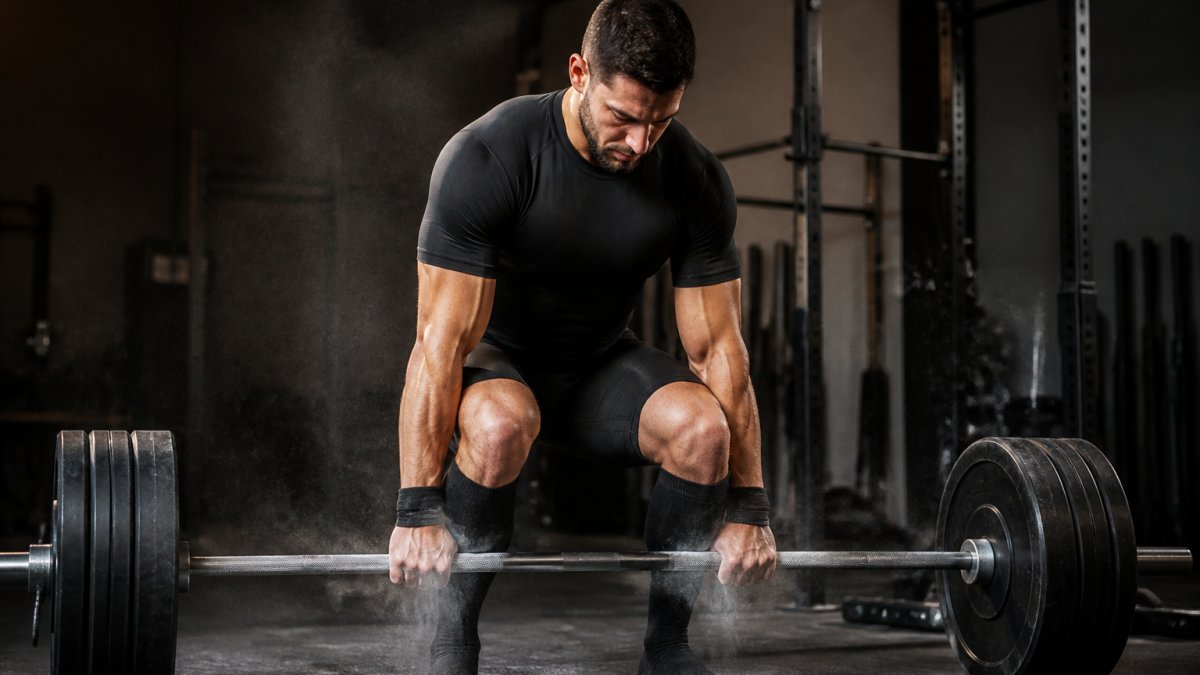
A powerlifter in a snug black compression shirt and shorts preparing for a heavy deadlift in a dimly lit gym, chalk dust in the air, focused expression
Muscle Support, Joint Support, and Muscle Oscillation
Muscle oscillation is the repeated micro-movement of muscle tissue during dynamic movement. Compression fabric dampens that movement, which many lifters describe as feeling more stable through squats and deadlifts.
Joint support is a different story. Compression sleeves and tights can add warmth and mild compression around the knee or elbow, but they are not a substitute for a proper knee sleeve or elbow wrap built for heavy loads.
Sweat-Wicking Fabrics and Thermoregulation
Sweat-wicking fabrics move moisture away from your skin so it evaporates faster. That matters during high-intensity workouts and metabolic conditioning, where cotton gets heavy, clings, and stays wet.
Thermoregulation is the flip side. Compression gear traps heat, which is a benefit in cold temperatures when you want to keep muscles warm and ready, and a drawback in a hot gym where you want to dump heat fast.
Compression Gear vs. Loose Gym Clothes: Which Wins Under the Bar?
Compression gear wins for muscle support, warmth, and moisture management. Loose clothing wins for airflow, comfort in heat, and unrestricted range of motion during dynamic movements. Neither is universally better, and most serious lifters end up using both.
Here is how we would break it down by training context:
Training Context |
Better Choice |
Why |
|---|---|---|
Heavy squats and deadlifts in a cool gym |
Compression gear |
Warmth, muscle support, less oscillation |
Olympic lifting and high-rep conditioning |
Loose clothing |
Full range of motion, better heat dump |
Cold-weather training or early morning sessions |
Compression gear |
Keeps muscles warm before heavy sets |
Hot gym, long sessions, heavy sweating |
Loose, sweat-wicking clothing |
Airflow and faster drying |
The mistake we see most often is treating this as a binary. A compression top under a loose tee gives you warmth and support without locking down your range of motion, and that combination works for a lot of lifters.
The Downsides of Compression Shirts and Tights You Should Know
Compression gear has real drawbacks, and most reviews skip them. The three that matter most are heat retention, cost, and the fit problem.
Heat retention is the big one. In a hot gym or during long conditioning sessions, compression clothing can leave you overheated and uncomfortable.
Cost is the second. Good compression clothing uses technical fabrics and holds up to repeated washing, which pushes the price above basic cotton gym wear.
The fit problem is the third. A compression top that is too loose does nothing.
When Compression Gear Is Not Worth It
Skip compression gear if you train primarily in high heat, if you prefer loose clothing for full freedom of movement, or if you are not willing to spend on a quality fit.
It is also not worth it as a replacement for real supportive equipment. If you need joint support under maximal loads, buy the knee sleeves and elbow wraps built for that job.
How Tight Should Compression Gear Fit? A Practical Sizing Guide
Compression gear should fit snug against the skin with no loose fabric and no pinching. You should be able to move through a full squat or deadlift without the garment riding up, rolling down, or cutting into your skin. But "snug" is not a size, it is a set of measurable fit points. Use the framework below to choose compression level, size, seams, and garment length for lifting specifically.
Step 1: Match Compression Level to the Lift
Not all compression is built for the same job. Manufacturers typically describe three levels:
- Light compression (roughly 10-15 mmHg): base-layer feel, best for warm gyms, high-rep accessory work, and lifters who want sweat management without a locked-in sensation.
- Moderate compression (roughly 15-20 mmHg): the most common level for general strength training. Provides noticeable muscle oscillation control without restricting breathing at the bottom of a squat.
- Firm compression (roughly 20-30 mmHg): best reserved for cold gyms, heavy singles, and lifters who already know they tolerate tight garments. Above this range you are into medical-grade territory, which is not what you want under a barbell.
If you are new to compression, start at light or moderate. Firm compression is a tool for specific sessions, not an everyday default.
Step 2: Size by Measurement, Not by Shirt Size
Your everyday t-shirt size is a starting point, not an answer. Measure these three points and compare them to the brand's size chart:
- Chest circumference at the fullest point, arms relaxed
- Natural waist at the narrowest point, not at the hip bone
- Thigh circumference at the mid-thigh, standing
A common pattern is that lifters with developed quads and glutes need to size up in tights even when their waist measurement says otherwise. If your chest and waist fall into two different sizes on the chart, size to the larger measurement for the upper body and consider a garment with a drawcord waist for the lower body.
Step 3: Check Seams and Construction Before You Buy
Seams are where compression gear fails first. Look for:
- Flatlock seams on the torso and inner thigh, they lie flat against the skin and reduce chafing under a belt or during high-rep sets.
- Gusseted crotch on tights and shorts, this is the single biggest predictor of whether a garment survives deep squats without splitting or binding.
- Wide, non-roll waistband, a narrow elastic band rolls down under a lifting belt; a wide flat band stays put.
Step 4: Choose Garment Length for Your Training
- Full-length tights: best for cold gyms, deadlift days, and lifters who want knee warmth without a separate sleeve. Watch for bunching behind the knee at the bottom of a squat.
- 7-inch to 9-inch shorts: the most versatile length for lifting. Long enough to prevent thigh chafe under a belt, short enough to stay out of the way on squats.
- Compression top (short or long sleeve): short sleeve for warm gyms and pressing days; long sleeve when you want forearm and elbow warmth for pulling.
Step 5: The Fit Test Before You Commit
Run this checklist on the first wear, before you cut the tags:
- No bunching or loose fabric anywhere on the torso or legs
- No pinching at the waistband, armpits, or thigh seams
- You can breathe fully and deeply without resistance
If a garment fails two or more of these, size up. A slightly looser compression top still gives you warmth and moisture management; an overly tight one gives you nothing but discomfort.
Compression Clothing vs. Supportive Lifting Equipment: Know the Difference
Compression clothing and supportive lifting equipment do different jobs, and confusing them leads to bad purchases. Compression apparel applies mild, even pressure across a wide area to support muscles and manage heat and sweat.
Here is the practical distinction:
- Compression gear: full-body or regional pressure, warmth, sweat-wicking, muscle oscillation control
- Supportive equipment: rigid joint support, load bracing, injury-specific protection
- Both together: compression base layer plus a knee sleeve or belt for heavy working sets
If your goal is to feel more stable and warm through a heavy squat session, compression tights and a compression top help. If your goal is to protect a knee under a maximal single, you need a knee sleeve built for that load.
What to Look For: Durability, Cost Per Use, and Training Environment
Durability is the single biggest factor in whether compression gear is worth the money. A shirt that holds its fit and compression level through a year of washing and training is a good deal; one that sags after ten washes is not.
Look for these markers when you shop:
- Fabric blend: polyester, Lycra, and nylon blends hold shape and stretch better than cotton-heavy blends
- Construction: flatlock or side-seam stitching reduces chafing and holds the garment's shape
- Fit consistency: the garment should fit the same after repeated washes
At Mayhem Performance Apparel, we build our training gear for exactly this problem. Our Classic Performance T uses lightweight, breathable performance fabric with moisture management, a tagless design, and an athletic fit that holds through repeated workouts and washes. If you train in the heat and want maximum airflow, the Classic Performance Tank uses a 4.2 oz tri-blend of polyester, cotton, and modal with side-seam construction for shape retention. For lifters who want a heavier, more structured layer over a compression base, the Heavyweight Oversized T is built from 7.5 oz 100% cotton with a reinforced double-needle stitched collar.


Conclusion: Making the Call on Compression Gear
Compression gear is worth it for lifting when you want muscle support, warmth, and sweat management during heavy sessions, and when you are willing to get the fit right. It is not worth it if you train in high heat, prefer loose clothing, or expect it to replace real joint support.
The decision comes down to your training environment, your priorities, and how the gear fits your body. Get those three right and compression clothing earns its place in your bag.
Frequently Asked Questions
Does compression gear actually help you lift more weight?
Research on compression clothing and lifting performance is mixed. Some studies suggest compression sleeves and tights may improve proprioception and reduce muscle oscillation during dynamic movements like squats and Olympic lifts, which can support technique. However, no garment replaces proper programming, bar path work, or recovery. Think of compression gear as a marginal assist, not a strength multiplier. If you train heavy and want consistent muscle support, a snug compression top or tights can help you stay aware of body position under load.
What are the downsides of compression shirts for lifting?
The main downsides of compression shirts include restricted range of motion if the fit is too tight, overheating during high-intensity workouts in warm gyms, and difficulty getting them on and off when sweaty. Some athletes also find stiff sleeves or heavy compression levels uncomfortable during overhead presses. If you have circulation concerns or notice numbness, tingling, or deep red marks after training, the garment is too tight. Compression should feel snug, not restrictive, and should never cut into your skin.
Is compression clothing better than loose clothing for weightlifting?
It depends on the lift and the environment. Compression gear vs. loose gym clothes comes down to priorities. Compression clothing offers sweat-wicking moisture management, muscle support, and thermoregulation, which helps in cold gyms or during long sessions. Loose clothing provides unrestricted airflow and comfort for lifters who run hot or prefer zero restriction during squats and deadlifts. Many strength athletes wear compression tops under loose shirts or choose compression tights for lower-body work and loose shorts for conditioning. There is no single winner.
How tight should compression gear fit for lifting?
Compression gear should fit like a second skin: snug enough to stay in place through squats, deadlifts, and dynamic movements, but not so tight that it restricts breathing or range of motion. You should be able to slide one finger under the hem without forcing it. If the fabric bunches, rolls, or leaves deep indentations after a set, size up. For lifting specifically, medium compression is usually enough for muscle support and warmth. High compression is better reserved for recovery or short, intense efforts.
Can compression gear replace knee sleeves, wrist wraps, or belts?
No. Compression clothing and supportive lifting equipment serve different purposes. Knee sleeves, wrist wraps, and belts provide external mechanical support and joint stability under heavy loads. Compression tights and shirts offer mild muscle support, improved blood flow, and sweat management but do not brace joints or reduce spinal load. If you are chasing a PR in squats or deadlifts, you still need the appropriate supportive equipment. Compression gear complements your training kit; it does not replace it.
Choosing gear that survives your training schedule is harder than it should be. At Mayhem Performance Apparel, we build apparel for athletes who train under load and refuse to negotiate on durability. Our Classic Performance T, Classic Performance Tank, and Heavyweight Oversized T are engineered to hold their fit and performance through relentless training and repeated washing. Shop now and gear up with apparel that endures as long as you do.
0 comments