
Table of Contents
- Why Strength Athletes Switch From Hylete
- Best Workout Shorts for Powerlifting
- How to Choose Gym Shorts for Squats
- Durable Gym Clothing for Heavy Lifting
- Fabric Technology and Long-Term Durability
- Price-to-Value: What You Actually Get
- Performance Across Training Modalities
- Frequently Asked Questions
Last Updated: September 24, 2026
Why Strength Athletes Switch From Hylete
Strength athletes demand more from their apparel than casual gym-goers, which is why finding a Hylete alternative for strength athletes engineered for heavy lifting matters. When you're moving serious weight, squatting 400 pounds, deadlifting 500, your gear needs to survive the friction, sweat, and repeated stress that most training clothes simply can't handle. A Hylete alternative for strength athletes isn't just about finding a cheaper option. It's about finding gear engineered specifically for the demands of powerlifting, functional fitness, and heavy lifting.
Many lifters stick with established brands out of habit, but the real question is whether your gear actually holds up. Are waistbands rolling down mid-squat? Is fabric pilling after three months? Are you replacing shorts every six months instead of getting a year or more out of them?
Mayhem Performance Apparel was built for exactly this problem. Rather than designing for casual fitness, we engineered every piece around the specific demands of strength training, fabric weight, seam construction, and material composition all matter when you're operating under load.
Best Workout Shorts for Powerlifting
The ideal powerlifting shorts combine squat-proof construction, unrestricted range of motion, and fabric that survives repeated heavy use. Most general-purpose athletic shorts fail on at least one of these fronts.
Look for shorts with a 7-inch inseam or shorter to avoid restricting hip mobility. The fabric should be four-way stretch.
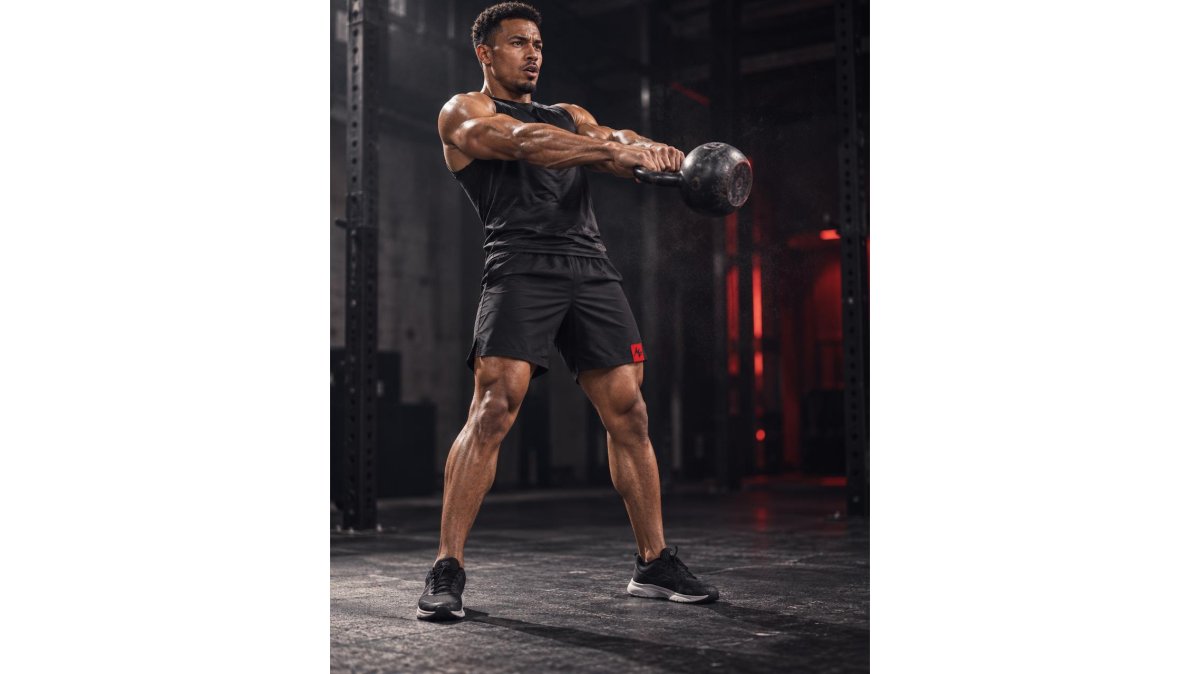
Mayhem Performance's Moisture Wick Shorts hit all three requirements. Built from a lightweight 3.5 oz poly/spandex performance blend, they deliver four-way stretch without the bulk that slows you down. The 7-inch inseam is cut specifically for lifters, and the moisture-wicking technology keeps you dry during high-intensity conditioning work.

Heavier fabric (measured in ounces per square yard, or GSM) resists pilling and abrasion, holding its shape through hundreds of washing cycles. Lighter fabrics feel more comfortable initially but deteriorate faster under repeated friction.
How to Choose Gym Shorts for Squats
Choosing the right gym shorts for squats requires evaluating inseam length, fabric composition, waistband security, and your specific body type.
Inseam length determines your range of motion and coverage. Shorts that sit too long restrict hip flexion when you descend into a squat. Most strength athletes prefer 5 to 7 inches. Shorter inseams (5-6 inches) work well if you prioritize mobility and have a longer torso relative to your legs; longer inseams (7 inches) provide more coverage during conditioning work and casual wear, and work better if you have shorter legs relative to your torso or larger glutes that require more fabric. The 7-inch inseam on Mayhem's Moisture Wick Shorts splits the difference, making them versatile across strength work and HIIT conditioning for most body types.
Strength athletes with larger quads (32+ inches) or glutes often need longer inseams (6.5-7 inches). Test fit during both bodyweight and loaded squats; what feels fine at rest often shifts under load.
Lifters with larger torsos benefit from shorter inseams (5-6 inches); those with longer legs can wear 7-8 inches. Inseam depends on your proportions.
Poly/spandex blends (typically 88% polyester, 12% spandex) offer superior abrasion resistance, dry faster, and resist pilling compared to cotton blends. A 3.5 oz fabric weight withstands friction without bulk. Cotton-blend shorts degrade faster under repeated heavy lifting.
Look for reinforced waistband construction with internal drawcords and double-stitched seams to hold shape through 100+ washing cycles; standard elastic waistbands lose tension after 30-40 cycles.
Four-way stretch is essential for unrestricted movement. Two-way stretch (up/down and left/right) limits diagonal movement, which matters during heavy squats where your hips, knees, and ankles all move in different planes simultaneously. Four-way stretch accommodates all these movements without binding.
Selection Criteria |
What to Look For |
Why It Matters |
|---|---|---|
Inseam Length |
5-7 inches (adjust for body type) |
Balances mobility and coverage; longer for larger glutes, shorter for longer torso |
Fabric Weight |
3.5+ oz poly/spandex |
Resists pilling and abrasion; outlasts cotton blends by 6-9 months |
Waistband Design |
Reinforced with drawcord and double stitching |
Prevents rolling during heavy lifts; maintains shape through 100+ cycles |
Gusset Design |
Extended 2-3 inches up inner thigh |
Prevents binding and seam failure in highest-stress area |
Stretch Technology |
Four-way stretch |
Moves with you in all directions; two-way stretch restricts diagonal movement |
Moisture Management |
Moisture-wicking synthetic blend |
Keeps you dry during conditioning; wet fabric degrades faster |
Test a single pair through 5-10 training sessions including heavy squats, deadlifts, and conditioning. Check for waistband rolling, restrictiveness, and pilling. Real-world tests reveal fit and durability issues that sizing charts miss.
Durable Gym Clothing for Heavy Lifting
Durability comes down to material composition and seam construction. Generic gym wear cuts corners on both, falling apart after a few months of serious training.
Tri-blends feel softer but break down faster; pure synthetic blends resist abrasion and maintain elasticity longer. A 7.5 oz shirt outlasts a 4 oz shirt by a factor of two or three.
Double-needle stitching (two parallel rows of thread) is the industry standard for durable apparel; single-needle stitching fails faster. Reinforced collar stitching is critical, it's where most shirts develop tears first.
Mayhem's Heavyweight Oversized T uses 7.5 oz 100% cotton with reinforced double-needle stitched collar. This construction choice isn't about comfort, it's about longevity. A lifter wearing this shirt through 200+ training sessions per year will see it maintain its structure and fit where lighter alternatives would show visible degradation.

The Moisture Wick Track Pants at $74.99 use a 7.8 oz poly/spandex blend with ankle zippers. This weight class resists wear from repeated squatting and deadlifting.

Fabric Technology and Long-Term Durability
Modern technical fabrics used in strength-training apparel employ specific technologies designed for the demands of heavy lifting. Understanding these technologies, and their real-world durability limits, helps you evaluate whether a brand will actually last through a full training year.
Moisture-wicking moves sweat away rather than absorbing it. Synthetic blends do this better than cotton, and wet fabric degrades faster through repeated washing. A poly/spandex blend dries in 2-3 hours; a cotton-blend shirt takes 6-8 hours. Over 200+ sessions per year, that difference compounds into measurable degradation.
Four-way stretch fabric moves in all directions. Spandex content (typically 10-15%) provides stretch while polyester provides durability. The optimal balance for strength athletes is around 12% spandex, which preserves elasticity through a full year of training.
Fabric weight (measured in ounces per square yard or GSM) is the single strongest predictor of long-term durability. A 7.5 oz cotton tee or 7+ oz poly/spandex blend resists pilling and abrasion significantly better than lighter alternatives:
- 4-5 oz fabric: Visible pilling after 20-30 washes; seams begin to fray by month 4-5 of regular heavy training.
- 6-6.5 oz fabric: Minor pilling after 40-50 washes; seams hold through 8-10 months of heavy use.
- 7-8 oz fabric: Minimal pilling through 80+ washes; seams remain intact through 16-18 months of heavy training (200+ sessions/year).
- 8.5+ oz fabric: Virtually no pilling through 100+ washes; maintains structural integrity through 24+ months of heavy training.
This isn't theoretical. Lifters who track their gear report that a 7.5 oz shirt worn 3-4 times per week shows no visible degradation after 12 months, while a 5 oz shirt from the same brand shows significant pilling and seam stress by month 6.
Anti-odor treatments reduce bacterial growth, which breaks down fabric fibers and accelerates pilling and tearing. Treated gear maintains structural integrity longer, typically adding 3-4 months of usable lifespan.
Double-needle stitching withstands 150+ washing cycles; single-needle stitching fails after 40-60 cycles. Reinforced collar stitching adds 4-6 months to usable lifespan.
A 7+ oz poly/spandex blend with reinforced double-needle seams and 12% spandex survives 18+ months with minimal degradation. Lower-quality alternatives show significant wear by month 6-9.
Price-to-Value: What You Actually Get
A $30 shirt and a $60 shirt are engineered for different use cases and lifespans.
Mayhem Performance gear is engineered for fabric weight, seam construction, and material composition that survives heavy training. The Classic Performance T at $49.99 uses high-performance technical fabric with UV protection. The Moisture Wick Shorts at $49.99 deliver a 3.5 oz poly/spandex blend with four-way stretch.
The real cost calculation isn't the upfront price. It's the cost per wear over the lifespan of the garment. A $50 shirt that lasts 18 months of heavy training (200+ sessions per year) costs roughly $0.14 per wear.
Performance Across Training Modalities
Strength athletes train across multiple modalities: heavy lifting, conditioning, and functional fitness. Your apparel needs to perform across all three.
Frequently Asked Questions
What makes a Hylete alternative actually better for strength athletes?
A genuine Hylete alternative must deliver specific durability for heavy lifting: fabric that resists abrasion from barbells and equipment. The Mayhem Performance Moisture Wick Shorts use 3.5 oz poly/spandex with four-way stretch and a 7-inch inseam designed explicitly for strength training.
How do I know gym shorts will stay in place during heavy squats?
Look for a secure waistband with no roll-down risk, and fabric with adequate tensile strength to resist shifting under load. A 7-inch inseam provides coverage without bulk. Test the waistband fit snug but not restrictive.
Why should I switch from Hylete to Mayhem Performance Apparel?
Mayhem Performance Apparel is engineered specifically for strength athletes and powerlifters, not general fitness. The Moisture Wick Shorts ($49.99) combine lightweight 3.5 oz poly/spandex with moisture-wicking and four-way stretch, while the Moisture Wick Track Pants ($74.99) add ankle zippers and secure pockets for serious training. Both are built for relentless use and deliver durability.
What fabric weight actually matters for durable gym clothing?
Fabric weight (measured in ounces per square yard or GSM) directly correlates to durability and longevity. The Mayhem Moisture Wick Shorts use 3.5 oz poly/spandex for breathability and mobility, while the Heavyweight Oversized T ($59.99) uses 7.5 oz 100% cotton for maximum durability through repeated washing and heavy training. Heavier fabrics resist pilling and abrasion better, but lighter blends perform better in high-heat training and HIIT.
0 comments