
Last Updated: October 26, 2026
Quick Summary
Choose workout shorts for HIIT training with a 5-inch or 7-inch inseam, a lightweight moisture-wicking synthetic blend, and four-way stretch. Look for flatlock seams, a secure waistband, and a denser weave that stays opaque when stretched. Test them in deep squats, lunges, jumps, burpees, and a short sprint before cutting the tags.
- A 5-inch inseam gives maximum airflow, while a 7-inch inseam adds coverage for squats, lunges, and jumps.
- Look for a lightweight performance fabric of roughly 3 to 5 oz per square yard with four-way stretch.
- Flatlock seams sit flush against the skin and cut down on rubbing during repeated lunges.
- Spandex content in the low-to-mid teens, roughly 12 to 18 percent, helps shorts stretch and recover under load.
- Wash performance apparel in cold water, skip fabric softener, and air dry to preserve wicking and elasticity.
Table of Contents
- Why HIIT Training Demands a Different Short
- Your Workout Shorts Length Guide: 5, 7, or 9 Inches
- Moisture-Wicking Workout Shorts: What the Fabric Must Do
- How Should Gym Shorts Fit? Waistband, Liner, and Stay-Put Tests
- Workout Shorts With Pockets: What to Carry and What to Leave Behind
- How to Test Fit Before Burpees, Lunges, and Box Jumps
- Durability, Opacity, and Care for Shorts Under Repeated Stress
- Pick Your Pair and Train in Them
- Frequently Asked Questions
Why HIIT Training Demands a Different Short
Choosing workout shorts for high intensity interval training comes down to one truth: your shorts have to survive the workout, not just start it.
HIIT is short bursts of all-out effort followed by brief rest. That means explosive movements, fast direction changes, and a lot of sweat.
If you want a broader roundup of shorts built for intense CrossFit-style sessions, see our guide to the best gym shorts for intense CrossFit.
Your Workout Shorts Length Guide: 5, 7, or 9 Inches
A workout shorts length guide starts with the inseam, the distance from the crotch seam to the hem. For HIIT, most athletes land on a 5-inch or 7-inch inseam. The 5-inch cut gives maximum airflow and freedom. The 7-inch cut adds coverage for squats, lunges, and jumps without dragging.
Here is how the three common lengths compare:
| Inseam | Coverage | Best For | Watch Out |
|---|---|---|---|
| 5 inch | Minimal, high thigh | Sprinting, conditioning | Can ride up on deep lunges |
| 7 inch | Mid-thigh | Lifting, mixed HIIT | Slightly warmer in heat |
| 9 inch | Full mid-thigh to knee | Heavy squats, tall athletes | Can bunch on short frames |
Shorter is not always better. Taller athletes often need more length to avoid friction between the thighs.
Inseam and Coverage for Squats, Lunges, and Jumps
Coverage matters most when you drop into a deep squat. Too short, and the hem climbs. Too long, and fabric bunches behind the knee. A 7-inch inseam balances both for most training. If squats anchor your program, our guide to durable gym shorts for heavy squats covers coverage in more depth.
Moisture-Wicking Workout Shorts: What the Fabric Must Do
Moisture-wicking workout shorts move sweat away from your skin so it can evaporate fast. The fabric should be a synthetic blend, not cotton. Polyester and spandex blends dry quickly, breathe well, and hold their shape through repeated washing.
Look for five things:
- A lightweight performance fabric, roughly 3 to 5 oz per square yard
- Four-way stretch for full range of motion
- Breathable knit or weave for airflow
- A cut that stays put when wet
Our Moisture Wick Shorts use a 3.5 oz poly/spandex blend with moisture-wicking tech and four-way stretch. That build keeps you cool and dry when the rounds get ugly.
Stretch, Seams, and Chafing Under Load
Chafing comes from friction, and friction comes from seams and loose fabric. Flatlock seams sit flush against the skin and cut down on rubbing. A seamless design in high-friction zones helps too. Watch out: rough overlocked seams will shred your inner thighs during repeated lunges. If chafing is already your problem, read our full guide on how to prevent gym clothes chafing.
Durability, Opacity, and Squat-Proof Performance
Durability separates training gear from fashion gear. Repeated stress wears out thin fabric, weak seams, and cheap elastic. Two tests tell you most of what you need to know before you buy:
- The stretch-and-hold test. Grip the fabric at the thigh and pull it taut in bright light. If you can see your hand clearly through the stretched weave, the short will likely go sheer in a deep squat. A denser knit or a higher spandex percentage resists this.
- The seam-and-elastic check. Flex the waistband and tug the inseam. Flatlock or bonded seams should lie flat without puckering. Elastic should snap back, not stay stretched.
Squat-proof performance starts with a denser weave and a fabric that holds its shape. Spandex content in the low-to-mid teens (roughly 12 to 18 percent) is a common range for shorts that need to stretch and recover under load; all-polyester shorts with minimal spandex tend to bag out over time.
Care That Preserves Wicking and Elasticity
Care extends life. Wash performance apparel in cold water and skip the fabric softener, which coats the fibers and kills wicking. Air dry when you can. Heat breaks down spandex over time, so a hot dryer is the fastest way to turn a snug waistband into a loose one. For the full routine, follow our guide on how to wash performance apparel.
How Should Gym Shorts Fit? Waistband, Liner, and Stay-Put Tests
How should gym shorts fit? Snug at the waist, loose through the leg, and locked in place before your first rep. The waistband should sit flat and stay put through squats and jumps.
Liner choices matter. A built-in compression liner adds support and stops fabric from riding up. Running shorts often use a brief liner for light support. For HIIT, many athletes prefer a compression liner for stability under load.
A Movement-Specific Fit Protocol for HIIT
Most fit advice stops at "try them on and squat." HIIT demands more. Run this five-movement protocol before you cut the tags, ideally in the shorts you plan to train in:
- Deep squat hold (10 reps, 3-second pause at the bottom). Watch the waistband for roll-down and the hem for climb. If the waistband folds over, the short is too loose or the elastic is too soft.
- Walking lunge (10 per leg). Feel for thigh friction and check whether the hem creeps toward the hip. Hem creep here usually means the inseam is too short for your thigh circumference.
- Box jump or broad jump (5 reps). Listen and feel for any slide at the waist. A short that shifts on landing will shift every round.
- Burpee (5 reps). Check that nothing rides up in the back and that the liner (if any) stays in place when you drop to the floor.
- Short sprint (20 to 30 yards). Test airflow and weight. Heavier fabric that felt fine standing still will feel like a drag here.
If the shorts pass all five, they are ready for real training. If the waistband rolls or the hem climbs, size down or switch cuts. This is the step most buyers skip, and it is the one that saves you from a bad pair.
Inclusive Fit Across Body Types and Gender Presentations
Fit advice often assumes one body. HIIT athletes come in many shapes, and the right short depends on thigh circumference, hip shape, and torso length as much as on inseam. A few practical adjustments:
- Larger thighs relative to waist: Look for a wider leg opening or a split hem so the fabric does not bind. A 5-inch inseam can work if the leg opening is generous; a tight 7-inch can chafe more than a loose 5-inch.
- Shorter torso or higher waist: A higher-rise waistband stays put through hinges and squats. Low-rise shorts tend to slide down during burpees.
- Taller athletes: A 7- or 9-inch inseam reduces inner-thigh friction, but check that the hem does not catch behind the knee in deep squats.
- Gender presentation: The fit principles are the same regardless of label. Prioritize waistband security, leg-opening comfort, and liner preference over the men's or women's tag on the rack.
Workout Shorts With Pockets: What to Carry and What to Leave Behind
Workout shorts with pockets are useful, but pockets can work against you. A phone bouncing in a side pocket throws off your balance during box jumps. For HIIT, carry less.
Use pockets for small, flat items only. A zippered pocket beats an open one because nothing falls out mid-burpee. If you lift and condition in the same session, a single secure pocket covers the basics without adding bulk.
How to Test Fit Before Burpees, Lunges, and Box Jumps
Test fit with the movements you actually train, not a mirror pose. The best test is a five-minute circuit that mimics your session. Do it before you cut the tags.
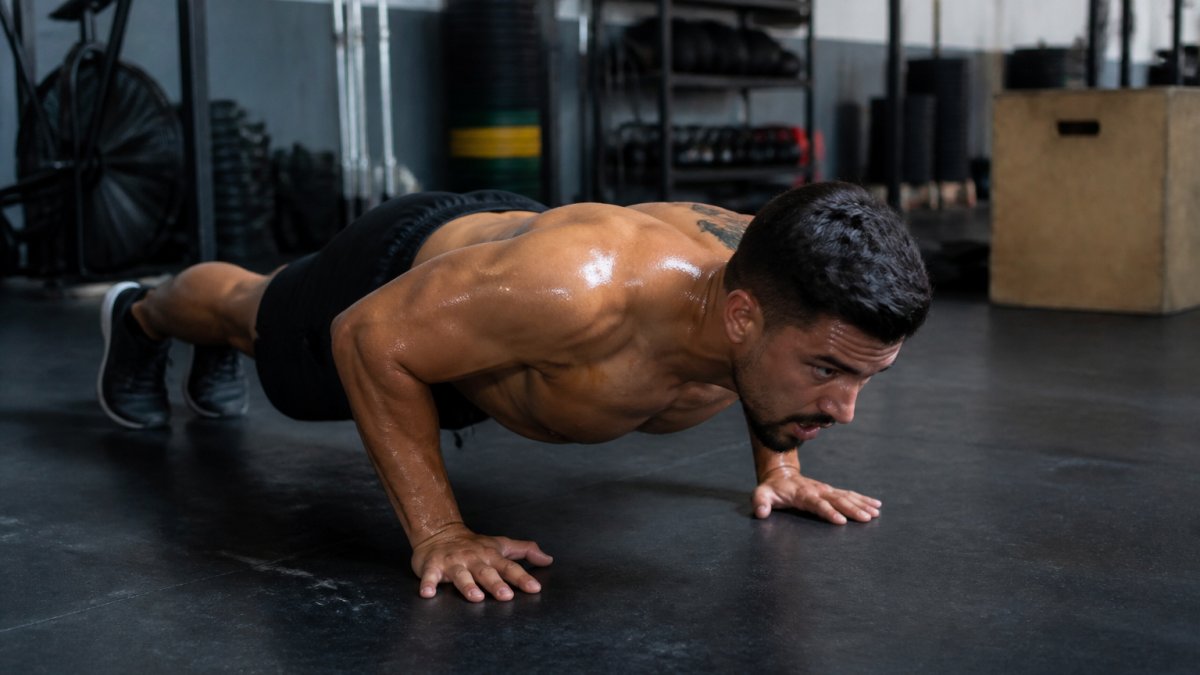
Run this sequence:
- Ten deep squats, checking waistband and hem
- Ten walking lunges, feeling for thigh friction
- Five box jumps, watching for any slide
- Five burpees, checking that nothing rides up
- A short sprint, testing airflow and weight
If the shorts pass all five, they are ready for real training. If the waistband rolls or the hem climbs, size down or switch cuts.
Durability, Opacity, and Care for Shorts Under Repeated Stress
Durability separates training gear from fashion gear. Repeated stress wears out thin fabric, weak seams, and cheap elastic. Check opacity by squatting in bright light: thin fabric goes see-through under load.
Care extends life. Wash performance apparel in cold water and skip the fabric softener, which coats the fibers and kills wicking. Air dry when you can. Heat breaks down spandex over time.
Pick Your Pair and Train in Them
The right pair disappears once you start moving. No tugging, no chafing, no second thoughts. That is the standard we build to. Our Moisture Wick Shorts use a 7-inch inseam, four-way stretch, and moisture-wicking fabric built for relentless use.

Stop negotiating with your gear. Get started with Mayhem Performance Apparel and train in shorts that hold up under load, round after round.
Frequently Asked Questions
What should I look for in workout shorts for HIIT?
Start with four things: a 5- to 7-inch inseam that clears your thigh during deep squats, a synthetic blend with four-way stretch, flatlock or seamless construction to stop chafing, and a waistband that stays put through jumping. A built-in compression liner helps if you want extra support and coverage. Pockets are optional, but a zip pocket beats an open one when you are moving fast. Test all four in the fitting room with a few air squats before you buy.
Are compression shorts or loose shorts better for HIIT training?
It depends on the session. Compression shorts or shorts with a built-in liner reduce friction and keep fabric from riding up during burpees and sprints. Loose shorts with a 5- to 7-inch inseam feel cooler and let you move freely through heavy lifts. Many athletes split the difference with a lined short: the outer layer gives airflow, the liner gives support. If chafing is your main problem, lean toward compression or a liner; if heat is the issue, lean toward a lighter woven short.
How do I prevent workout shorts from riding up during exercise?
Riding up usually means the leg opening is too wide or the fabric is too slick for your thigh. Choose a shorter inseam if your thighs are thick, look for a silicone grip or elastic hem, and size down if the waistband still fits comfortably. Flatlock seams and four-way stretch help the short move with you instead of bunching. Before a workout, do 10 air squats and 5 walking lunges in the fitting room. If the hem climbs past mid-thigh, try a different cut.
How often should I replace workout shorts?
Replace them when the elastic goes slack, seams start to fray, or the fabric turns see-through in a squat. For daily training in a synthetic blend, that is often every 12 to 18 months, sooner if you wash hot and tumble dry. Stretch the waistband and hold the fabric up to light after a few months of use. Wash cold, skip fabric softener, and air dry to get more life out of moisture-wicking workout shorts.

0 comments