
Table of Contents
- Why Proper Care Matters for Performance Apparel
- Step 1: Sort Laundry by Fabric Type and Training Intensity
- Step 2: Pre-Treat Stains and Sweat Buildup
- Step 3: How to Wash Moisture-Wicking Fabric Without Damage
- Step 4: Choosing the Best Detergent for Athletic Wear
- Why Do Gym Clothes Smell and How to Eliminate Odors
- Step 5: Drying Methods and Storage Best Practices
- Frequently Asked Questions
Last Updated: September 30, 2026
Why Proper Care Matters for Performance Apparel
Performance apparel is built to handle intense training. Your gear absorbs sweat, endures repeated stress, and gets pushed to its limits every single session. But here's what most athletes miss: how you wash performance apparel determines whether it lasts one season or five.

The fabric technology in modern athletic wear is engineered to wick moisture, stretch without tearing, and maintain its shape through relentless use. That engineering breaks down fast with the wrong care routine. Improper washing degrades the elastane fibers, traps bacteria that cause odor, and reduces breathability. At Mayhem Performance Apparel, we understand the frustration of gear deteriorating prematurely.
This guide walks you through the exact process to wash performance apparel correctly. You'll learn how to sort your gear, pre-treat problem areas, select the right detergent, and dry without damage. The result: apparel that performs as designed and lasts years longer than typical gym clothes.
Step 1: Sort Laundry by Fabric Type and Training Intensity
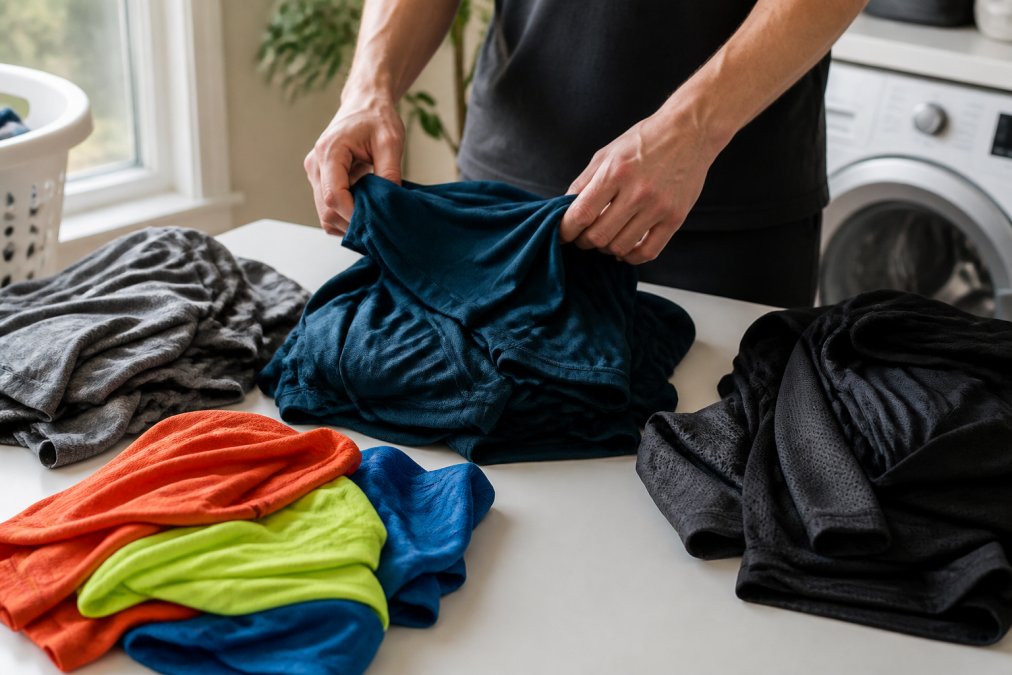
Before anything hits the washing machine, sort your gear. This single step prevents damage and ensures each piece gets the care it needs.
Separate by fabric composition:
- Technical synthetics (polyester, nylon blends) wash together
- Elastane-heavy pieces (compression shorts, tight leggings) go in a separate load
- Cotton blends (hoodies, sweatshirts) get their own cycle
- Zippers, buckles, and hardware need protection from snagging other pieces
Sort by training intensity:
- Heavy sweat gear (shorts, base layers, tank tops) requires pre-treatment
- Light-use pieces (hoodies, jackets worn over other clothes) can skip pre-treatment
- Compression wear with elastic bands needs gentler handling than standard shorts
The reason: synthetic fabrics respond differently to heat and agitation than cotton. Elastane degrades faster in hot water and heavy spin cycles. Grouping similar pieces lets you customize water temperature and cycle intensity for each load.
Pro tip: Turn all pieces inside out before washing. This protects the outer surface from pilling and fading while exposing the inner layer where most sweat and bacteria accumulate.
Step 2: Pre-Treat Stains and Sweat Buildup
Sweat stains and stubborn marks need attention before the wash cycle. Most athletes skip this step and wonder why their gear still smells after washing.
Identify problem areas:
- Underarm zones where sweat concentrates
- Collar and neckline areas that contact skin directly
- Waistbands and elastic areas where moisture gets trapped
- Visible stains from dirt or equipment contact
Pre-treatment methods that work:
For fresh sweat buildup, spray the area with cold water and let it soak for 15 minutes before washing. This loosens salt deposits and bacteria without setting the stain.
For stubborn marks, apply a small amount of enzyme-based cleaner directly to the stain. Let it sit for 30 minutes. Enzyme cleaners break down protein-based stains (sweat, blood) without damaging synthetic fibers. This is far more effective than fabric softener or bleach, which actually worsen odor and degrade elastane.
For odor that won't quit, soak the entire piece in a solution of cold water and white vinegar (one part vinegar to four parts water) for 30 minutes. The vinegar neutralizes odor-causing bacteria without harsh chemicals. Rinse thoroughly before washing.
What NOT to do:
- Never use hot water for pre-treatment, it sets protein stains permanently
- Never scrub aggressively, you'll damage synthetic fibers and weaken elastane
- Never use bleach on colored gear, it fades the dye and weakens fabric integrity
Step 3: How to Wash Moisture-Wicking Fabric Without Damage
The washing machine is where most athletes ruin their gear. The wrong settings destroy the moisture-wicking properties that make performance apparel worth buying.

Water temperature matters: Cold water (below 60°F) is non-negotiable for synthetic fabrics. Hot water breaks down elastane permanently and causes shrinkage. Warm water is a compromise, acceptable for heavily soiled gear but not ideal. Cold water cleans just as well and preserves fiber structure.
Cycle selection: Use a delicate or gentle cycle for all performance apparel. Standard cycles use heavy agitation that weakens synthetic fibers over time. A gentle cycle still cleans effectively while protecting fabric integrity. Most modern machines have a "athletic wear" or "synthetic" setting, use it.
Load size: Never overstuff the machine. Gear needs room to move freely in water. Cramming too many pieces prevents detergent from reaching all surfaces and increases friction between pieces. A half-full or three-quarter-full load is ideal.
Spin speed: Lower spin speeds protect moisture-wicking fabrics. High-speed spin cycles stress elastane fibers and can cause permanent stretching. Use the lowest spin setting your machine offers. If your machine has an "extra spin" option, skip it entirely.
Water level: Use enough water to fully submerge all pieces. Synthetic fabrics need adequate water to rinse properly. Insufficient water leaves detergent residue, which traps bacteria and causes odor even after washing.
Step 4: Choosing the Best Detergent for Athletic Wear
Not all detergents work equally on performance apparel. Standard laundry detergent leaves residue that traps bacteria and reduces breathability. The best detergent for athletic wear is specifically formulated for synthetic fibers.
What to look for:
Enzyme-based formulas break down protein stains (sweat, blood) without harsh chemicals. These work better on athletic wear than standard detergents.
Detergents labeled "sport" or "athletic" are designed for moisture-wicking fabrics. They rinse cleanly and don't leave residue that interferes with breathability.
Avoid fabric softener entirely. Softener coats synthetic fibers with a waxy layer that blocks moisture-wicking. This defeats the entire purpose of performance apparel. It also traps bacteria and causes odor.
Detergent amount: Use less than you think you need. A quarter cup is typically sufficient for a half-full load. Excess detergent doesn't rinse completely and leaves residue in the fabric. This residue traps sweat bacteria and causes persistent odor.
Temperature and detergent interaction: Cold water detergents dissolve more slowly than warm-water formulas. Use a liquid detergent rather than powder for cold water washing, it dissolves better and rinses more completely.
Avoid these common mistakes:
- Never use bleach or oxygen-based cleaners on colored gear
- Never use scented detergents, they mask odor rather than eliminate it
- Never use more detergent to compensate for cold water, it won't help and makes rinsing harder
Why Do Gym Clothes Smell and How to Eliminate Odors
Gym clothes smell because bacteria thrives in sweat-soaked synthetic fibers. This isn't about cleanliness, it's about how bacteria colonizes fabric and how standard washing fails to eliminate it completely.
The science behind the smell:
Bacteria feed on sweat components (salts, proteins, oils).
Why standard washing fails:
Elimination strategies that work:
Step 5: Drying Methods and Storage Best Practices
How you dry performance apparel determines whether it lasts years or gets destroyed in months. Heat is the enemy of elastane. Most athletes ruin their gear by throwing it in the dryer.
Air drying is the only safe method:
Drying timeline:
- Lightweight pieces (tank tops, t-shirts): 2-3 hours
- Medium pieces (shorts, lightweight pants): 3-4 hours
- Heavy pieces (hoodies, sweatshirts): 4-6 hours
- Ensure pieces are completely dry before storage, any remaining moisture allows bacteria to multiply
Storage best practices:
Repair and maintenance:
Microplastic shedding mitigation:
| Care Step | Water Temperature | Cycle Type | Drying Method | Storage |
|---|---|---|---|---|
| Washing | Cold (below 60°F) | Delicate/Gentle | Air dry only | Breathable container |
| Pre-treatment | Cold water or vinegar solution | N/A | N/A | N/A |
| Detergent | Works best in cold water | Enzyme-based formula | N/A | N/A |
| Drying | N/A | N/A | Hang or lay flat | Keep completely dry |
| Storage | N/A | N/A | N/A | Cool, dry, with airflow |
Frequently Asked Questions
How often should I wash performance apparel to prevent odor buildup?
Wash performance apparel after every training session or when visible sweat or odor is present. Moisture-wicking synthetic fabrics trap sweat differently than cotton, allowing bacteria to colonize fibers quickly. Waiting more than 24 hours after intense training increases odor compounds. For lighter sessions, washing every 2-3 wears is acceptable if the gear still smells fresh. Sweat buildup accelerates fabric degradation and reduces the moisture-wicking effectiveness over time.
Why do gym clothes still smell after washing, and what removes the odor?
Gym clothes smell after washing because detergent residue and fabric softener trap bacteria in synthetic fibers, preventing complete odor removal. Use white vinegar as a rinse agent (half cup in the rinse cycle) to neutralize odor-causing bacteria without damaging fibers. Baking soda added directly to the wash cycle also neutralizes sweat compounds. Avoid fabric softener entirely on technical fabrics, it coats fibers and locks in odor. Enzyme-based cleaners specifically designed for athletic wear break down sweat proteins more effectively than standard detergents.
Can I use fabric softener on moisture-wicking apparel?
No. Fabric softener coats synthetic fibers and blocks the moisture-wicking channels that keep you dry during training. This coating reduces breathability and traps sweat and odor in the fabric. It also accelerates detergent residue buildup, which is why gym clothes smell worse over time with softener use. For performance apparel like Mayhem Performance's Moisture Wick Shorts and Track Pants, skip softener entirely and use white vinegar in the rinse cycle instead for softness without compromising function.
How should I store performance apparel to maintain durability and prevent odor?
Store performance apparel in a cool, dry location after completely air-drying, never in a damp gym bag or sealed container. Moisture trapped in storage creates conditions for bacterial growth and mildew. Fold items loosely or hang them to avoid permanent creases that stress fabric fibers. Keep gear away from direct sunlight and heat sources, which degrade synthetic fibers over time. Store separately from cotton clothing to prevent cross-contamination of odor-causing bacteria. Ensure storage space has airflow to prevent moisture accumulation.
0 comments